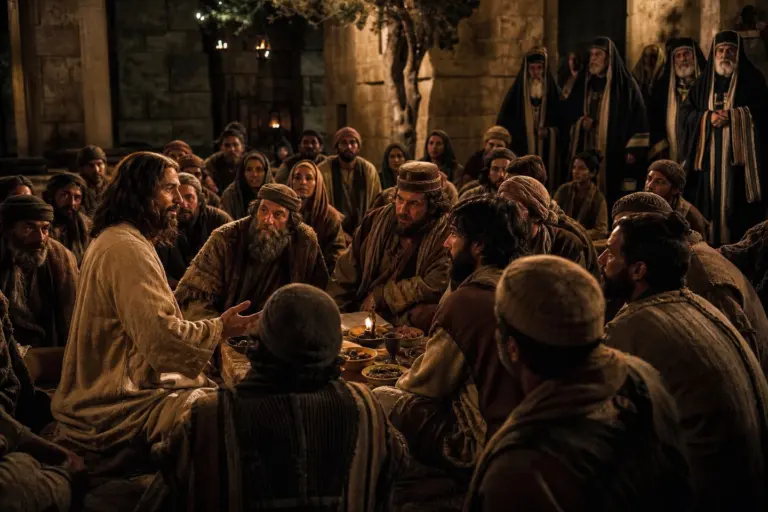
Ask ten believers why Jesus told stories instead of preaching sermons, and you will hear something about simple illustrations for simple people. The Gospels tell a sharper story. Why did Jesus teach in parables? He taught in parables to reveal the mysteries of the kingdom of heaven to seeking hearts while concealing them from hostile ones, the paid spies planted in every crowd to trap Him. And He created each story on the fly, fitted exactly to the hearts standing in front of Him.
That one answer is the key that unlocks every story He told. In this study we hear Jesus answer the question Himself in Matthew 13, then watch the method at work in Luke 13, where He reads a hostile crowd and plants three rapid pictures of the kingdom in front of them: a barren fig tree, a mustard seed, and a handful of leaven.
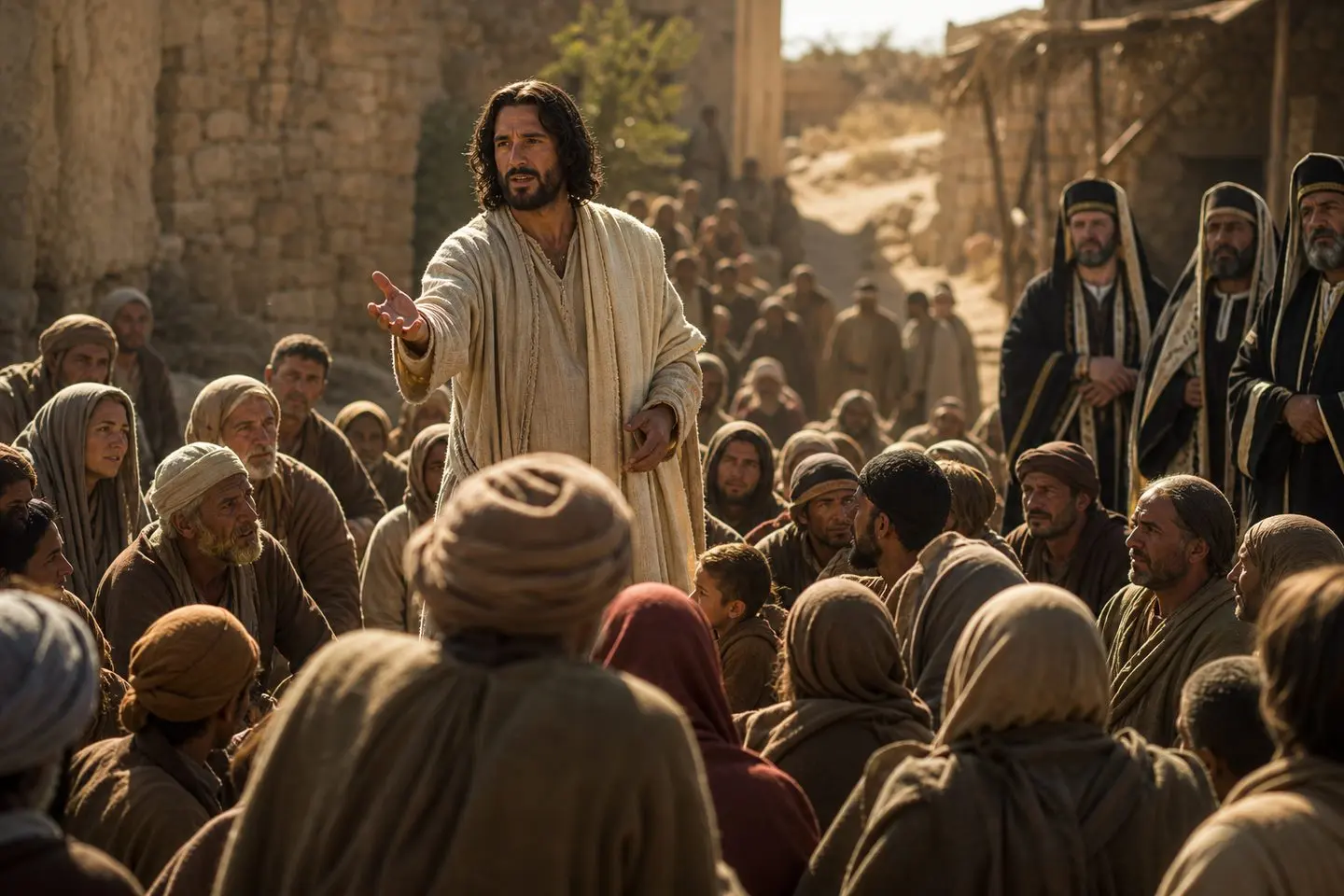
Watch this teaching in full above, and read on as we open it together.
The Question the Disciples Asked
The first time Jesus ever taught this way was the Parable of the Sower, delivered from a boat at Capernaum on a day when the temple authorities had informers shadowing His every word. His disciples were as stunned as anyone. Their Teacher had always spoken plainly, and suddenly He was telling farming stories to thousands. So they came to Him with the obvious question:
And the disciples came and said to Him, “Why do You speak to them in parables?”
Matthew 13:10 (NKJV)
His answer is the foundation of everything else in this study:
He answered and said to them, “Because it has been given to you to know the mysteries of the kingdom of heaven, but to them it has not been given. For whoever has, to him more will be given, and he will have abundance; but whoever does not have, even what he has will be taken away from him. Therefore I speak to them in parables, because seeing they do not see, and hearing they do not hear, nor do they understand.”
Matthew 13:11-13 (NKJV)
Notice the double purpose. The same story does two opposite things at the same time, depending entirely on the heart that hears it. To the disciples it opens the mysteries of the kingdom. To the closed heart it stays shut. That is exactly what the four soils describe: most of the crowd would not get the message, but the people where the seed fell on good soil would dig into these parables and keep learning about the kingdom of God for the rest of their lives. Every parable is a soil test.
Why He Could Not Just Say It
To understand why Jesus taught in parables at all, look at what He was up against. Everywhere He went, the crowds were seeded with spies paid by the deep state at the temple, waiting for one sentence they could arrest Him with. He wanted to teach people what was wrong with their perception of the kingdom of God, but He could not say it straightforwardly with informers taking notes. So He made His points through agricultural stories, and it confounded the spies completely. There was nothing there for them when He talked that way. They just turned off.
Do not mistake the strategy for timidity. This is the same Jesus who had just told His disciples:
I came to send fire on the earth, and how I wish it were already kindled! But I have a baptism to be baptized with, and how distressed I am till it is accomplished! Do you suppose that I came to give peace on earth? I tell you, not at all, but rather division.
Luke 12:49-51 (NKJV)
This is not kissy face passive Christianity. Jesus was the new sheriff, and He was not playing. A fierce baptism lay ahead of Him, He was pent up until it was accomplished, and His teaching grew edgier the closer He drew to Jerusalem. The parables were not a retreat from that fight. They were how He kept teaching the kingdom right under His enemies’ noses, on His timetable instead of theirs.
Stories Created on the Fly
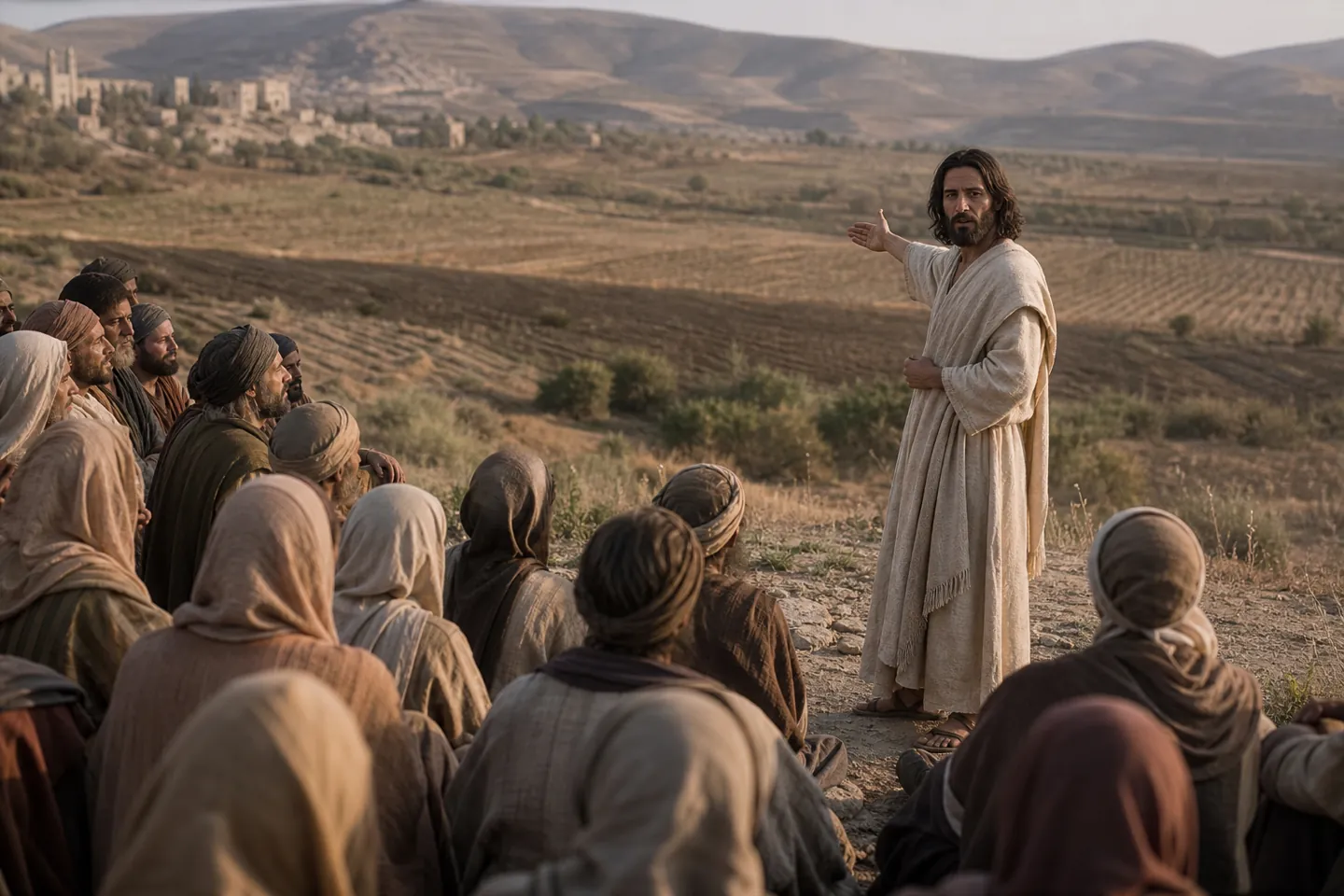
Here is the discovery that changes how you study the parables: Jesus made them up on the fly, based on the problems He saw in people’s hearts when He was around them. These were not stock illustrations worked out in advance. He read the hearts in front of Him and built each story to confront exactly what He found there.
Luke 13 opens with that heart reading in action. Some people came and told Him about the Galileans whose blood Pilate had mingled with their sacrifices, worshipers cut down by soldiers in the middle of their offerings. They presented it as news. Jesus heard what they were actually saying underneath it: those people must have been doing something wrong, or God would never have let it happen.
Do you suppose that these Galileans were worse sinners than all other Galileans, because they suffered such things? I tell you, no; but unless you repent you will all likewise perish.
Luke 13:2-3 (NKJV)
He totally busts them. And the same reflex lives in us. When something terrible happens to someone, we quietly assume they must have brought it on themselves, because if we can name a reason, we can tell ourselves it will never happen to us. That is self-preservation dressed up as theology, and it has nothing to do with the kingdom of God. The perfectly righteous One saying these words was Himself about to be killed. Then He reached for the day’s other headline, the tower at the Siloam aqueduct project that collapsed and killed eighteen people, and pressed the identical question. God’s word, aimed at today’s concerns, in pictures the hearers could not shake off. It is the same pattern behind the Parable of the Good Samaritan, a story built on the spot for the self-justifying heart of the man who asked the question.
Object Lessons Everyone Could See
When Jesus turned back to the kingdom, He reached for things His hearers saw every day of their lives.
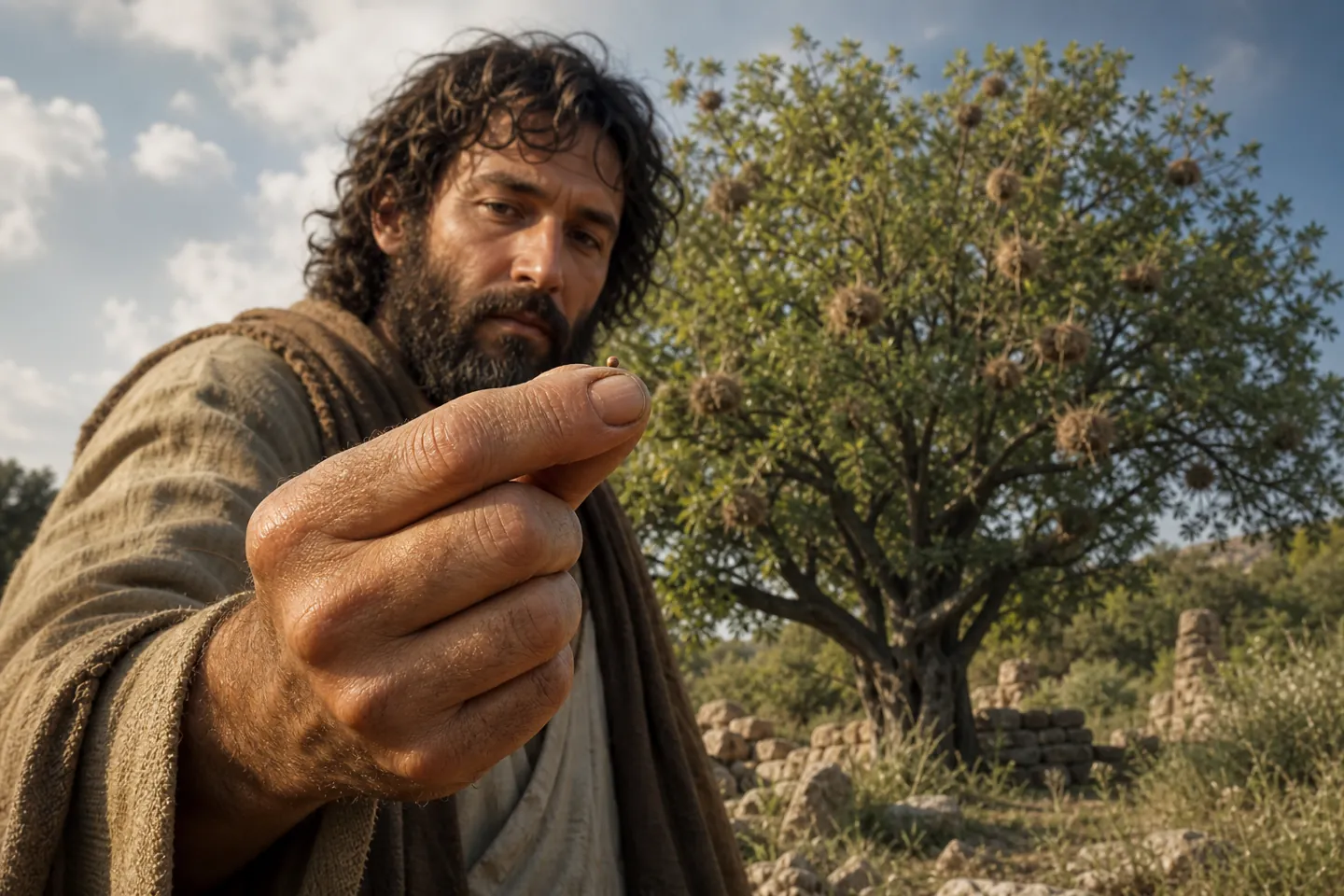
Then He said, “What is the kingdom of God like? And to what shall I compare it? It is like a mustard seed, which a man took and put in his garden; and it grew and became a large tree, and the birds of the air nested in its branches.”
Luke 13:18-19 (NKJV)
A mustard seed is about the size of the head of a pin, and the tree it becomes is huge, full of branches and space and safety, exactly the kind of tree birds love. Jesus picked that seed on purpose. He was saying: what I am doing is planting this tiny seed in as many hearts and as many places as I can, and My disciples will do the same. He had operated within about thirty miles, yet being God as well as man, He knew where it was all headed: Christendom spanning the entire globe. And notice that the birds are different here than in the Sower. These are not the evil ones that snatch the seed away. They are the ones who find comfort and security in the span of a great tree, a strong church, or a believer who is solid and grounded in the word.
And again He said, “To what shall I liken the kingdom of God? It is like leaven, which a woman took and hid in three measures of meal till it was all leavened.”
Luke 13:20-21 (NKJV)
Three measures of meal is no small bowl. The general consensus is that it comes to about fifty pounds. A woman works a little leaven into all of it, covers it, walks away, and something miraculous happens that nobody is performing: the whole batch is transformed. Back to back, these two parables show the two sides of the kingdom’s growth. The mustard seed is the side that takes your personal effort, sharing the gospel, starting a church with a couple of people, planting so there can be a harvest. The leaven is the side that happens by the power of God. Once the truth of His word gets into a person, a family, a church, a town, things start to happen that are almost mystical, because the Holy Spirit is guiding events while no one is mechanically making them happen. You just wait in wonder, and it will happen. Jesus stacked kingdom pictures like these all through His ministry, and we open two more of them in the Wheat and the Tares and the Hidden Treasure.

More Than Stories: Parables That Prophesy
Some parables carry an edge that only shows up later, because a parable can also be a prophecy. Right after telling the crowd to repent or perish, Jesus gave them this:
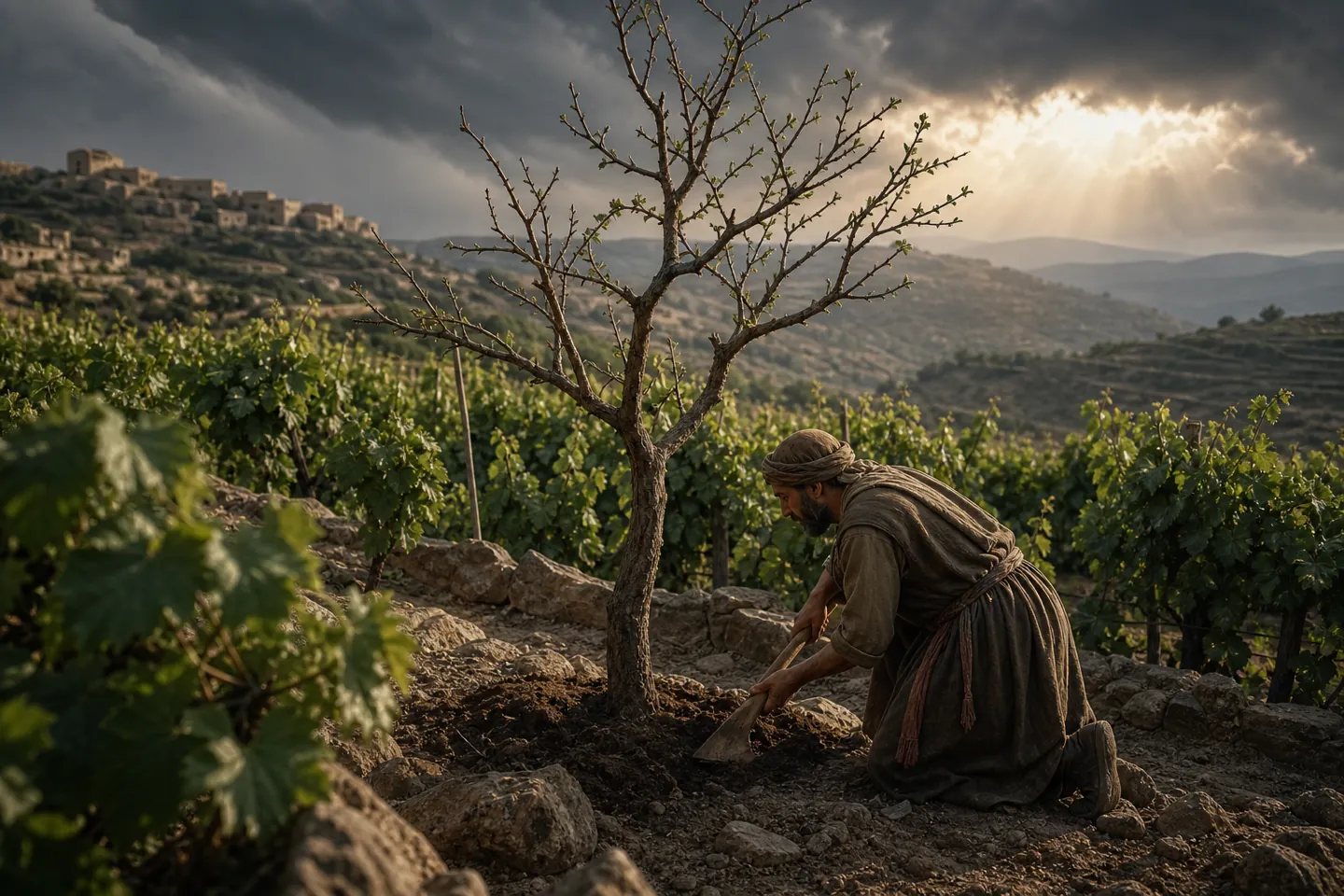
A certain man had a fig tree planted in his vineyard, and he came seeking fruit on it and found none. Then he said to the keeper of his vineyard, “Look, for three years I have come seeking fruit on this fig tree and find none. Cut it down; why does it use up the ground?” But he answered and said to him, “Sir, let it alone this year also, until I dig around it and fertilize it. And if it bears fruit, well. But if not, after that you can cut it down.”
Luke 13:6-9 (NKJV)
The certain man is God. The fig tree is the nation of Israel. And the Bible’s way of assessing a tree is simple: look at the fruit. This tree has none, not even bad fruit, because God has put the Messiah in the middle of His chosen nation, teaching and healing and performing miracles in the temple itself, and the nation is not just rejecting Him, its leaders are plotting to kill Him. The three years are the three years of Jesus’ ministry. The keeper pleading for one more season is Jesus: let it alone this year also, for the rest of My ministry, while I dig around it and fertilize it. Older translations say dig around it and dung it, which is exactly how a farmer tried to kickstart a failing tree.
This is not only a parable, it is a prophecy. When does the tree get cut down? In 70 AD, when Jerusalem and the temple were totally destroyed. Jesus hid a national prophecy inside a gardening story, and only the hearers with the right soil would remember it when it came true. He did the same thing when the Pharisees ran up shouting that Herod wanted to kill Him, a false alarm from men whose power was waning because nobody believed them anymore. Go tell that fox, He answered, behold, I cast out demons and perform cures today and tomorrow, and the third day I shall be perfected. A prophecy of the resurrection, folded inside a one line reply. They did not get any of it. The right hearts remembered.
The Key to Every Parable: Which Heart Hears It
So why did Jesus teach in parables? Put it all together. To conceal the kingdom from hearts already closed against Him. To reveal it, layer after layer, to hearts that wanted it. To confront the exact problem standing in front of Him without handing His enemies a case. And to plant seed and prophecy that would keep working long after the story ended, as quietly as leaven in the meal.
That means every parable is asking you a question back: which heart is hearing this? When someone in the crowd asked whether only a few are saved, Jesus answered with one more object lesson from daily life:
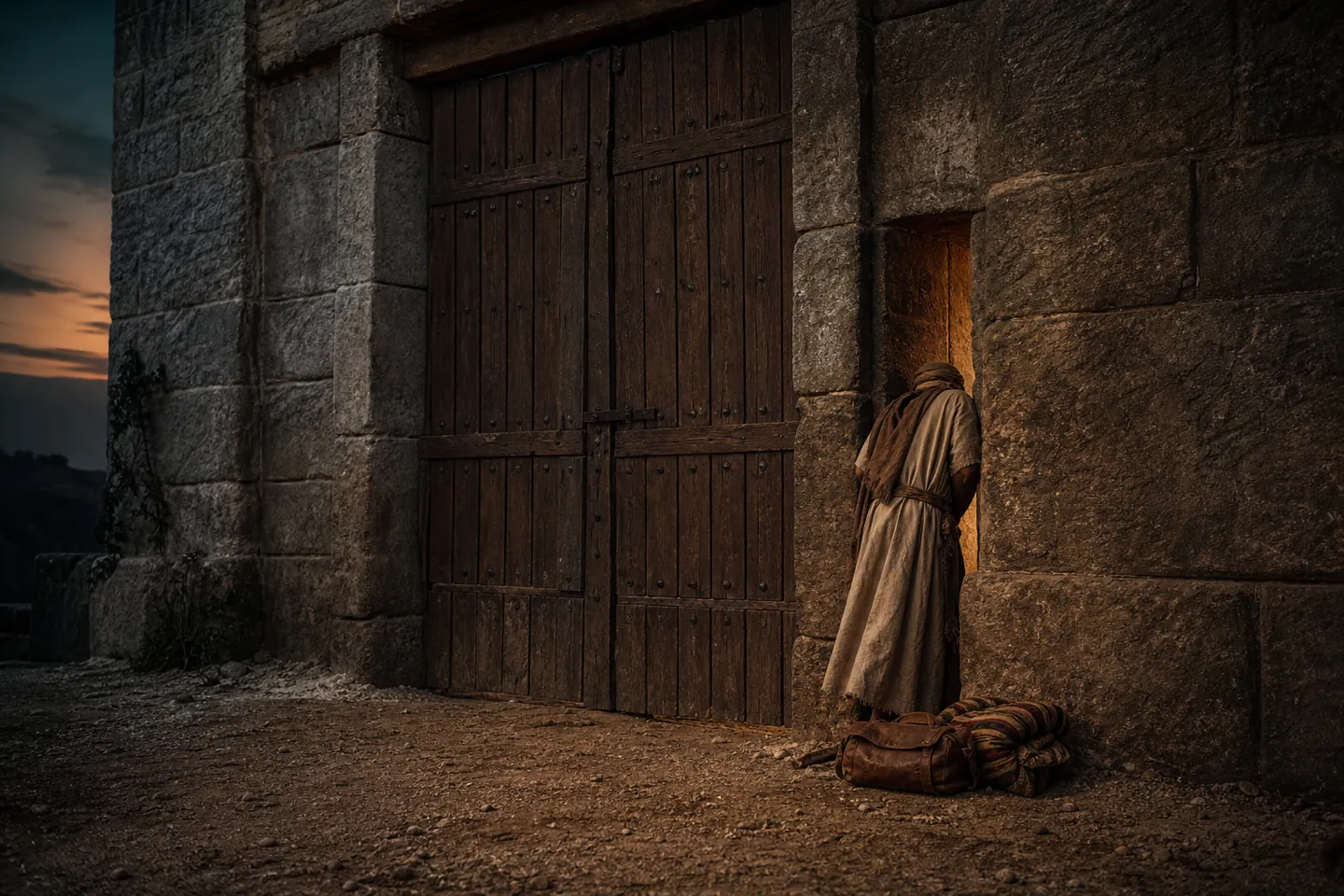
Strive to enter through the narrow gate, for many, I say to you, will seek to enter and will not be able.
Luke 13:24 (NKJV)
Every walled city had a great front gate, locked and reinforced at night, and beside it a narrow opening about eighteen inches wide that turned at hard angles. You could still get in after dark, but only you. No cart, no bundles, not even a backpack. Jesus is saying you cannot get into heaven dragging all your junk: the sins you have decided are acceptable, the edits you want to make to the gospel, the second things you keep putting first. Most people will not leave it outside, so they never take the narrow gate. And once the master of the house has bedded down and locked the door, knowing Him by association will not open it. I do not know you, He says to everyone who had their chance and was not interested, a scene He painted again in the Ten Virgins and the Friend at Midnight.
He who has ears to hear, let him hear. The parables are still doing exactly what they did on those roads two thousand years ago: giving the casually curious nothing to carry away, and opening wider and wider to everyone who digs in. So dig in.
A Prayer for Ears That Hear
We close the way this teaching closed, with a prayer of Benjamin Franklin, who took it as settled that men ought always to pray and not to faint:
Come then in childlike confidence to our blessed and glorious Father, not as a formality, nor merely as a duty, but because you need His almighty arm to protect and sustain you, to guard and shield you in the midst of the evils of the world, and finally to save you. Our glorious Father can see dangers that we cannot see and avert calamities that we have no power to stay. He is our everlasting trust, our stronghold, the rock of our defense.
Prayer attributed to Benjamin Franklin
And this is the man our historians say was not a believer. Let his prayer be ours. The Sower is still sweeping His arm across every kind of ground, and the stories He told are still sorting hearts. Lord, give us the good soil, and give us ears to hear.
Further Reading
For a verse by verse walk through the Luke 13 passages in this study, David Guzik's commentary at Enduring Word is an excellent companion, and GotQuestions offers a concise summary answering this very question.
Chuck's own study over the years has leaned most on six teachers. If you want to keep going after this parable, their work is where he would send you:
- John MacArthur at Grace to You
- James Burton Coffman, whose Coffman Commentaries are free at StudyLight
- Charles Stanley at In Touch Ministries
- Robert Deffinbaugh at Bible.org
- Chuck Swindoll at Insight for Living
- David Guzik at Enduring Word
How this study was written: it comes from Chuck Frank’s own teaching on this passage. It was put into writing with the help of AI editing tools, then reviewed by Chuck for faithfulness to his message and to Scripture.