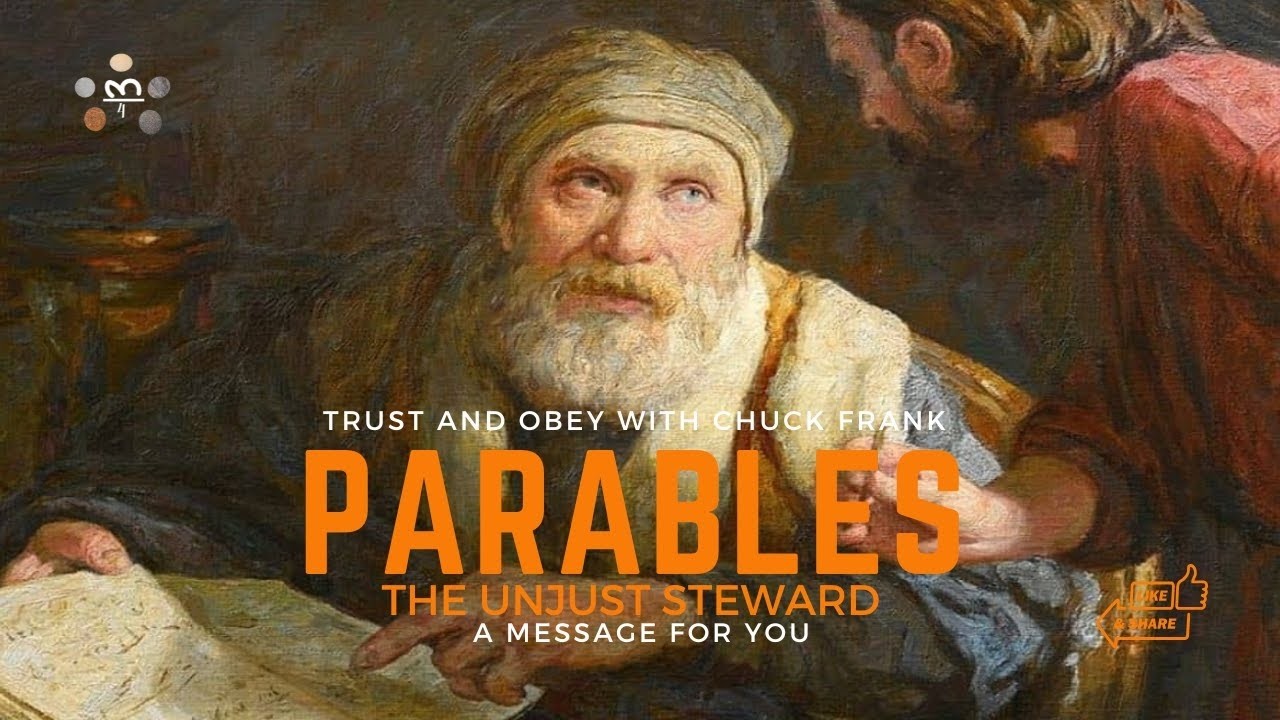
Bible teachers call the Parable of the Unjust Steward the strangest story Jesus ever told, and Chuck agrees: this teaching asks us to take our brains and do an extreme yoga class. A manager gets caught stealing, steals more on his way out the door, and the master praises him for it. Then Jesus tells His disciples to learn from the man.
Here is the key that unlocks it. The Parable of the Unjust Steward means this: the rich owner represents God, and the cheating steward represents the Pharisees, entrusted with the word of God and wasting it. The master commends the steward’s shrewdness, never his stealing, and Jesus presses the point: the sons of this world are more shrewd than the sons of light, and that must stop.
Watch this teaching in full above, and read on as we open it together.
- A Wholesale Operation and a Cheating Manager
- A Shrewd Man Tells Himself the Truth
- Take Your Bill and Sit Down Quickly
- Why Did the Master Commend the Unjust Steward?
- Make Friends by Unrighteous Mammon?
- Faithful in What Is Least
- The Deceitfulness of Wealth
- Your Portfolio of Gifts
- No Servant Can Serve Two Masters
- The Pharisees Heard Every Word
- A Prayer from Benjamin Franklin
A Wholesale Operation and a Cheating Manager
Luke 16 opens with Jesus before the same crowd that heard the Lost Sheep, the Lost Coin, and the Prodigal Son in the chapter before: tax collectors and sinners leaning in, the Pharisees at the edges, dogging Him and criticizing everything. Keep them in view. This whole parable is about them, and they do not realize it, the same concealment we met when we asked why Jesus taught in parables in the first place.
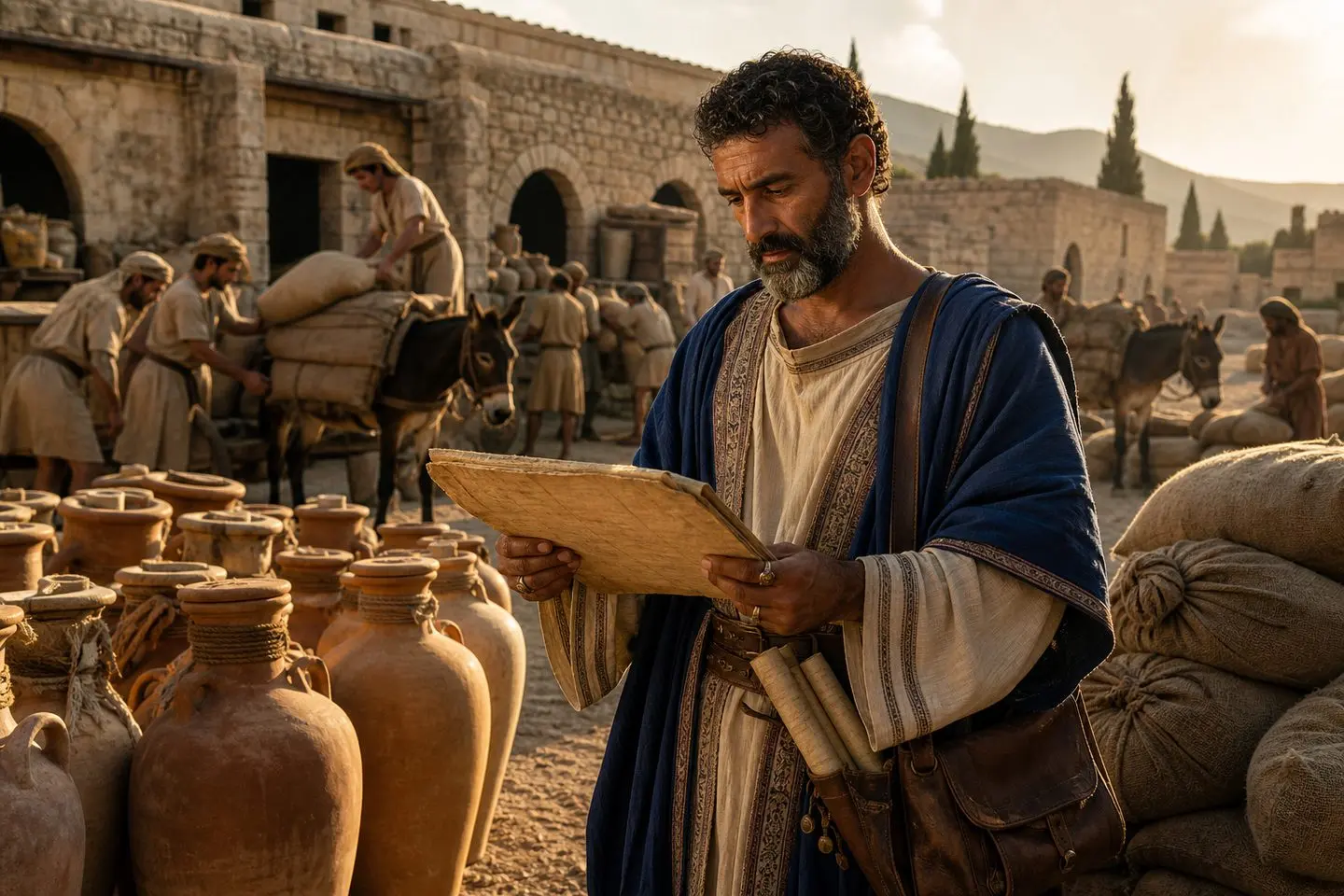
Now picture the setting. A certain rich man owns a wholesale agricultural operation so big he employs a manager to keep the books. He sells oil and wheat to retailers, and because nobody had deep pockets in that world, everything ran on credit: no banks, no way to move money. A vendor signed the book for what he took and paid at season’s end. The system worked well, unless you had a cheating manager. That is exactly what this parable is about.
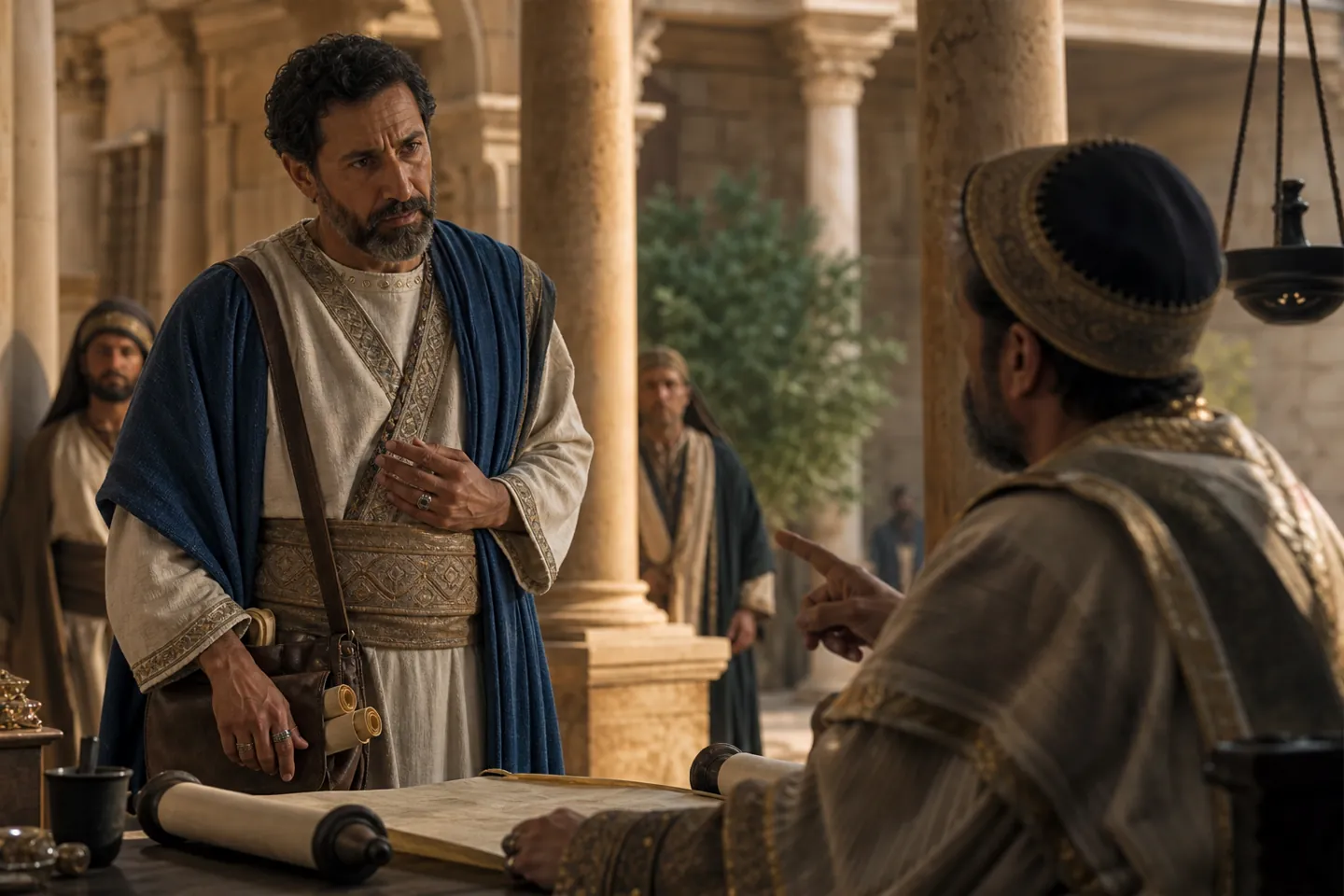
He also said to His disciples: “There was a certain rich man who had a steward, and an accusation was brought to him that this man was wasting his goods. So he called him and said to him, ‘What is this I hear about you? Give an account of your stewardship, for you can no longer be steward.'”
Luke 16:1-2 (NKJV)
Remember that all of this is symbolism. The rich owner represents God. The cheating steward represents the Pharisees. And the accusers? Chuck points us to the prophets, Ezekiel and Micah, standing before God and saying, in effect: these are the chosen people You have worked with for centuries, they are totally rejecting You, and it is not getting better. So the summons carries a verdict already reached: you can no longer be steward. He has already determined they are not going to make it.
A Shrewd Man Tells Himself the Truth
Then the steward said within himself, “What shall I do? For my master is taking the stewardship away from me. I cannot dig; I am ashamed to beg. I have resolved what to do, that when I am put out of the stewardship, they may receive me into their houses.”
Luke 16:3-4 (NKJV)
Look closely at “said within himself,” because what this man does next almost nobody does, certainly not in our time. He makes a very fast assessment and tells himself the truth. He does not struggle against the verdict or defend himself. He accepts that he got caught stealing and takes inventory without flinching: I cannot dig, and I am ashamed to beg. In other words, I am basically worthless except for a job like this.
We know his opposite well. The modern functionary caught riding a thirty-year free ride never says, thanks, I will go find another job. He lawyers up and claims a hostile work environment. You almost have to admire the steward for skipping all of that. There is no point arguing this, he decides. I have a plan B. On my last day, I am going to the vendors who owe my master, and I am going to make every one of them indebted to me.
Take Your Bill and Sit Down Quickly
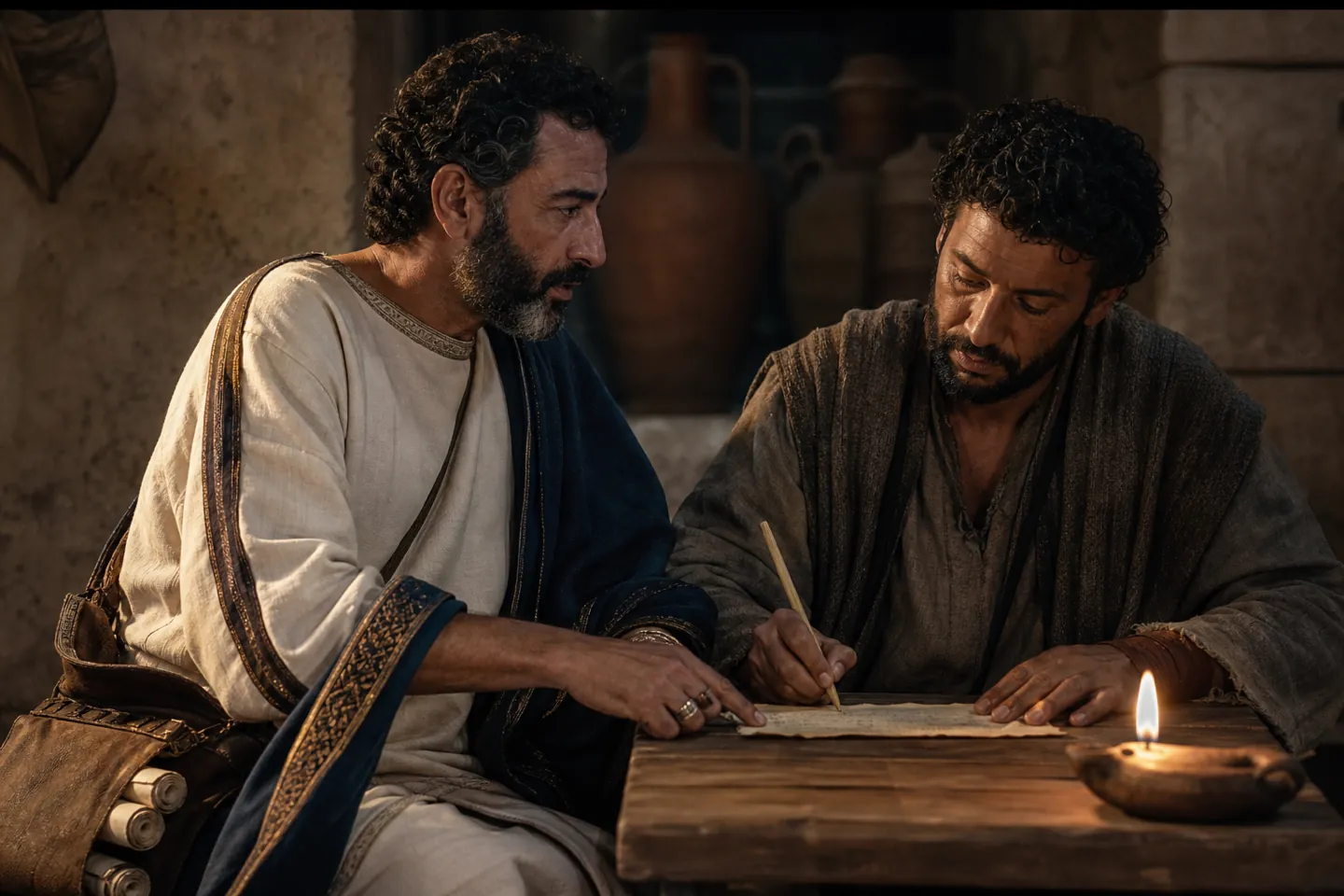
So he called every one of his master’s debtors to him, and said to the first, “How much do you owe my master?” And he said, “A hundred measures of oil.” So he said to him, “Take your bill, and sit down quickly and write fifty.” Then he said to another, “And how much do you owe?” So he said, “A hundred measures of wheat.” And he said to him, “Take your bill, and write eighty.”
Luke 16:5-7 (NKJV)
Take your bill, sit down quickly. He knows exactly what he is doing, and he is going deeper into the stealing to do it. And don’t you love the vendors? Not an ounce of loyalty to the wholesaler once a fifty percent discount lands on the table. Because it is never just a discount. It is: you are going to take care of me because of that discount. A kickback? A room in the man’s house? Whatever form it takes, the steward is feathering a new bed for himself with his master’s money.
Why Did the Master Commend the Unjust Steward?
Now here is where you have to take your brain and start the advanced yoga.
So the master commended the unjust steward because he had dealt shrewdly. For the sons of this world are more shrewd in their generation than the sons of light.
Luke 16:8 (NKJV)
The master is commending the unjust steward. Not for the theft; for the shrewdness. He watched a cornered man produce a plan B so fast and so clever that he finds himself thinking, this guy is worth something, I just have to keep an eye on him. Then Jesus adds the capper, and the capper is the whole point: the sons of this world are more shrewd in their generation than the sons of light.
That is a backhand to believers. The world plans and plots and maneuvers for advantage all the time, and most of the time the believers get rolled. Chuck’s word on that is blunt: that has to stop. It is not enough for Christians to be passive sheep. We are called to be just as shrewd without breaking the law, just as creative and aggressive without sinning. We have God on our side and every gift He gives; we should be out ahead of these folks, not assuming faith excuses us from the commerce and policy of the world. Jesus is saying: knock it off, Christians. Get in the game. If you do not change, the world will keep rolling you.
Make Friends by Unrighteous Mammon?
And I say to you, make friends for yourselves by unrighteous mammon, that when you fail, they may receive you into an everlasting home.
Luke 16:9 (NKJV)
It is hard to sit with that sentence. Wait, what? Is Jesus telling us to make friends with stolen money? No. He is saying mammon itself is inherently unrighteous. Not that you are unrighteous if you are wealthy: your wealth is deceitful, and it will compromise you unless you are incredibly careful with it.
Many readers rush this verse into a comfortable shape: spend your wealth for the cause of Christianity and heaven will welcome you for it. Chuck stops us: that is actually not what Jesus is teaching. Watch where He goes next.

Faithful in What Is Least
He who is faithful in what is least is faithful also in much; and he who is unjust in what is least is unjust also in much.
Luke 16:10 (NKJV)
However you handle a small job is how you will handle wealth. Do a small job in a shoddy way and you will do the big project in a shoddy way. Every lottery player says, if I win, I am giving so much to charity. It never happens. Their lives get destroyed, their relationships get destroyed, and they get separated from that money. If you cannot deal fairly over the change on a dinner bill, you will not deal fairly on the big transaction either.
Therefore if you have not been faithful in the unrighteous mammon, who will commit to your trust the true riches? And if you have not been faithful in what is another man’s, who will give you what is your own?
Luke 16:11-12 (NKJV)
Jesus calls money the least of the things a believer will ever handle. If grubby, deceitful mammon captures all your attention and you cannot even deal straight with that, why would God trust you with the true riches? The true riches are salvation: the relationship you were created for, the reason Jesus came and died for your sins. The gift is free, and God chose you while you were still in rebellion, which makes it, as Chuck puts it, a whopper. You will not know until heaven why He chose you, because you were rejecting, rejecting, rejecting.
The Deceitfulness of Wealth
Why does Jesus keep calling mammon deceitful? Chuck walks through the classic list. Wealth deceives its owner into believing it is his, instead of a resource God handed him; you rarely hear a wealthy man pray, what do You want me to do with this gift? It tempts him to trust in riches, because money ends your need to compromise: you can fix things, buy people, buy advice, buy influence, exactly how our capital became a swamp. It makes a man depend on wealth for happiness, robbing him of salvation and the glory of God; think of the billionaires constantly in the news, not one of them a believer, wanting to be God rather than worship Him. It estranges old friends and supplies false ones, sharks like this unjust steward, playing friend while they separate you from the money. It promises much and delivers little: Taylor Swift may own eight houses, but she can only sleep in one bed at night and wear one pair of shoes at a time. And it is a constant hazard to personal spirituality, because you quietly put more faith in the money than in God. The exceptions are few and far between. That is the power of deceitful mammon.
Your Portfolio of Gifts
Verse 12 turns personal. Chuck hears God speaking about the portfolio He issued each of us at birth: a unique set of gifts, attributes, and talents. They come from God, not from within you, and your job is to discover them and use them to forward the kingdom of heaven. One day you will stand where this unjust servant stood, before the Master, reviewing what you did with the portfolio, the same accounting Jesus describes in the Parable of the Talents.
Take one gift, hospitality. You know within ten seconds of a front door whether your host has it. Without it, everything is rigid: the tense hello, the coat with nowhere to go, the quiet wondering whether a drink is coming. Chuck laughs that he used to tell his wife, we are eating out first, these people do not have the gift. Where the gift is alive, you are family at the door, a beverage is in your hand, and the food just keeps coming: eat until you are happy, we are not going to worry about a thing.
Each of us carries different gifts, and the warning lands on all of them: if you have a gift and you are mean with it, if you do nothing with it, why would God give you something more?
No Servant Can Serve Two Masters
No servant can serve two masters; for either he will hate the one and love the other, or else he will be loyal to the one and despise the other. You cannot serve God and mammon.
Luke 16:13 (NKJV)
Chuck slows us down on the word servant. The word Luke uses means a house servant: a live-in worker at one home, on call day and night, physically unable to serve a second household. That is the picture, and it is why the verse allows no middle ground.
Why so absolute? Because Jesus knows how we are wired, and He knows the true life of faith is difficult for us. Ninety percent of Christians stand like a scale. In the right hand, the relationship with God: church, a few prayers, maybe one study group, four or five hours a week at the outside. In the left hand, everything we do to keep money coming in, and that hand gets whatever it takes. We forget that God is the resource behind all of it, the reason you have the job at all. We balance the two so the optics look good, better car, better neighborhood, kids at camp, family in the pew on Sunday, and it looks like the perfect life. And Jesus says: I know. You are deluding yourself.
Here is the hard teaching inside the hard parable. If you think you are serving God and mammon and doing both well, you are doing something evil in the eyes of God. You are saying, I trust this, I can touch it and spend it and solve my problems with it, and God is a fire extinguisher I grab when money cannot fix the thing. God is a jealous God. He wants to be seen as the source of everything you need, and that requires a walk of faith, a great adventure. It does not mean you have no job. It means your relationship with God holds first place: it is the whole reason you are here, and you have no guarantee of how much time you have to make it strong. The one who dies with the most toys does not win; that slogan is a lie from the pit of hell by way of Madison Avenue. The winner dies knowing salvation is assured, a servant leader whose family found in him a help toward heaven, not a stumbling block. The world says second things first. No. First things first.

The Pharisees Heard Every Word
Now the Pharisees, who were lovers of money, also heard all these things, and they derided Him. And He said to them, “You are those who justify yourselves before men, but God knows your hearts. For what is highly esteemed among men is an abomination in the sight of God.”
Luke 16:14-15 (NKJV)
Now the mask comes off. Jesus is on His way to Jerusalem with nasty people on His heels, and the Pharisees, lovers of money, are the unjust steward. Entrusted with the richest portfolio ever handed to men, the word of God, they twisted and perverted it because they loved money more than they loved God. They justified themselves before men; in their culture, wealth and station meant God was smiling on you. But God knew their hearts, and their hearts were stone. That is why the steward finds no mercy at the end of this story, and none is coming for them.
Chuck declares it plainly: the steward at least knows he is fired, but these men could not see 70 AD coming. The temple gone, Jerusalem torn down, their outdoor-mall business venture around the temple finished, a million murdered, tens of thousands of their sons crucified because of the one Messiah they crucified. They were given a huge portfolio, and they lost it. Chuck adds a blessing: God bless any Jewish person who comes to Jesus Christ; they have an immense destiny to fulfill, and all of our disciples and our Messiah are Jewish. And he points at the modern echo: a capital full of lawyers who twist the law and love money more than the people they represent is the same spirit in a different robe.
The law and the prophets were until John. Since that time the kingdom of God has been preached, and everyone is pressing into it. And it is easier for heaven and earth to pass away than for one tittle of the law to fail.
Luke 16:16-17 (NKJV)
The law and the prophets were until John: a paradigm shift the legal experts completely missed. John came as the herald crying, make straight the way of the Lord, and now everyone is pressing into the kingdom, above all the Gentiles the Pharisees did not count as people: our made-up faiths of little pagan idols never worked, and here is a man sent from God who heals, feeds thousands, and says believe in Me and be saved. Everyone is pressing in except the spiritual leaders of Israel. And not one tittle of God’s law will fail, a tittle being the tiny hook, smaller than an apostrophe, that scribes used to distinguish nearly identical Hebrew letters. God’s law, mind you. Not the law they had concocted.
Then verse 18 raises divorce, seemingly from nowhere. Is Jesus suddenly teaching on marriage? No; you have to absorb all four gospels together to understand any one thing. Divorce is Exhibit A of the twisting: they had bent God’s law until almost no grounds were needed to trade a wife for a younger one, a mockery of what God intended. God sees it all. And Jesus is not finished with these lovers of money. Before this same chapter is out, He will tell them the Rich Man and Lazarus, and the stakes stop being ledgers and become eternity.

A Prayer from Benjamin Franklin
Chuck closes with Benjamin Franklin, beginning with a line that could sit over this whole parable: I didn’t fail the test. I just found a hundred ways to do it wrong. That is this story in one sentence: a steward, a nation’s leaders, and most of us, finding a hundred ways to fail a stewardship. What follows is not a prayer Franklin composed. Chuck assembled it from sentences in Franklin’s letters to people he cared about, and he chose Franklin deliberately: he is the founder contemporary historians call the real leader, precisely because they believe he was not a believer. Read what the man actually wrote:
Dear God, let us live then under the continual impression that men ought always to pray and not to faint… that we should pray without ceasing, rejoicing evermore, and in everything give thanks. Come then in childlike confidence to our blessed and glorious Father, not as a formality, nor merely as a duty, but because you need His almighty arm to protect and sustain you. Our glorious Father can see dangers that we cannot see and avert calamities that we have no power to stay. He is our everlasting trust, our stronghold, the rock of our defense. In the name then of our Lord Jesus the Christ, our only Savior, let us come to our Father who always hears us, who will be with us in every trial, in all our sufferings, and in crossing the cold river, where He will receive us to Himself, to be with Him forever and ever. Amen.
Assembled from the letters of Benjamin Franklin
He is our everlasting trust, our stronghold, the rock of our defense. That is a man who knew which master he served. The unjust steward had one shrewd moment. The wise servant builds a shrewd life, spent on the true riches. May we be found faithful in what is least, faithful in much, and free, because we serve one Master.
Further Reading
For a deeper verse by verse study of Luke 16, David Guzik's commentary at Enduring Word is an excellent companion to this teaching.
Chuck's own study over the years has leaned most on six teachers. If you want to keep going after this parable, their work is where he would send you:
- John MacArthur at Grace to You
- James Burton Coffman, whose Coffman Commentaries are free at StudyLight
- Charles Stanley at In Touch Ministries
- Robert Deffinbaugh at Bible.org
- Chuck Swindoll at Insight for Living
- David Guzik at Enduring Word
How this study was written: it comes from Chuck Frank’s own teaching on this passage. It was put into writing with the help of AI editing tools, then reviewed by Chuck for faithfulness to his message and to Scripture.