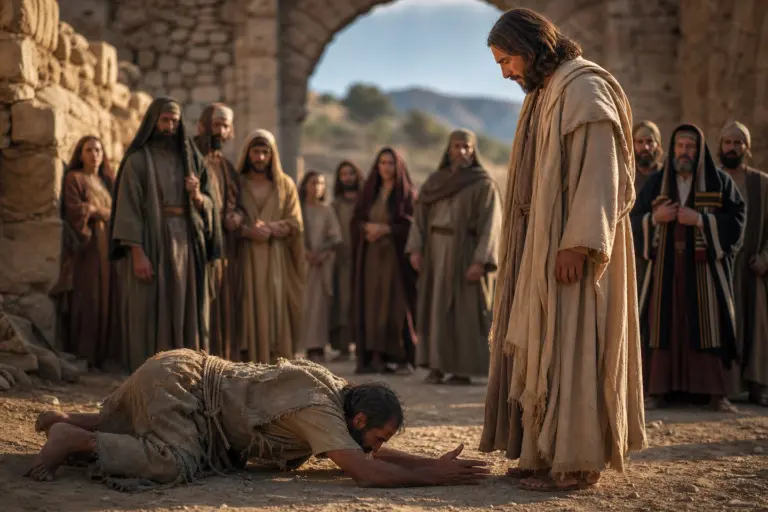
Jesus told the Parable of the Great Banquet at a dinner party where He was the least welcome guest in the room. Its meaning is direct: God has prepared salvation as a great feast and sent His invitation to everyone, and most people refuse it with obvious lies. So the master fills his house with the poor, the maimed, the lame, and the blind, and finally with strangers from the highways, while the invited never taste the supper. In this study we take our place at that Sabbath table in Luke 14, watch Jesus unmask the hypocrisy all around it, and hear what it costs to actually come.
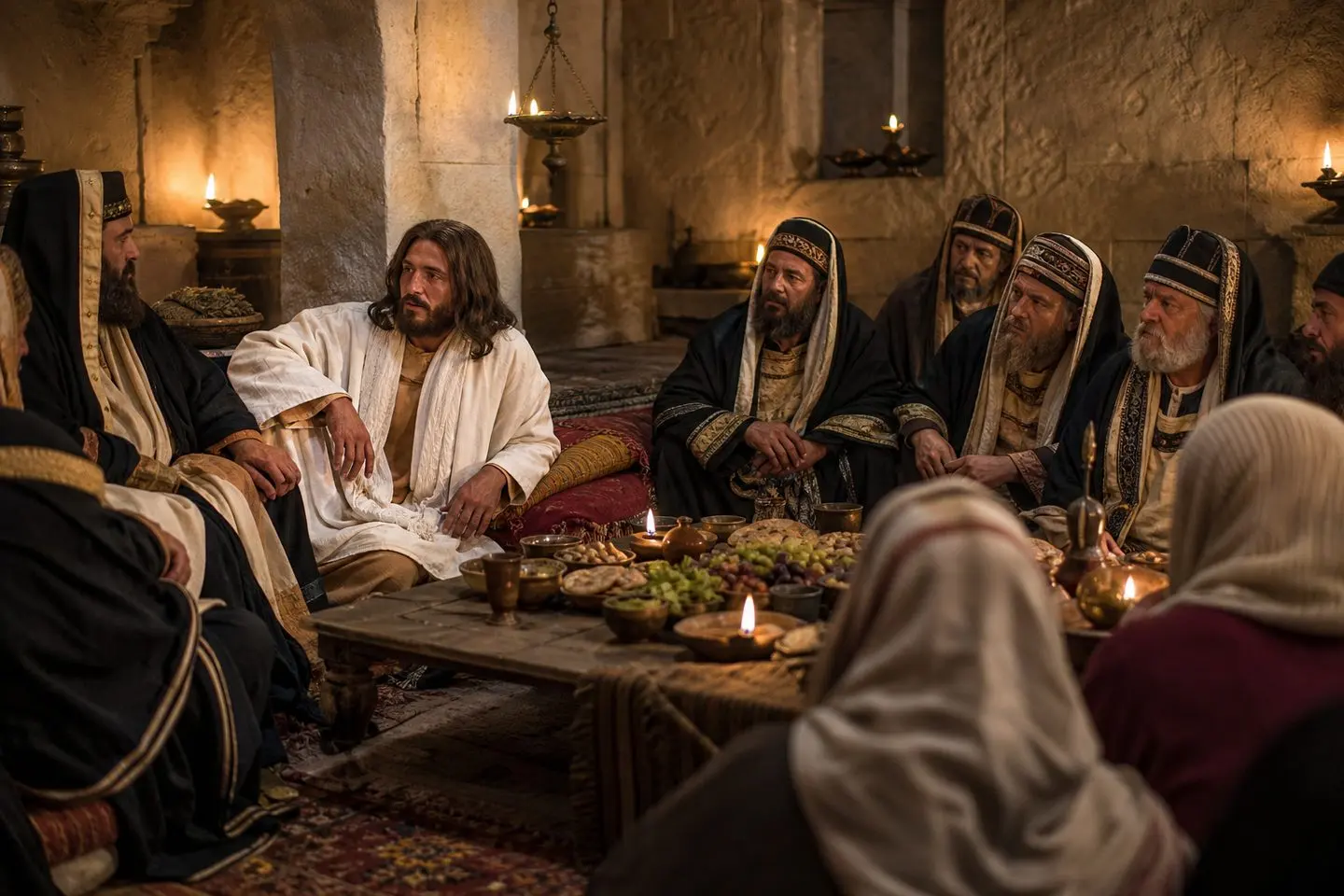
Watch this teaching in full above, and read on as we open it together.
- A Dinner Set as a Trap
- The Seats at the Feast: Whoever Exalts Himself Will Be Humbled
- Jesus Turns on the Host
- “Blessed Is He Who Shall Eat Bread in the Kingdom of God”
- The Parable of the Great Banquet
- Three Excuses, and Every One a Lie
- The Poor, the Maimed, the Lame, the Blind
- The Highways and the Hedges: A Prophecy of the Gentiles
- Counting the Cost on the Road Outside
- Salt That Keeps Its Savor
- A Prayer from a Man Who Counted the Cost
A Dinner Set as a Trap
Luke opens the scene with one thoroughly loaded sentence:
Now it happened, as He went into the house of one of the rulers of the Pharisees to eat bread on the Sabbath, that they watched Him closely. And behold, there was a certain man before Him who had dropsy. And Jesus, answering, spoke to the lawyers and Pharisees, saying, “Is it lawful to heal on the Sabbath?” But they kept silent. And He took him and healed him, and let him go.
Luke 14:1-4 (NKJV)
Invitations like this happened a lot, and not everyone at the table was a bad guy. Some Pharisees, think of Joseph of Arimathea and Nicodemus, genuinely wanted to study with Jesus but could not do it openly, so when a hostile colleague hosted Him, they would get themselves invited just to be near Him. But this dinner comes close to pure ambush. The intent was never hospitality. It was to catch Him doing something they could bring charges on, and their favorite charge was doing work on the Sabbath. Most of the Pharisees were lawyers; that is how they lorded it over everyone, twisting the law to suit their purposes.
By this point in Jesus’ ministry, crowds followed Him everywhere, a carnival atmosphere for some and a last hope for others, and a man with dropsy had followed Him right into the house, obviously sick and obviously wanting to be healed. Jesus reads hearts. He knew they were trying to jump Him, so He jumped them first with the question they were saving for Him. They kept silent, their opportunity slipped by, and He healed the man. Then He busted them: which of you, having a donkey or an ox fallen into a pit, will not immediately pull him out on the Sabbath day? They could not answer, because He knew, and they knew, that they all violate the very law they punish everybody else with. He jumps them, then He busts them. What a great beginning to a dinner party.
None of this came from a satchel of prepared stories. Jesus created parables on the fly, aimed at behavior happening right in front of His face, the pattern we traced in why Jesus taught in parables.
The Seats at the Feast: Whoever Exalts Himself Will Be Humbled
When the host called everyone to the table, they bolted for it. The Talmud prescribed three seats on each couch around the table: the center seat of honor, the right seat for the next most honorable, the left for the least. So the power players rushed to grab the center seats. They wanted the optics of honor, not the substance of honor. And how thick is the irony: the Son of God is in the room while they scramble for the good chairs.
Jesus, noting how they chose the best places, told them a parable. When you are invited to a wedding feast, do not take the best place, lest someone more honorable than you has been invited, and the host comes to say, give place to this man, and with shame you slide down to the lowest seat. He was talking about Himself. You all bolted for the center seats, and the Son of God is here at dinner.
But when you are invited, go and sit down in the lowest place, so that when he who invited you comes he may say to you, “Friend, go up higher.” Then you will have glory in the presence of those who sit at the table with you. For whoever exalts himself will be humbled, and he who humbles himself will be exalted.
Luke 14:10-11 (NKJV)
First will be last, and last will be first. They had no idea what He was talking about, because they are grabby. All they know is wanting whatever gives them the look of honor and power, and they never connect any of it to their own behavior. And things are about to get worse for them.

Jesus Turns on the Host
Nobody has even sat down to eat, and He has already delivered a reprimand parable to the whole room. Now He turns on the host. Pause on that, because this is what I do not get about so much Christian behavior. Here is Jesus, invited into a powerful man’s house, watching everything and getting right in their faces about what He sees. So where did the namby-pamby version of Christianity come from, the one where we never speak up, where we walk into an important dinner acting meek and intimidated? That is not the example of our Savior. I do not know who made that junk up. I think it is just easy to be weak and a chicken.
When you give a dinner or a supper, do not ask your friends, your brothers, your relatives, nor rich neighbors, lest they also invite you back, and you be repaid. But when you give a feast, invite the poor, the maimed, the lame, the blind. And you will be blessed, because they cannot repay you; for you shall be repaid at the resurrection of the just.
Luke 14:12-14 (NKJV)
He is not saying there is anything wrong with having your relatives and friends over. He is saying do not act like you did some great thing, because you will get every bit of it back; every one of those guests will invite you to their table in turn. You sacrificed nothing. But when you give where there is no hope of reimbursement, that is a gift, and that is God seeing you give. It is the same heart Jesus put on display on the Jericho road in the Parable of the Good Samaritan: mercy spent on someone who can never pay it back.
“Blessed Is He Who Shall Eat Bread in the Kingdom of God”
Then something interesting happens at the table.
Now when one of those who sat at the table with Him heard these things, he said to Him, “Blessed is he who shall eat bread in the kingdom of God!”
Luke 14:15 (NKJV)
I have looked all over, and I cannot find a compelling explanation for this comment. It may be completely sincere: the man is reclining near somebody he knows claims to be the Son of God, the evening has been one reprimand after another, and maybe he is trying to defuse the room. True enough, it will be blessed to eat bread in the kingdom of God. It could also be sarcasm, a man grabbing for a little power in the judo of a dinner where Jesus keeps throwing everyone. Either way, because of this comment and everything preceding it, Jesus answers with a parable, created on the fly out of all this bad behavior.
The Parable of the Great Banquet
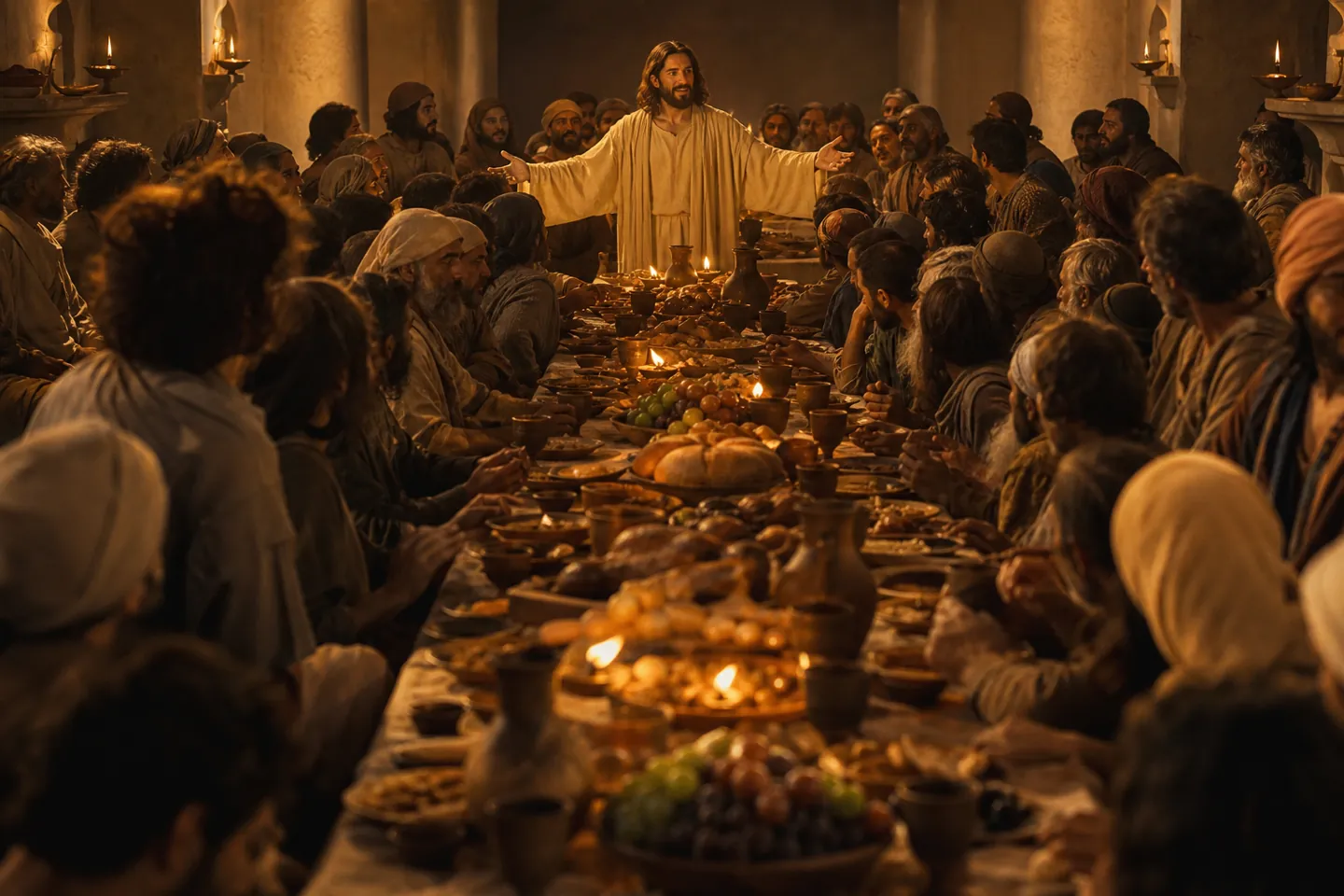
Then He said to him, “A certain man gave a great supper and invited many, and sent his servant at supper time to say to those who were invited, ‘Come, for all things are now ready.’ But they all with one accord began to make excuses. The first said to him, ‘I have bought a piece of ground, and I must go and see it. I ask you to have me excused.’ And another said, ‘I have bought five yoke of oxen, and I am going to test them. I ask you to have me excused.’ Still another said, ‘I have married a wife, and therefore I cannot come.'”
Luke 14:16-20 (NKJV)
Understand the custom, because every man at that table lived it. A great supper took serious logistics. First an invitation went out, and everyone had to confirm, because the host needed a firm count to know how much to prepare. Then, on the day of the banquet, at the moment everything was ready, the servant went to each confirmed guest with the summons: the meal is prepared, come now. Nobody stood around waiting for the food to cook; the whole evening was designed to flow. Which means every one of these guests had already said yes.
Three Excuses, and Every One a Lie
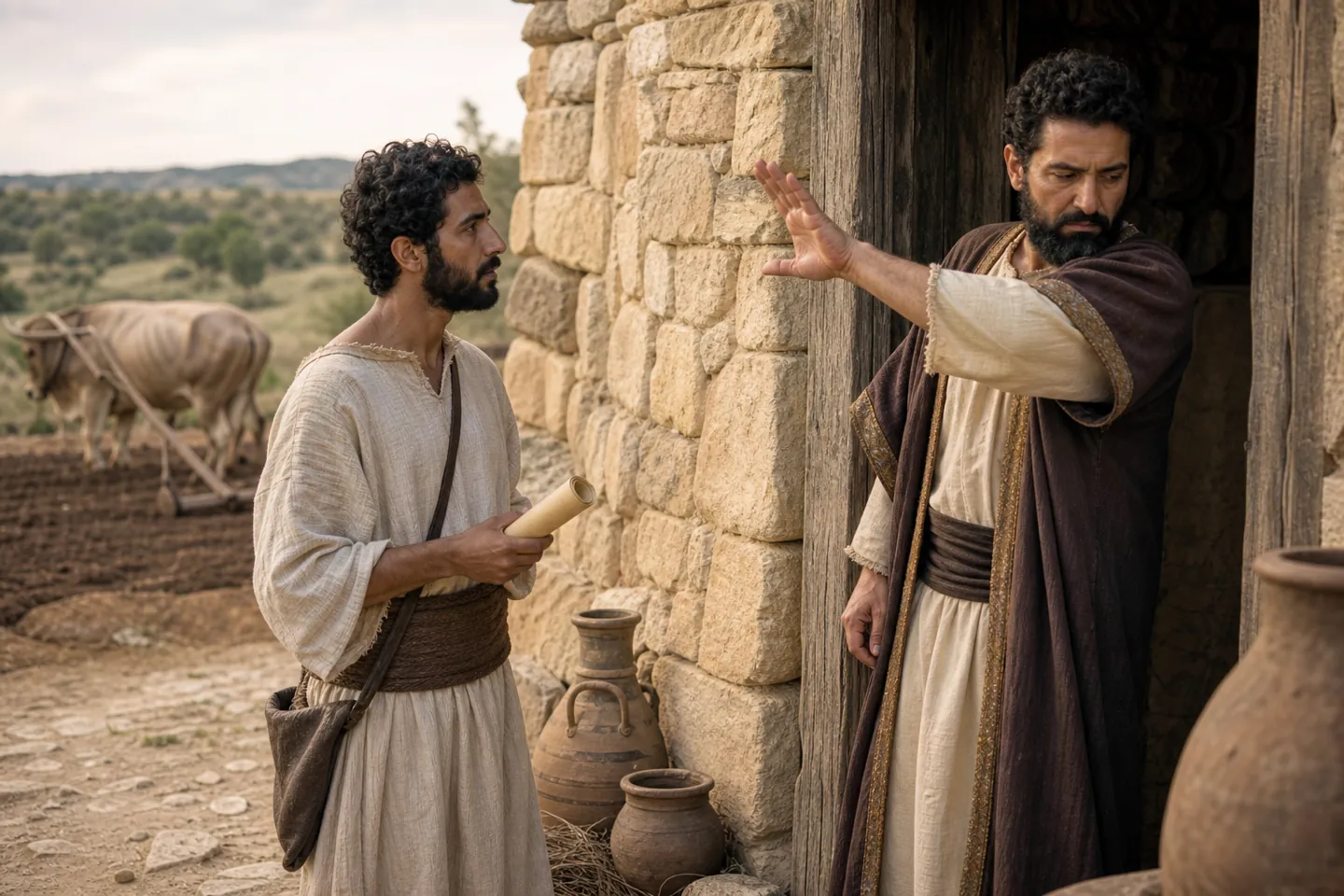
Jesus, on purpose, makes the excuses incredibly lame. I have bought a piece of ground and I must go see it: nobody in that world bought land without first walking it off, checking the drainage, seeing what his options were. An obvious lie. I have bought five yoke of oxen and I am going to test them: a yoke is two oxen, so this man claims ten, and a team has to be matched perfectly in strength or it will never pull a straight furrow; the stronger ox keeps dragging the plow off line. You test oxen before you buy them, never after. A fantastic lie. And the third: I have married a wife and therefore I cannot come. What are the chances he got married between his confirmation and the meal? And even if he had, why not bring her? Since when does a bride turn down a feast? They are all lying.
That is the picture: the offer is constantly given, and people cannot be bothered. They cannot be bothered with securing their own salvation. And it is truly a banquet.
The Poor, the Maimed, the Lame, the Blind
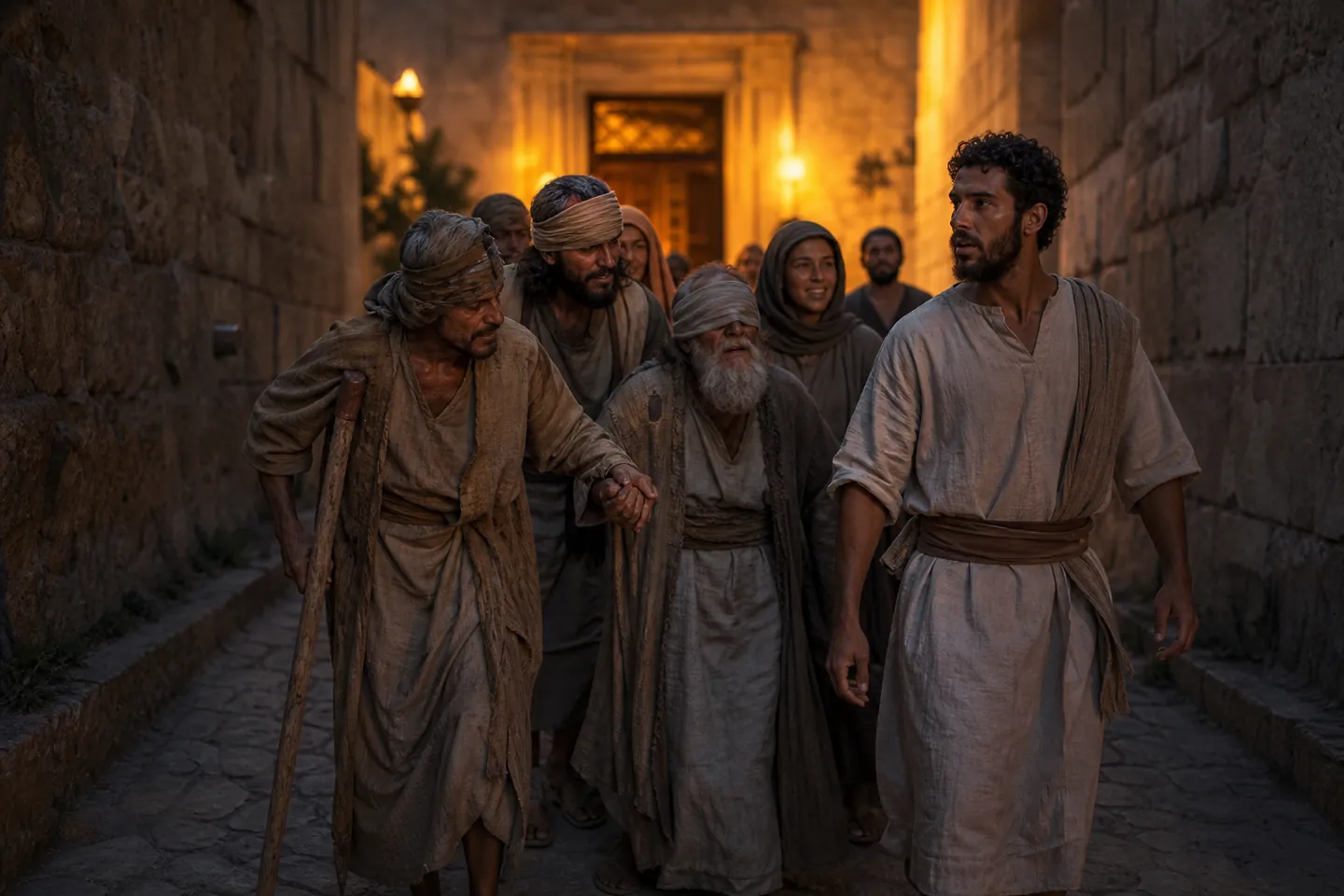
So that servant came and reported these things to his master. Then the master of the house, being angry, said to his servant, “Go out quickly into the streets and lanes of the city, and bring in here the poor and the maimed and the lame and the blind.”
Luke 14:21 (NKJV)
Notice: it is the exact guest list Jesus had just handed the host. Within the city, the servant goes to the destitute, the people who never get invited anywhere, who struggle just to survive each day. If you want to put a smile on God’s face, that is the table you set.
The Highways and the Hedges: A Prophecy of the Gentiles
And the servant said, “Master, it is done as you commanded, and still there is room.” Then the master said to the servant, “Go out into the highways and hedges, and compel them to come in, that my house may be filled. For I say to you that none of those men who were invited shall taste my supper.”
Luke 14:22-24 (NKJV)
Still there is room. Hear what the servant is reporting: he went out to people who never get invited anywhere, and a bunch of them did not want to come either. By now we know who is throwing this banquet. The master of the house is God Almighty. So when he sends the servant out to the highways and hedges, outside the city, this is prophecy inside the parable: go and get the Gentiles. I do not care what the rules say. I want My house filled. I want this banquet enjoyed. And if the Jews will not have it, let us see if the Gentiles will. It is exactly what history did, and exactly what we still see. What percentage of the global population do you think cannot be bothered, waving off the invitation with some lame excuse? Is it eighty percent? Is it more than eighty percent? I hate to think about it.
The master in the parable of the great banquet is angry, and I will fill in a little here: I think Jesus is angry at this point. He is surrounded by people whose hearts are evil, and He loves sharing the truth, even with the crowds that follow Him. It is just like Holy Week: thousands crying hosanna and laying palms so the donkey’s feet would not touch the ground, and the next day screaming for His crucifixion. No substance to their choice. What they liked was the carnival atmosphere: let’s follow Jesus, he does miracles, sometimes food just appears and everybody eats. That has nothing to do with a life of faith.
And watch the pronoun. The parable began in the third person: a certain man gave a great supper. It ends in the first person: none of those men who were invited shall taste My supper. I believe He is telling that table: none of you are going to taste My supper. Your hearts are just too barren. And then I see Him walking out of the place. Near the end of His ministry Jesus told a companion feast parable with an even harder ending, and we open it in the Wedding Feast and the Wicked Husbandmen.
Counting the Cost on the Road Outside
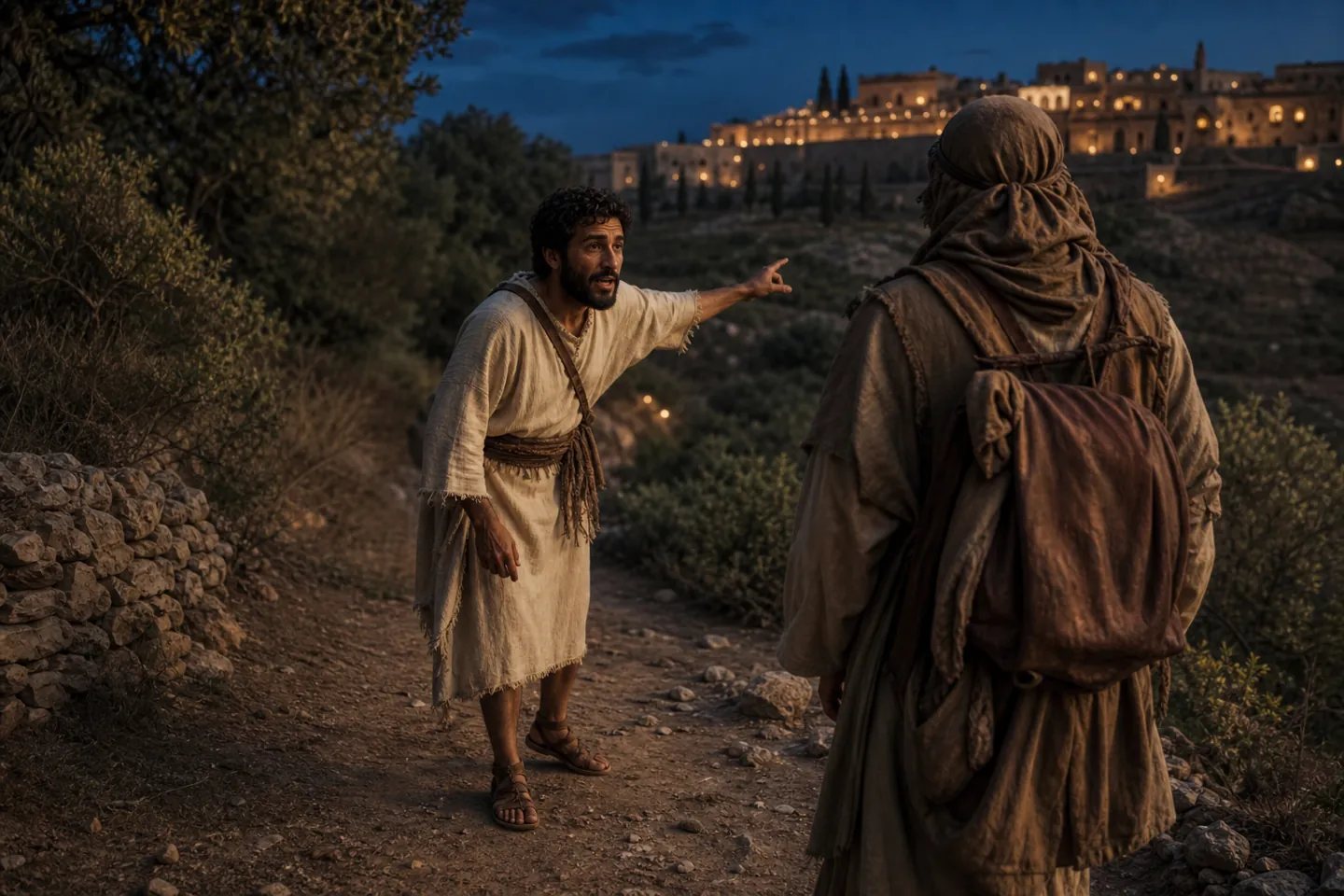
Great multitudes had followed Him even into that wealthy neighborhood, and as He leaves, they surge after Him. He is, I think, in a mood. He turns and says:
If anyone comes to Me and does not hate his father and mother, wife and children, brothers and sisters, yes, and his own life also, he cannot be My disciple. And whoever does not bear his cross and come after Me cannot be My disciple.
Luke 14:26-27 (NKJV)
His own disciples heard sayings like this and went off with their heads down: this is a hard saying, who can keep it? But Jesus is doing something deliberate. He is thinning out the crowd. You do not get it, He is saying. This is not free food and miracles and a grin. This requires sacrifice. Then He gives them two pictures.
For which of you, intending to build a tower, does not sit down first and count the cost, whether he has enough to finish it; lest, after he has laid the foundation, and is not able to finish, all who see it begin to mock him, saying, “This man began to build and was not able to finish”?
Luke 14:28-30 (NKJV)
Is He talking about construction? No. He is talking about fair weather followers with a fair weather faith. The minute anything gets tough, they fold up shop and walk away, and everybody who watched them pray and talk about Jesus starts mocking: this man began to build and was not able to finish. Jesus is saying, this cannot be how My church gets built, not a church with no foundation. It has to be a church with a foundation of sacrifice. And we see the other kind all the time: fair weather Christianity, fair weather priests, fair weather pastors, folding at the first social pressure.
The second picture is a king with ten thousand men facing a king with twenty thousand. You have to sit down and ask: am I willing to face impossible odds and trust God in that situation, or will I send a delegation while the enemy is still a great way off and ask conditions of peace? In other words, I will make peace with evil, because evil looks stronger than me. We saw it during the pandemic. The bars were open, the strip clubs were open, but the churches closed up, and very few pastors stood and said no. You think the church was not being targeted? Do not kid yourselves. Jesus is a target in this chapter, and His people are targets now; the power players of this world cannot stand us, and they hate our faith. So He presses it all the way down: the follower who will not forsake everything he has cannot be His disciple. Faith is serious business, and we need believers who can count the cost and pay the price. Plenty of people will say they can count the cost. Will they pay the price? I am afraid we are going to find out.
Salt That Keeps Its Savor
Salt is good; but if the salt has lost its flavor, how shall it be seasoned? It is neither fit for the land nor for the dunghill, but men throw it out. He who has ears to hear, let him hear!
Luke 14:34-35 (NKJV)
Salt carries several meanings in the New Testament, but here it means self sacrifice. If sacrifice loses its will, if we say, I do not think I can go that far, we are like salt that has lost its savor: not fit for anything, and certainly not fit for following Jesus. And remember who is speaking. This Man knows that in a few days He will be murdered, and that His disciples will be murdered after Him. He who has ears to hear, let him hear.
A Prayer from a Man Who Counted the Cost
The invitation of the parable of the great banquet is still going out, and the Master still wants His house filled. Only one question is left on the table: will we come when everything is ready, and will we count the cost when we do? We continue through Jesus’ Luke parables in The Prodigal Son, the Lost Sheep, and the Lost Coin, where the God who fills a banquet hall does not wait for the lost to wander in; He goes out searching for them.
We close with the evening prayer of a man who counted the cost. George Washington wanted nothing more than to be at his farm, working on his architectural projects and developing his land; that is where his heart was. But his country kept asking for him, and he kept answering. That is what we need now: patriots, and Christians above all, who will wake up, listen up, stand up, and speak up. Waking up is the part Christians are worst at. Listening up is not passive; seek the truth and dig for it, because finding it takes work these days, and the truth will set you free. And once you know it, stand up when you hear falsehood and speak up against it. Hear how a man like that examined himself before God at the end of a day:
But O God, who art rich in mercy and plenteous in redemption, mark not, I beseech Thee, what I have done amiss; remember that I am but dust, and remit my transgressions, negligences, and ignorances, and cover them all with the absolute obedience of Thy dear Son, that those sacrifices which I have offered may be accepted by Thee in and for the sacrifice of Jesus Christ offered upon the cross for me… Give me grace that by the call of the gospel I may rise from the slumber of sin into the newness of life.
Evening prayer attributed to George Washington
Man, I wish we had statesmen who could pray like that. Better still, let us become people who pray like that. The supper is ready. Come.
Further Reading
For deeper verse by verse study of this chapter, David Guzik's commentary at Enduring Word is an excellent companion, and GotQuestions offers a concise summary of the parable's interpretation.
Chuck's own study over the years has leaned most on six teachers. If you want to keep going after this parable, their work is where he would send you:
- John MacArthur at Grace to You
- James Burton Coffman, whose Coffman Commentaries are free at StudyLight
- Charles Stanley at In Touch Ministries
- Robert Deffinbaugh at Bible.org
- Chuck Swindoll at Insight for Living
- David Guzik at Enduring Word
How this study was written: it comes from Chuck Frank’s own teaching on this passage. It was put into writing with the help of AI editing tools, then reviewed by Chuck for faithfulness to his message and to Scripture.