
February 14, 2026
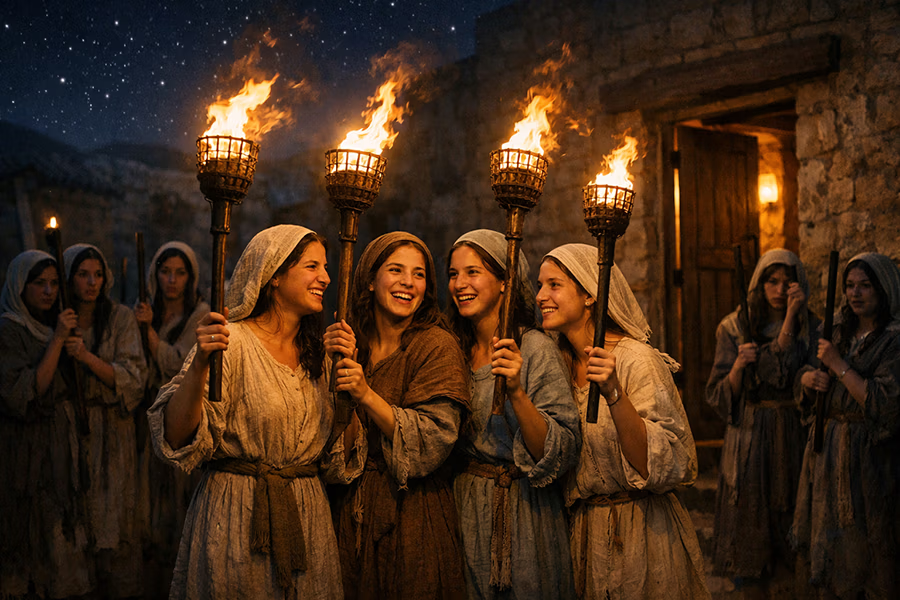
The Ten Virgins parable in Matthew 25:1-13 is one of Jesus’ most powerful teachings on spiritual readiness for His Second Coming. Paired with The Friend at Midnight in Luke 11:1-13, these two parables reveal that being prepared for Christ’s return requires both a genuine relationship with the Holy Spirit and a vibrant, persistent prayer life that keeps our spiritual lamps burning bright.
Table of Contents
Understanding the Parable of the Ten Virgins
What is the Parable of the Ten Virgins about? The Parable of the Ten Virgins is Jesus’ teaching in Matthew 25:1-13 about spiritual readiness for His Second Coming. Ten bridesmaids await the bridegroom, but only five bring extra oil for their torches. When he arrives at midnight, the five without oil are locked out, illustrating that outward appearance is no substitute for genuine faith.
The Parable of the Ten Virgins is found in what scholars call the Olivet Discourse, spanning Matthew chapters 24 and 25. These chapters record some of the most urgent words Jesus ever spoke to His apostles, all delivered near the time He was heading to Jerusalem for the final time. The central theme across both chapters is the Second Coming, and Jesus was determined that His followers grasp its significance. As Chuck Frank teaches in this powerful lesson from our Bible Messages series, the entire Old Testament contained specific details about the Messiah, yet when He arrived, nearly everyone missed it. Jesus makes clear that missing the Second Coming carries an entirely different and permanent consequence.
The Jewish Wedding Tradition: Context for the Ten Virgins
To understand the ten virgins, we must first step into the world of first-century Jewish culture. Two thousand years ago in a small Jewish village, a wedding was a monumental event that involved the entire community. There were three distinct stages to a Jewish wedding:
- The Engagement was a legal contract negotiated between the fathers of the bride and groom, covering practical provisions and living arrangements.
- The Betrothal was a private ceremony where the bride and groom exchanged vows before close family members.
- The Wedding Feast was the grand public celebration that could last up to a week.
After the betrothal, the couple lived apart for an entire year. The groom would demonstrate his ability to provide, often building a room onto his father’s house or tilling land and planting a crop. The bride would prepare household necessities with her mother. This period gave both families time to observe one another and build trust, a stark contrast to modern customs.
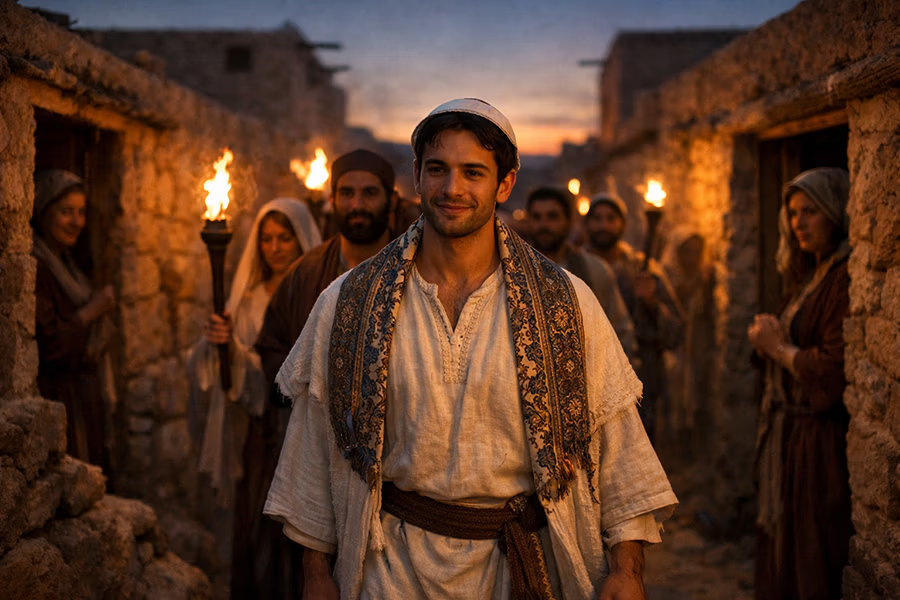
When the year was complete, the groom would walk with his wedding party to the bride’s family home for the formal farewell. This goodbye could last hours, as it was a deeply emotional occasion. Meanwhile, the bridesmaids and other guests would gather at the groom’s home, where the wedding feast would take place.
Torches, Not Lamps: What the Ten Virgins Actually Carried
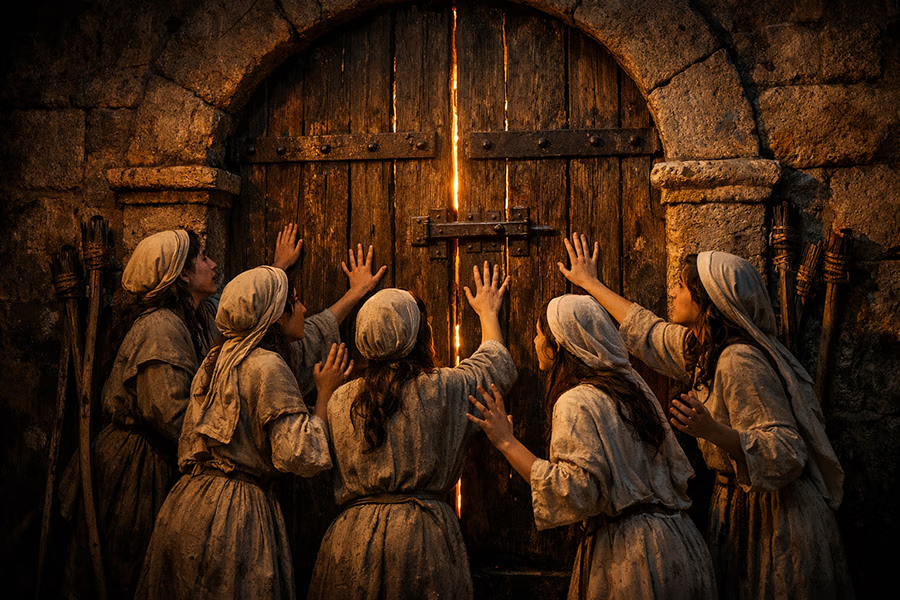
One important detail often lost in translation involves the word “lamp.” In the original text, the ten virgins did not carry small oil lamps. They carried torches, long sticks with wire baskets at the top, stuffed with rags and soaked in oil. These torches served a dual purpose: they lit the path through the village at night, and once inside, they provided the lighting for the wedding feast itself. In a very real sense, carrying a lit torch was your ticket into the celebration.
The Wise and Foolish: A Parable of Spiritual Preparedness
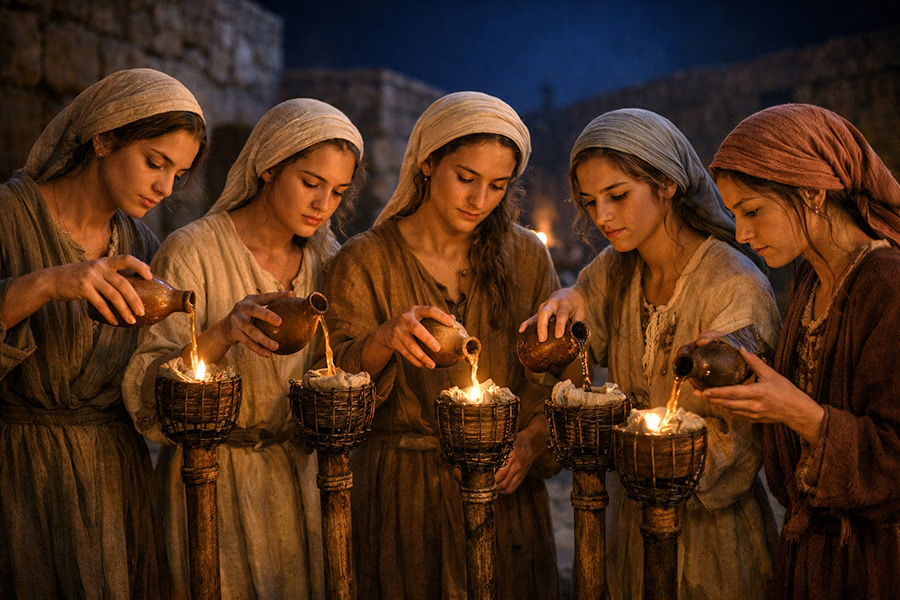
What is the difference between the wise and foolish virgins? The five wise bridesmaids brought extra flasks of oil for their torches, showing foresight and genuine preparation. The five foolish ones carried no reserve oil. When the bridegroom was delayed until midnight, all ten fell asleep, but only the wise could relight their torches when the call came. Their preparedness represents the indwelling of the Holy Spirit.
Jesus describes the ten virgins in vivid terms. The Amplified translation calls the five foolish bridesmaids “thoughtless, silly, and careless,” while the five wise ones were “farsighted, practical, and sensible.” If you saw all ten walking together toward the groom’s house, they would have looked identical, dressed alike with torches in hand. You could not tell them apart by appearance alone.
This is the heart of the parable. Jesus is saying that in our churches today, the same reality exists. On any given Sunday morning, a congregation may look like a unified body of believers, all singing hymns and going through the motions of worship. But Jesus teaches that you cannot judge spiritual readiness by outward appearance alone. Just as Chuck Frank explores in his teaching on The Wheat and the Tares, the genuine and the superficial often grow side by side, indistinguishable to the human eye. According to this parable of the ten virgins, a sobering number of those who identify as Christians may not be truly prepared for Christ’s return.
The Oil That Keeps Your Lamp Burning
What does the oil represent in the ten virgins parable? The oil in the ten virgins parable represents the Holy Spirit and a genuine, living relationship with Jesus Christ. Just as oil fuels the torch and produces visible light, the Holy Spirit indwells believers and produces the visible fruit of salvation. Without that indwelling, there is no light to shine.
Salvation by Grace, Not Works
Before we can talk about keeping our oil supply full, we must establish a foundational truth. You cannot get to heaven by good works. If salvation were earned through effort, then Satan could always argue that your work was insufficient or inferior. Scripture tells us that our best efforts are as “filthy rags” before a holy God (Isaiah 64:6). We enter heaven solely by the grace of God through faith in Jesus Christ. As Chuck Frank emphasizes, God draws us to Himself, and for every one of us, that drawing came at a time when we were actively rejecting Him. The cost of this gift was the agonizing sacrifice of His Son on the cross.
So how do we keep our oil supply full? Through the three legs of the stool that sustain spiritual life:
- Be in the Word of God daily, studying and meditating on Scripture.
- Pray constantly, maintaining an ongoing conversation with the Father.
- Fellowship with believers, gathering regularly with other Christians.
These three disciplines function like a spiritual engine. When they work together, believers discover something remarkable: the Christian life becomes a kind of perpetual motion where faithfulness generates its own energy and momentum. This connects directly to the wisdom found throughout our Proverbs study series, where Solomon repeatedly teaches that walking in God’s ways produces life, strength, and fruitfulness.
Let Your Light So Shine: Matthew 5:15 and the Ten Virgins
Jesus adds another layer to this teaching that many pastors overlook. In Matthew 5:15-16, He says:
“Let your light so shine before men, that they may see your good works and glorify your Father in heaven.”
Notice the specific language. Jesus did not say, “Make your light shine.” He did not say, “Struggle to keep your light lit.” He said “Let” your light shine. The word implies getting out of the way so that the natural byproduct of salvation, the light of Christ within you, can radiate outward. When you combine that inner light with the specific gifts God has given you, something organic happens. People see you operating in your calling, and they recognize that something unique and special is at work. As the teaching on The Parable of the Talents reminds us, every believer has been entrusted with gifts meant to be invested for God’s Kingdom. The result is not your glory but theirs: they will “glorify your Father in heaven.”
The Sobering Warning: “I Do Not Know You”
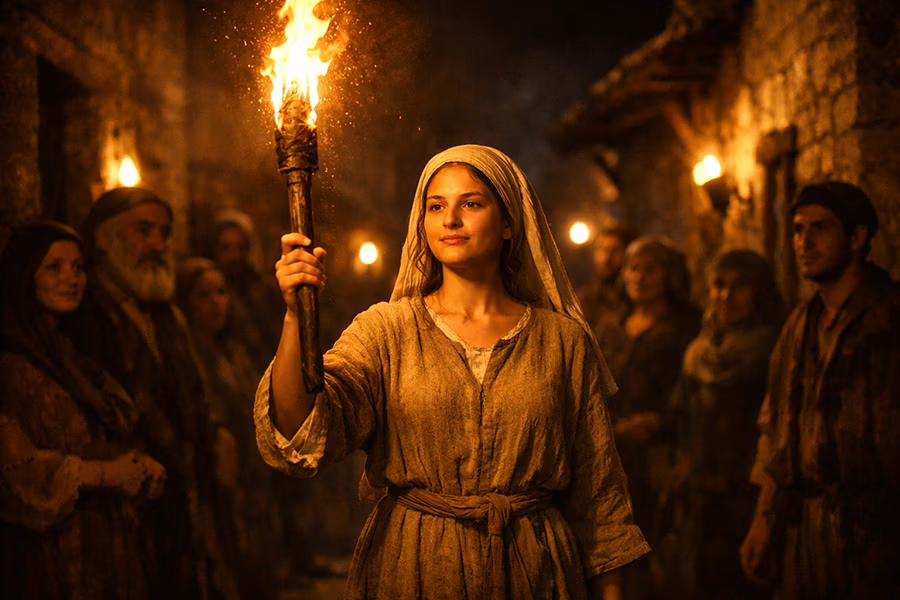
What happens to the foolish virgins in the parable? When the five foolish bridesmaids return after trying to buy oil, they find the door to the wedding feast shut and locked. They cry out, “Lord, Lord, open the door for us!” But the bridegroom replies with devastating finality: “I assure you and most solemnly say to you, I do not know you.” This represents exclusion from God’s Kingdom.
This is one of the hardest teachings in all of Scripture. Five young women who were part of the wedding party, who expected to attend the feast, who looked identical to the wise bridesmaids, are turned away with the words, “I do not know you. We have no relationship.” The door is shut and locked behind them.
The parable reveals a truth that should give every believer pause. Salvation cannot be borrowed or transferred. When the foolish bridesmaids ask the wise ones for oil, the answer is no, because one person’s salvation cannot cover another. Each individual must secure their own relationship with Christ. This is why Chuck Frank stresses that the parable of the ten virgins is not about crisis management but about daily faithfulness. Those who live in genuine relationship with the Holy Spirit, nourishing that connection through the spiritual resources God has provided, will find their torches burning bright when the midnight cry comes.
The timing itself is significant. Jesus says the bridegroom will come “at a time when you least expect it.” It will likely not be during a season of hardship when people are thinking about their mortality and salvation. It will come during the good times, when life is comfortable and attention has drifted. This warning echoes the urgency found in the Rich Fool and Good Shepherd parables, where Jesus warns against the deadly complacency of earthly comfort.
The Friend at Midnight: Jesus Teaches Us to Pray
What is the Parable of the Friend at Midnight? The Friend at Midnight in Luke 11:5-8 is a parable Jesus told to teach about persistent prayer. A man knocks on his friend’s door at midnight, needing bread to serve an unexpected guest. Despite the friend’s reluctance, the man’s persistence wins out. Jesus uses this contrast to show that God is far more willing to answer prayer than any reluctant neighbor.
After the apostles hear the sobering message of the ten virgins, Luke’s Gospel records their reaction. Watching Jesus pray constantly, moving away for privacy to have uninterrupted time with the Father, the disciples finally ask, “Lord, teach us to pray, as John taught his disciples” (Luke 11:1). They are beginning to understand that prayer is not an accessory to faith; it is the foundation.
The Lord’s Prayer: A Foundation for Every Believer
Jesus responds with what we know as the Lord’s Prayer, but the translation carries a deeper meaning than most realize. When Jesus says “When you pray, say…” the original word He uses for Father is Abba, the most intimate, childlike expression for “Daddy.” This is how Jesus instructs us to approach the Creator of the universe: not with formal distance but with the tender closeness of a child speaking to a beloved parent.
Jesus lays out a prayer framework with four essential elements:
- Honor God first. “Hallowed be thy name” requires that we begin by acknowledging God’s holiness.
- Pray for Christ’s return. “Thy kingdom come” is a daily acknowledgment of the Second Coming.
- Ask for daily provision. “Give us day by day our daily bread” teaches contentment and simplicity.
- Seek forgiveness and forgive others. “Forgive us our sins, for we also forgive everyone indebted to us” links our forgiveness directly to our willingness to forgive.
This final point is especially challenging. Jesus places it among the top four priorities of prayer because He knew it would be one of our greatest struggles. As our community of believers seeks to grow together in faith, this principle of mutual forgiveness remains essential.
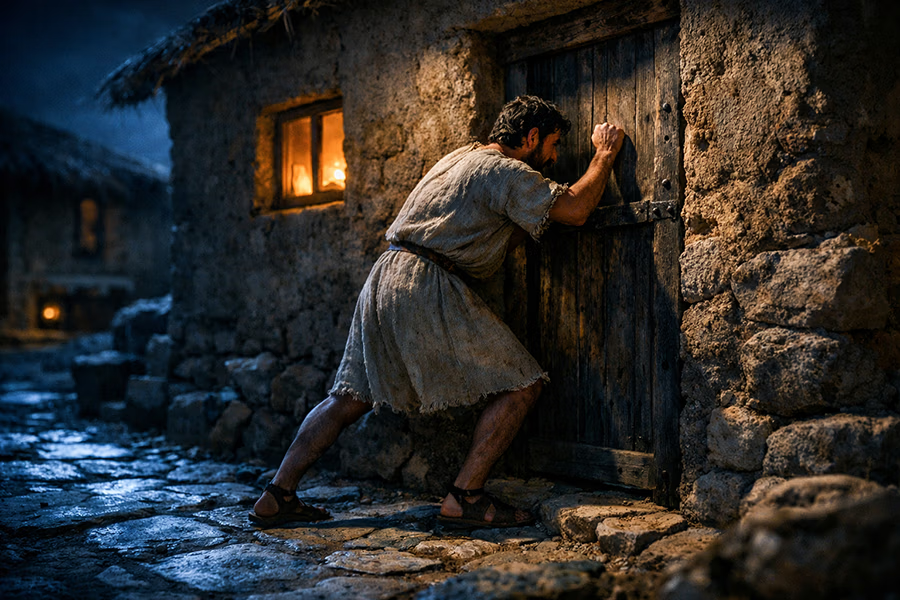
The Parable of the Persistent Friend
Knowing the disciples still do not fully grasp the teaching, Jesus tells the parable of the friend at midnight. A man receives an unexpected visitor who is hungry and weary from traveling. In the hospitality culture of the ancient Near East, failing to provide for a guest brought serious shame upon the entire family. Desperate, the man runs to his neighbor’s home at midnight and begins knocking.
To understand the neighbor’s reluctance, we must picture the scene. In a typical first-century home, the entire family, including small children, slept together in a single room on a raised platform. The floor was dirt. Getting the children to bed was a careful process: each child washed, had their feet cleaned, and was carried into bed one by one. Once everyone was settled and the door was locked, no one moved until morning. The man inside the house says, “The door is shut and my children are with me in bed. I cannot rise and give to you.”
But the man outside keeps knocking. His persistence, what the King James Version calls his “importunity,” eventually compels the neighbor to get up and give him not just the three loaves requested but “as many as he needs.”
Ask, Seek, Knock: The Progression of Prayer
What does “Ask, Seek, Knock” mean in Luke 11? Jesus teaches a three-stage progression in prayer found in Luke 11:9-10. Asking is bringing your requests to God. Seeking means looking for signs of God’s response and direction. Knocking represents all-out, intense, persistent prayer. This progression moves the believer from casual petition to deep, committed communion with God.
Here is where Jesus draws the crucial contrast. The man in bed represents a reluctant, inconvenienced human, not God. God is never annoyed by our prayers. The more we pray, the more He delights in it because He created us for relationship with Him. If even a cranky neighbor will respond to persistence, how much more will a loving Father respond to His children?
Jesus then outlines a powerful progression:
- Ask and it shall be given to you. Begin by simply bringing your request to God.
- Seek and you shall find. If the answer does not come, seek the face of God, looking for any sign that He is listening, any indication of direction.
- Knock and it shall be opened unto you. If seeking does not produce an answer, move to all-out, intense, repetitive prayer with the full force of your faith.
This progression is not a formula but a deepening of relationship. Each stage draws the believer closer to God’s heart. As Jonah discovered in the belly of the great fish, even prayers from the depths of despair reach the ears of a merciful God.
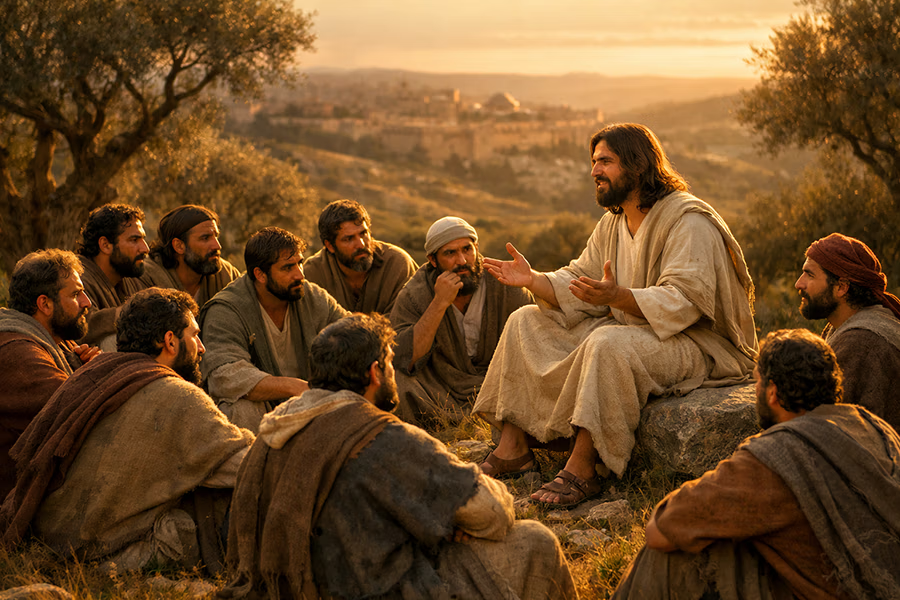
The Father Who Gives Good Gifts
Jesus drives the point home with three vivid contrasts:
“If a son shall ask bread of any of you that is a father, will he give him a stone? Or if he asks a fish, will he for a fish give him a serpent? Or if he shall ask for an egg, will he offer him a scorpion?” Luke 11:11-12
These absurd opposites make the point unmistakable. If flawed human parents know how to give good gifts to their children, how much more will the Heavenly Father give the Holy Spirit to those who ask? This is the golden thread connecting both parables. The oil of the ten virgins, the bread of the friend at midnight, and the good gifts of the Father all point to the same reality: the Holy Spirit is the source of everything we need. Learning to choose wisdom over foolishness, as Solomon teaches in Proverbs 9, begins with recognizing that the fear of the Lord is the starting point of all understanding.
Keeping Your Torch Lit in a Dark World
How do believers stay spiritually prepared for Christ’s return? Believers stay prepared by maintaining a vibrant relationship with the Holy Spirit through daily Bible reading, persistent prayer, and regular fellowship with other Christians. These three disciplines keep the oil of the Spirit flowing, ensure the light of Christ shines through good works, and build readiness for the Lord’s return.
The Holy Spirit is the oil that fuels your torch. But that Spirit can be grieved. Chuck Frank warns that sinful behavior, neglecting your body (which is the temple of the Holy Spirit), and failing to honor God’s presence within you creates spiritual “racket” that drowns out the still, small voice. When the Holy Spirit is in harmony with your life, He does not need to shout. A gentle whisper is enough, and you recognize it instantly, whether it is a warning about a dishonest business partner, a nudge toward a person who needs encouragement, or a conviction about an area of your life that needs correction.
This is the abundant life Jesus promised. When your prayer life is tuned and your relationship with the Spirit is strong, letting your light shine is not a burden. It becomes the natural overflow of a life aligned with God’s purposes. People see that light and are drawn not to you but to the Father, exactly as Jesus intended. The Five Smooth Stones teaching series offers practical tools for building this kind of spiritually disciplined life.
As believers who understand that a constitutional republic depends on a faithful populace, we carry a dual responsibility. Our light must shine not only in our homes and churches but in every sphere of influence where we are called to serve, from our communities to the public square.
Conclusion: Be Ready, Be Prayerful, Be Faithful
The Parable of the Ten Virgins and The Friend at Midnight deliver two sides of the same message. First, be ready. The Bridegroom is coming, and when He does, the door will close. There will be no second chances to borrow someone else’s oil. Second, be prayerful. Prayer is not a last resort or an emergency measure; it is the daily discipline that keeps your spiritual oil reservoir full and your torch burning bright.
Take inventory of your spiritual life today. Are you among the wise who carry extra oil, or have you been coasting on outward appearances? Are you asking, seeking, and knocking in prayer, or have you settled for one-off requests that you never revisit?
Jesus said it plainly: “Be on the alert. Be prepared and ready, for you do not know the day nor the hour when the Son of Man will come.” The best time to fill your lamp is now. If you are looking for deeper teaching on Jesus’ parables and their relevance to modern life, explore the growing collection of studies in The Pearl of Great Price and Dragnet and other related resources on our site.
Frequently Asked Questions (FAQs)
What does the oil represent in the Parable of the Ten Virgins?
The oil represents the Holy Spirit and a genuine saving relationship with Jesus Christ. Just as physical oil fuels a torch and produces visible light, the Holy Spirit indwells believers and produces the visible fruit of authentic faith. Without the Spirit’s presence, there is no spiritual light to shine (Zechariah 4:1-7).
Can someone else share their salvation with me, like the wise virgins sharing oil?
No. That is precisely the point of the parable. Salvation is an individual matter between each person and God. The wise bridesmaids could not share their oil because one believer’s relationship with Christ cannot cover another person. Each person must receive the gift of salvation personally through faith in Jesus Christ.
What is the main lesson of The Friend at Midnight parable?
The Friend at Midnight teaches that believers should approach God with boldness and persistence in prayer. The reluctant neighbor eventually responds because of the man’s relentless knocking. Jesus contrasts this with God, who is never reluctant or annoyed by our prayers. The parable encourages a progression from asking to seeking to knocking, deepening our communion with the Father.
How do the Parable of the Ten Virgins and The Friend at Midnight connect to each other?
Both parables address spiritual readiness from complementary angles. The ten virgins parable warns about the consequences of being unprepared for Christ’s return, while the friend at midnight teaches the method of staying prepared through persistent prayer. Together, they show that readiness requires both the indwelling of the Holy Spirit (the oil) and an active prayer life (the knocking) that keeps that relationship vibrant.
Further Reading
- David Guzik’s Study Guide for Matthew 25 on Blue Letter Bible – Detailed verse-by-verse commentary on the ten virgins and the parable of the talents.
- Enduring Word Bible Commentary on Luke 11 – Comprehensive commentary on the Lord’s Prayer and the Friend at Midnight parable with historical context.
- GotQuestions: What Is the Meaning of the Parable of the Ten Virgins? – Clear, concise explanation of the ten virgins parable from a trusted evangelical resource.
- Matthew 25 (NKJV) on Blue Letter Bible – Read the full text of the Ten Virgins parable with Greek word study tools and cross-references.
