
March 7, 2026
The Parable of the Minas in Luke 19 is one of the most urgent and personal teachings Jesus ever delivered. Found alongside the remarkable account of Zacchaeus in the Bible, this chapter answers two questions every believer must face: What does genuine salvation look like? And what does God expect us to do with the gifts He gave us before He returns?
Table of Contents
Zacchaeus in Jericho: A Man Who Refused to Stay in the Crowd
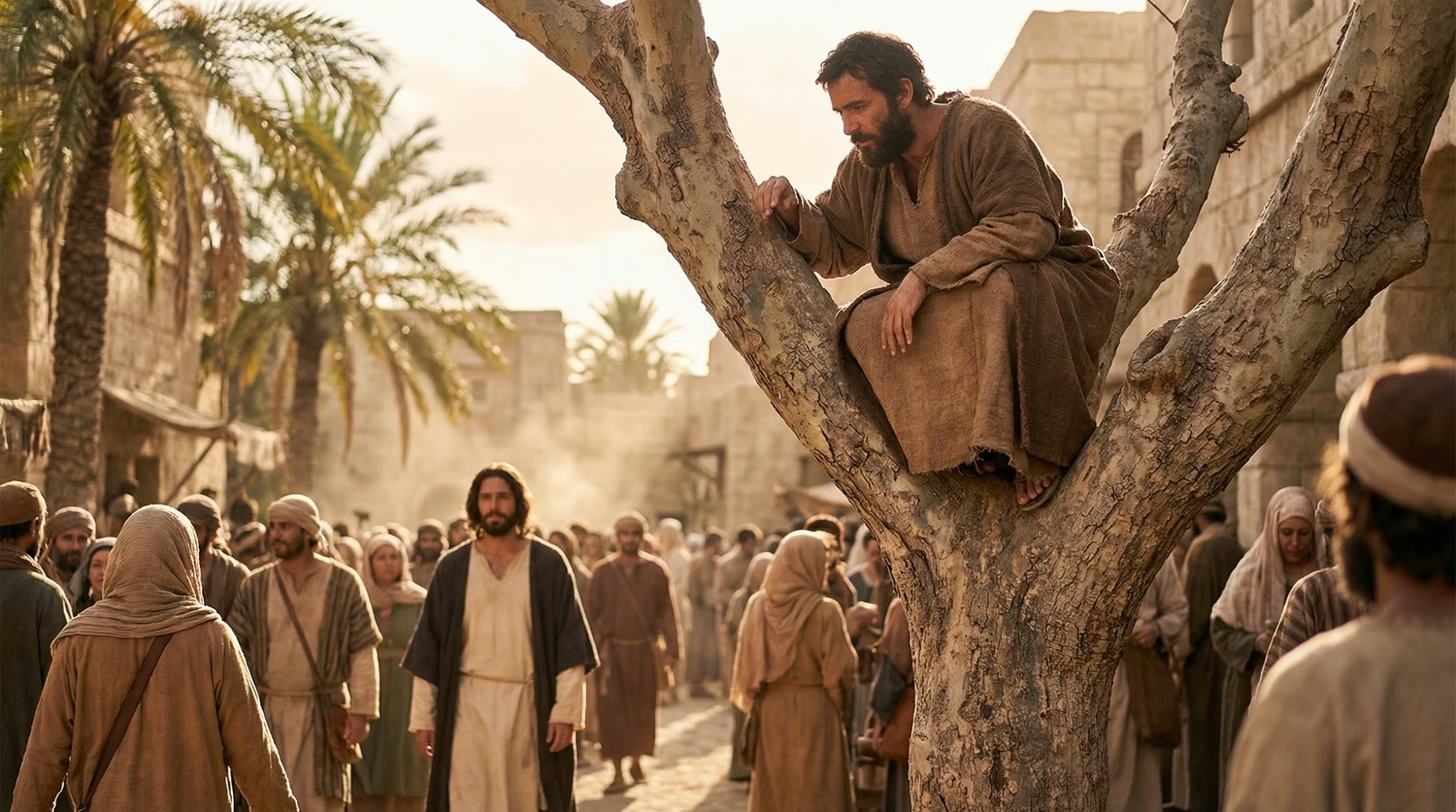
What do we know about Zacchaeus in the Bible, and why does Jesus single him out? Zacchaeus was the chief tax collector in Jericho, a man of considerable wealth and considerable social shame. His name, ironically, means pure in Hebrew. Despite the crowd’s contempt and his own physical limitations, he climbed a sycamore tree just to catch a glimpse of Jesus. Jesus noticed him first, called him by name, and invited Himself to dinner, an act that startled everyone present, including Zacchaeus himself.
Luke 19 opens with Jesus and a massive crowd moving through Jericho, a city sitting nearly 900 feet below sea level, on their way up to Jerusalem. The crowd surrounding Him was electric with misplaced expectation. They believed that the moment Jesus entered Jerusalem, the kingdom of God would appear immediately and Rome would fall. Jesus knew this. He knew their hearts. And He was about to address it directly, but not before stopping for one overlooked man in a tree.
The Sycamore Tree and What It Cost Zacchaeus
Zacchaeus was a short man in a culture that prized public dignity. Climbing a tree in full view of a crowd would have looked ridiculous for a man of his status and wealth. But he did it anyway, because seeing Jesus mattered more to him than protecting his reputation.
This is the first portrait the Gospel of Luke gives us of saving faith: a willingness to look foolish before men in order to draw near to God. Zacchaeus did not know what Jesus would say when He looked up. He only knew he had to get close.
“And there was a man called Zacchaeus. He was a chief tax collector and he was rich. Zacchaeus was trying to see who Jesus was, but he could not see because of the crowd, for he was short in stature. So he ran on ahead and climbed up into a sycamore tree in order to see him, for he was about to pass through that way.”
Luke 19:2–4
Those who study the parables Jesus taught throughout His ministry will recognize this same theme of relentless, undignified pursuit in other stories: the woman who searches her whole house for one lost coin, or the father who runs down the road toward his prodigal son. The hunger to encounter Christ costs something. For Zacchaeus, it cost his pride.
Jesus Calls Zacchaeus by Name
Why does Jesus call Zacchaeus by name, and why does He invite Himself to his house? This is the only recorded instance in the Gospels where Jesus invites Himself to someone’s home. He calls Zacchaeus by name before a crowd that despised him, effectively announcing a public endorsement of a man everyone considered a traitor and a sinner. Jesus does this intentionally, because He is about to teach the crowd something they desperately need to understand about the kingdom of God.
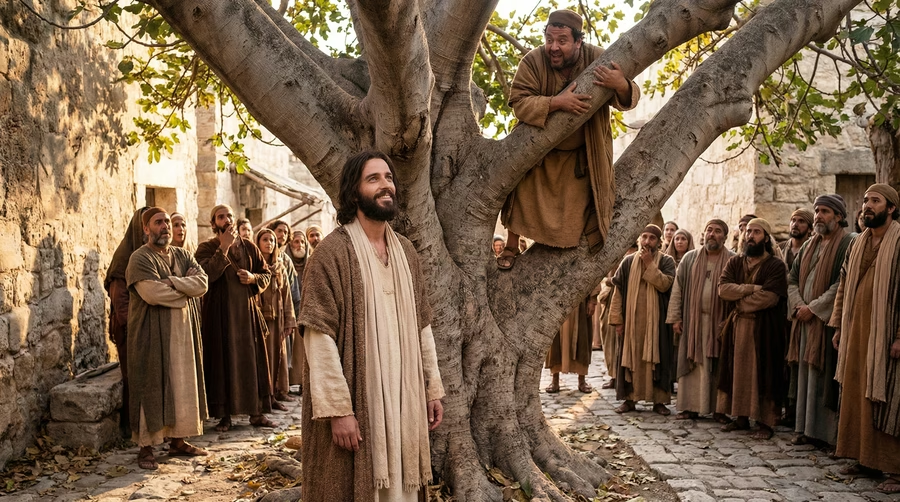
“When Jesus reached the place, He looked up and said to him, ‘Zacchaeus, hurry and come down, for today I must stay at your house.'”
Luke 19:5
Notice the word must. Jesus does not say “I would like to” or “perhaps we could.” He says I must stay at your house. This is divine appointment, not casual hospitality. Jesus already knows everything about Zacchaeus: the questions weighing on his heart, the shame attached to his name, and the condition of his faith. He is not discovering Zacchaeus. He is revealing him to the crowd.
What the Crowd Believed About Tax Collectors
The religious leaders of the day had issued formal decrees declaring that any Jew involved in tax collection had forfeited his status as a son of Abraham and could no longer enter the kingdom of heaven. These were not minor social judgments. They were declarations of spiritual death. The crowd around Jesus accepted this teaching completely.
So when Jesus walked up to Zacchaeus’s door, the people were not merely puzzled. They were offended. How could the Son of God associate with such a man? This same question arises in The Parable of the Good Samaritan, where Jesus challenges His listeners’ assumptions about who is truly right with God and often answers that question in ways no one expects.
“When the people saw it, they all began muttering in discontent. ‘He has gone to be the guest of a man who is a notorious sinner.'”
Luke 19:7
Salvation Comes to the House of Zacchaeus
How does Zacchaeus demonstrate genuine faith, and what does Jesus declare over him? Before Jesus says a single word about his sins, Zacchaeus stands up and voluntarily commits to giving half his possessions to the poor and repaying anyone he has defrauded fourfold. This is not a transaction; it is evidence. Zacchaeus is not trying to earn his salvation. He is showing what genuine repentance looks like when it is already taking root in a changed heart.
“Zacchaeus stopped and said to the Lord, ‘See, Lord, I am now giving half of my possessions to the poor. And if I have cheated anyone out of anything, I will give back four times as much.'”
Luke 19:8
Earlier in Luke’s Gospel, Jesus had told the story of the rich young ruler, a man who kept all the commandments but could not bring himself to let go of his wealth. Jesus observed that it is easier for a camel to pass through the eye of a needle than for a rich man to enter the kingdom of God. The issue was never the money itself. The issue was where the rich young ruler’s trust was ultimately anchored. Zacchaeus, equally wealthy, demonstrates the opposite posture. His wealth does not own him.
Jesus responds not with a list of requirements but with a declaration:
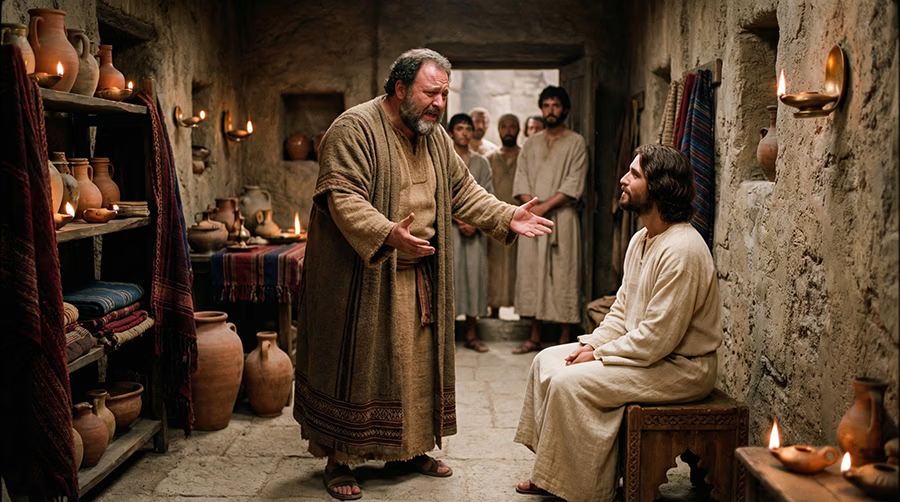
“Today salvation has come to this household because he too is a spiritual son of Abraham. For the Son of Man has come to seek and to save that which was lost.”
Luke 19:9–10
The phrase today salvation has come echoes what Jesus would later say to the penitent thief on the cross: “Today you will be with me in paradise.” Both statements are immediate, unconditional, and spoken to people the religious establishment had written off. God’s grace does not follow the crowd’s verdict. The biblical theme of charitable generosity flows directly out of this kind of transformed heart, giving not to earn favor, but because the heart has already been changed.
Why Jesus Told the Parable of the Minas
What is the Parable of the Minas, and why does Jesus tell it in Luke 19? The Parable of the Minas is Jesus’ direct response to the crowd’s belief that the kingdom of God was about to arrive immediately in Jerusalem. It is a structured allegory: a nobleman travels to a distant country to receive a kingdom, entrusts his servants with resources while he is gone, and returns to settle accounts. Every major element maps directly onto Jesus’ own life, death, resurrection, ascension, and second coming.
“While they were listening to these things, Jesus went on to tell a parable because He was near Jerusalem and they assumed that the kingdom of God was going to appear immediately.”
Luke 19:11
The crowd wanted conquest. Jesus offered stewardship. Understanding the difference between those two things is at the heart of what it means to live as a believer in the time between His first and second coming. This is not the only parable that warns against misreading the kingdom’s timeline; The Parables of the Ten Virgins and The Friend at Midnight carry a similar urgency about being spiritually prepared while awaiting the Master’s return.
The Nobleman’s Journey as Allegory
The nobleman who travels to a distant country to receive a kingdom represents Jesus Himself: going to Jerusalem, being arrested, crucified, buried, rising from the dead, appearing to hundreds of witnesses, ascending into heaven, and receiving His eternal kingship at the right hand of the Father. The distant country is heaven. The return is the Second Coming.
This makes the Parable of the Minas among the most directly allegorical of all of Jesus’ teachings. Unlike many parables that illustrate a single principle, this one maps the entire arc of redemptive history onto a single narrative. For a deeper look at how Jesus used narrative to embed theological truth, the Bible Messages series traces these themes across both Testaments.
The Servants and Their Minas: Using Your Spiritual Gifts
What do the minas represent in the Parable of the Minas? Each servant receives one mina, roughly equivalent to 100 days’ wages, and is told simply: “Do business with this until I return.” In the allegory, the minas represent the portfolio of spiritual gifts that God entrusts to every believer before birth. These gifts are unique to each person. The servant’s task is not merely to preserve them but to put them to work.
“He called ten of his servants and gave them ten minas, one each, and said to them, ‘Do business with this until I return.'”
Luke 19:13
The first servant returns ten minas. The second returns five. Jesus responds to both with the same affirmation: “Well done, good servant.” Critically, He does not compare the two. He does not ask the servant who earned five why he did not earn ten. Each person’s gifts are different. Each person’s circumstances are different. God does not measure us against each other. He measures us against our own faithfulness.
What Spiritual Gifts Actually Look Like
The gifts Jesus is describing are not limited to preaching or evangelism. They are as varied as the people who carry them: the gift of encouragement, the gift of hospitality, the gift of administration, the gift of creative excellence, the gift of intercession. What makes a spiritual gift recognizable is that it operates almost effortlessly and produces something that blesses others and draws them toward the kingdom.
The Parable of the Talents in Matthew 25 covers closely related ground; both parables address the same core question: What are you doing with what God gave you? If you have not yet explored what your own spiritual gifts might be, the Five Smooth Stones toolkit is a practical starting place for that kind of scriptural self-examination.
The Servant Who Buried His Gift
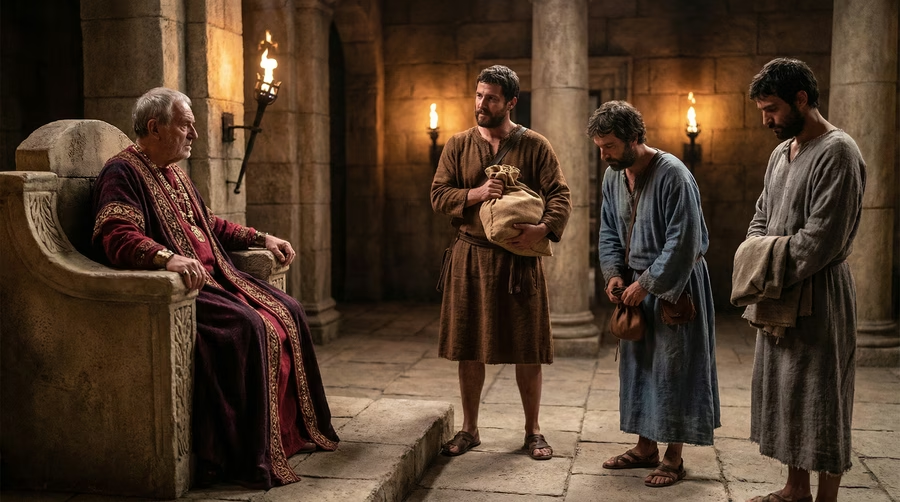
What happens to the servant who hides his mina, and what does it mean for us? The third servant in the Parable of the Minas wraps his mina in a cloth and buries it. His reasoning is striking: he accuses the nobleman of being a harsh man who profits from what he did not work for. He is not just fearful; he is resentful. And Jesus calls this out directly.
“Then another came and said, ‘Lord, here is your mina, which I kept laid up in a handkerchief for safekeeping. I was always afraid of you because you are a stern man. You pick up what you did not lay down and you reap what you did not sow.'”
Luke 19:20–21
The king’s response is not merely disappointment. It is confrontational: “I will judge you by your own words, you worthless servant.” If you truly believed I was a demanding master, he says, then you had even more reason to do something rather than nothing. But the real issue runs deeper than poor investment strategy. This servant has defined himself in opposition to the king. He does not want to serve him. He does not want to advance his kingdom. He wants to be left alone.
This is the portrait of what Paul describes in Romans 1 as a mind that has refused to acknowledge God. The result is not simply theological disagreement; it is a progressive hardening that reshapes character, relationships, and community. We see it in every generation: people who know enough about God to have an opinion about Him but have made a deliberate choice not to submit to His kingship. The articles on Today’s Concerns explore how this ancient spiritual posture shows up in contemporary culture and political life.
The Transfer of the Mina
What happens next offends nearly every reader’s instinct for fairness. The mina is taken from the third servant and given to the one who already has ten.
“I tell you that to everyone who has, because he valued his gifts and used them wisely, more will be given. But from the one who does not have, because he disregarded his gifts from God, even what he has will be taken away.”
Luke 19:26
This is not a statement about favoritism. It is a principle of spiritual investment. Gifts that are used multiply. Gifts that are ignored atrophy. The more you develop what God gave you, the more capacity you develop to receive more. This same dynamic appears in The Parables of the Wheat and the Tares and the Hidden Treasure, where the kingdom of God is shown to grow according to principles that often run against human intuition.
The King’s Return and the Question of Allegiance
What does the ending of the Parable of the Minas teach about judgment and the Second Coming? The parable closes with the king addressing those who actively opposed his reign, declaring: “Bring them here and kill them in my presence.” Jesus does not soften this. The king is returning not just to settle accounts with servants but to exercise final judgment over all who rejected his kingship.
“But as for these enemies of mine who did not want me to be king over them, bring them here and kill them in my presence.”
Luke 19:27
In the allegory, this represents the final judgment that awaits all who have rejected Christ. The same Son of Man who sought and saved Zacchaeus will return as King to judge the living and the dead. This is not a contradiction; it is a completion. Grace is offered fully and freely now. The time between the first and second coming is the open season of grace, the window for seeking and being found.
Those who have embraced the king and used their gifts faithfully will be rewarded with greater responsibility in His eternal kingdom. Those who rejected Him will face a judgment far worse than any earthly consequence. The Parables of the Pearl of Great Price and the Dragnet and the Parables of the Wedding Feast and the Wicked Husbandmen both confirm this same final division: not everyone who hears the invitation accepts it, and the king does not pretend otherwise.
Practical Application: Living Between the King’s Two Comings
The Parable of the Minas is not a distant theological abstraction. It is a direct commission for daily life. Between Jesus’ first coming and His return, every believer is a servant holding a portfolio of God-given gifts. The question is not whether you have gifts; you do. The question is whether you are using them.
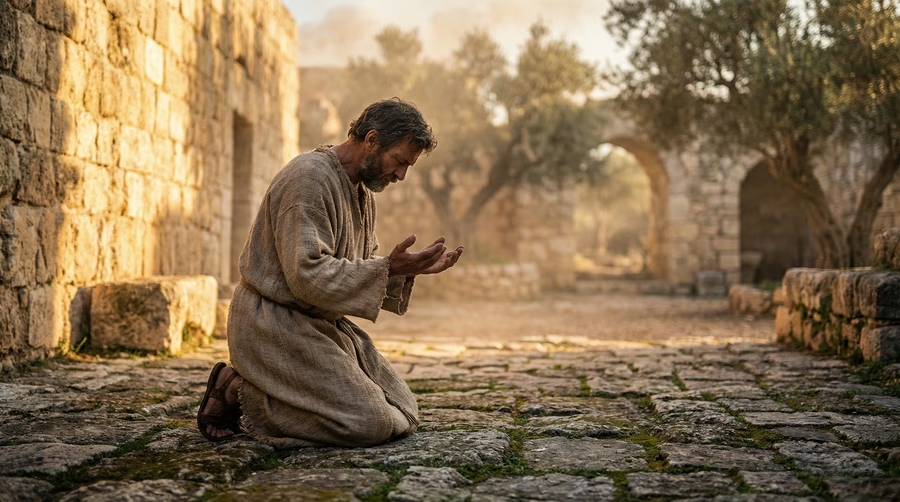
Here are four practical steps drawn from this passage:
- Identify your gifts. What do you do almost effortlessly that genuinely serves others? What draws people toward God when they see you do it? These are clues. The 4-3 Formula offers a structured biblical framework for this kind of spiritual inventory.
- Use them now, not later. The servant who wrapped his mina in a cloth was waiting for a better moment. There is no better moment. The king is coming, and the accounts are being prepared.
- Stop comparing your results to others. The servant who earned five minas received the same affirmation as the servant who earned ten. God sees your heart and your effort, not your visible outcomes.
- Reject the resentful servant’s logic. The most dangerous spiritual posture in this parable is not fear. It is the conviction that God’s standards are unreasonable, that He demands what He has not earned, and therefore you have no obligation to serve Him. That road ends in judgment.
The Parable of the Laborers in the Vineyard carries a similar lesson: God’s generosity is not subject to our sense of what is fair, and resentment toward His grace is one of the most spiritually destructive attitudes a person can carry.
Conclusion
Luke 19 holds two stories that belong together. Zacchaeus climbed a tree to see Jesus and came down transformed, his wealth loosened and his identity restored. The crowd watching him could not understand it. And so Jesus told the Parable of the Minas, not to explain Zacchaeus, but to explain the kingdom itself.
The King has gone to a distant country. He has received His kingdom. He is coming back. In the meantime, He has given every believer something specific and irreplaceable to work with. The Zacchaeus story asks: Will you pursue Jesus no matter the cost? The Parable of the Minas asks: Will you use what He gave you until He returns?
Both questions deserve an honest answer today.
Reflection Prompts:
- What spiritual gift has God given you that you have been reluctant to develop or offer to others?
- Is there a way that, like the third servant, you have been more focused on self-protection than on faithful service?
- How does the story of Zacchaeus change how you see people your community has written off?
Frequently Asked Questions (FAQs)
What is the Parable of the Minas, and where is it in the Bible?
The Parable of the Minas is found in Luke 19:11–27. Jesus tells it on the road to Jerusalem in response to the crowd’s belief that the kingdom of God was about to appear immediately. A nobleman entrusts ten servants with one mina each, travels to receive a kingdom, and returns to settle accounts. It functions as a direct allegory of Jesus’ death, resurrection, ascension, and second coming.
Who was Zacchaeus in the Bible, and why is he important?
Zacchaeus was the chief tax collector in Jericho, a wealthy Jewish man considered a traitor by his community. His encounter with Jesus in Luke 19:1–10 is one of the clearest portraits of salvation in the Gospels: a man whose faith was evidenced by immediate, voluntary repentance and generosity, and over whom Jesus declared, “Today salvation has come to this household.”
What do the minas represent in the Parable of the Minas?
In the allegory, the minas represent the spiritual gifts God entrusts to every believer. These are unique to each person, not limited to preaching or teaching, but including any God-given capacity that blesses others and draws people toward the kingdom. Believers are called to identify and use these gifts faithfully until Christ returns.
What happens to the servant who hid his mina?
The servant who hid his mina had his gift taken away and given to the servant with ten. Jesus explains the principle in Luke 19:26: gifts that are used grow, while gifts that are ignored are eventually lost. More critically, the servant’s resentment toward the king revealed a heart that had never truly submitted to his lordship, a condition Jesus treats with the full gravity it deserves.
Further Reading
- Luke 19 Commentary by David Guzik on Zacchaeus and the Parable of the Minas (Blue Letter Bible)
- Enduring Word Commentary on Luke 19 by David Guzik
- Who Was Zacchaeus in the Bible? (GotQuestions.org)
- Luke 19:13 Commentaries on the Parable of the Minas (Bible Hub)
- Faithful Stewardship: D.A. Carson on the Parable of the Talents (The Gospel Coalition)
