
January 31, 2026

The pearl of great price parable in Matthew 13:45-46 teaches that the kingdom of heaven is worth more than everything else we possess combined. Jesus compares salvation to a merchant who discovers one pearl so extraordinarily valuable that he joyfully sells everything to obtain it. This brief but powerful teaching reveals that our relationship with God should be our highest priority, transforming how we view every other pursuit in life.
Table of Contents
What Is the Parable of the Pearl of Great Price?
The pearl of great price parable answers the question: What is salvation truly worth? Jesus tells of a merchant who spent his life seeking fine pearls. When he discovered one pearl of incomparable value, he immediately sold everything he owned to purchase it. This two-verse parable carries profound implications for how believers should prioritize their relationship with God.
“Again, the kingdom of heaven is like a merchant seeking beautiful pearls, who, when he had found one pearl of great price, went and sold all that he had and bought it.” Matthew 13:45-46 (NKJV)
This parable appears in Matthew 13, a unique chapter containing seven parables about the kingdom of heaven. As Pastor Chuck Frank observes, these parables become progressively shorter and more concentrated in their message, building toward a sense of finality. Jesus knew that many would miss the kingdom of heaven, and He used these vivid illustrations to communicate eternal truths in ways that would penetrate the heart, just as He did with The Parables of the Wedding Feast and the Wicked Husbandmen.
This parable follows immediately after the Parable of the Hidden Treasure, and both convey the same essential truth: the kingdom of heaven is of inestimable value. However, while the treasure parable depicts someone who stumbles upon salvation unexpectedly, the pearl merchant represents someone who has been actively seeking spiritual truth and finally finds it in Christ.
Why Did Jesus Choose a Pearl to Symbolize the Kingdom?
Jesus selected the pearl for its unique symbolism of overcoming through suffering. Unlike other precious stones that are mined from the earth, pearls are formed through a process of transformation within a living creature. When an irritant enters an oyster, the creature responds by coating it with layer upon layer of nacre, eventually producing something beautiful.

In Jesus’ day, pearls ranked among the most valuable commodities in the Roman Empire. The process of obtaining them was incredibly difficult since divers had no modern equipment. They had to hold their breath, dive deep, and grope around underwater without being able to see clearly. Then they had to open many oysters before finding a pearl. All of this labor translated directly into value.
But Jesus was communicating something deeper than mere monetary worth. The formation of a pearl mirrors the Christian walk beautifully. As Chuck Frank explains, the oyster overcomes difficulty by transforming an irritant into something precious. In the same way, the challenges believers face in their faith journey are not obstacles to avoid but opportunities for growth. The difficulties we encounter can become the very substance of a rich spiritual life when we surrender them to God.
This symbolism connects powerfully to Revelation 21:21, where John’s vision describes the twelve gates of heaven as twelve massive pearls. If God chose pearls to adorn the entrances to the New Jerusalem, He was communicating something profound about the value of overcoming. Every believer who enters through those gates will have been transformed through trials into something beautiful for eternity.
Understanding the Merchant: The Skill of Knowing Value
The merchant in this parable represents someone who has developed the life skill of recognizing true worth. This person was not casually browsing but actively and seriously searching for valuable pearls. When he encountered this extraordinary pearl, he immediately recognized its incomparable value.
This ability to discern real value is a crucial skill that many people lack. Look around at the decisions people make: bad purchases, harmful relationships, missed opportunities, or abandoning commitments they should have kept. These mistakes often stem from an inability to recognize what truly matters.
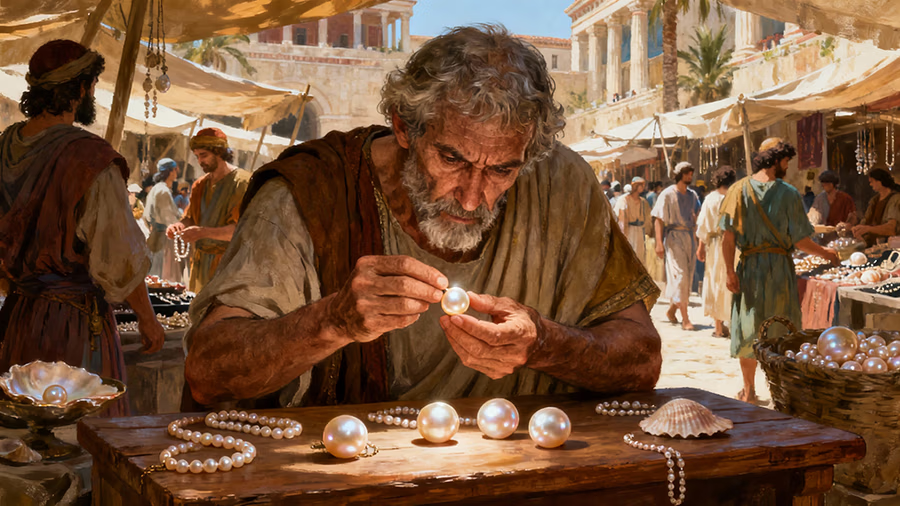
The pearl merchant did not waste time wishing or wondering. He did not say, “Oh, that is so beautiful, I wish I could have it.” He understood the value immediately because evaluating pearls was his life’s work. Similarly, those who have been genuinely seeking spiritual truth through studying Scripture and developing their relationship with God will recognize the supreme value of salvation when they encounter it.
This principle applies directly to the practical wisdom found throughout Solomon’s teachings. Proverbs 8 reveals wisdom’s call and divine blueprint for understanding what truly matters in life. The person who cultivates spiritual discernment will not be fooled by the world’s counterfeit treasures.
Selling Everything: What Total Commitment Looks Like
The merchant’s response to finding the pearl of great price demonstrates what genuine faith requires: the willingness to prioritize salvation above everything else. He did not negotiate or ask for payment plans. He sold everything he had without hesitation or regret.
This transaction illustrates a fundamental truth about the Christian life. While salvation itself is a free gift that cannot be earned or purchased, receiving that gift requires releasing our grip on everything else. Jesus addressed this directly when He told the rich young ruler to sell all he had and follow Him. The issue was not that wealth is inherently evil but that anything we value more than Christ becomes an idol that separates us from God.
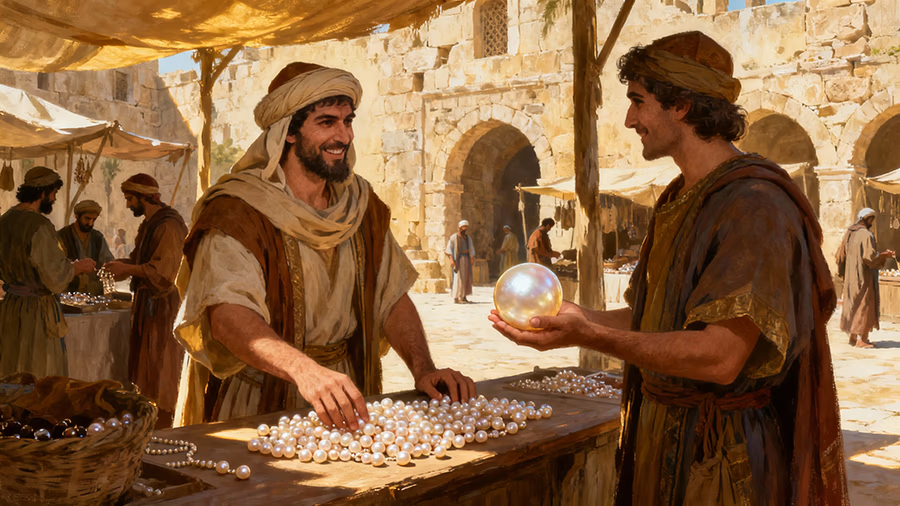
Notice that the merchant did not view his decision as a sacrifice. He understood basic economics: if the pearl was worth more than everything else he owned combined, then selling everything was not a loss but an incredible gain. The same principle applies to salvation. As the Apostle Paul wrote, he counted everything as loss compared to the surpassing worth of knowing Christ Jesus his Lord.
Many Christians struggle because they want salvation while still clinging to their old priorities. They want this precious pearl added to their collection rather than replacing their collection. But Jesus calls for a complete reordering of our lives where He becomes first, and everything else is arranged according to its proper relationship to Him.
The Problem of Second Things First
One of the greatest hindrances to the Christian life is the tendency to put second things first. Our culture constantly pressures us to reprioritize, elevating career, comfort, entertainment, relationships, or security above our relationship with God.
Pastor Chuck Frank regularly emphasizes this principle: when we keep first things first, everything else falls into proper order. But when we elevate secondary concerns to primary positions, we lose both the primary and the secondary. The merchant in the parable understood this instinctively. He knew that nothing in his entire inventory could compare to the pearl he had found. This principle echoes throughout Scripture, including the wisdom found in Proverbs 13 concerning diligence and righteous living.
This teaching connects directly to the broader message found in The Rich Fool and Good Shepherd parables, where Jesus warns against storing up earthly treasures while neglecting spiritual wealth. The rich fool’s mistake was not his success but his assumption that material abundance could provide security and meaning.
The challenge for modern believers is that second things often appear more immediately pressing than first things. Work deadlines feel more urgent than prayer. Social obligations seem more demanding than Scripture study. The cares of this world gradually crowd out devotion to God until we find ourselves spiritually impoverished while materially comfortable.
The Necessity of Christian Fellowship
The pearl of great price cannot be fully appreciated or properly guarded in isolation. While the parable focuses on an individual merchant making an individual decision, the broader context of Matthew 13 includes the Parable of the Dragnet, which emphasizes the community of faith.

Jesus compared the kingdom of heaven to a net that gathers fish of all kinds. The church is that net, containing both those who will enter eternal life and those who will not. This sobering reality means that not everyone sitting in church on Sunday morning will be in heaven. But it also means that genuine believers need the fellowship of other believers to grow in their faith.
The fellowship of believers serves multiple essential purposes. We cannot study Scripture the same way alone as we can with others who bring different perspectives and insights. Our prayer life deepens when we join with brothers and sisters in intercession. The challenges of relating to other imperfect Christians, while sometimes frustrating, provide exactly the kind of spiritual friction that produces growth.
This truth directly connects to the vision and resources available through the Christian Community fellowship, where believers can share reflections, submit prayer requests, and grow together in faith. For those seeking practical tools to deepen their walk with God, the 4-3 Formula provides a biblical framework for consistent spiritual growth. This priceless treasure is meant to be guarded within a community of fellow believers.
The Holy Spirit: Bringing Old and New Treasures
After Jesus explained these parables, He told His disciples they were like householders who bring out treasures both new and old. This statement pointed forward to their future ministry of connecting Old Testament promises with New Testament fulfillment.
The disciples at that moment did not fully understand what Jesus was teaching. They would only truly comprehend after the Holy Spirit came at Pentecost. But Jesus was investing in them by faith, knowing that the Comforter would bring all these teachings back to their remembrance and open their understanding.
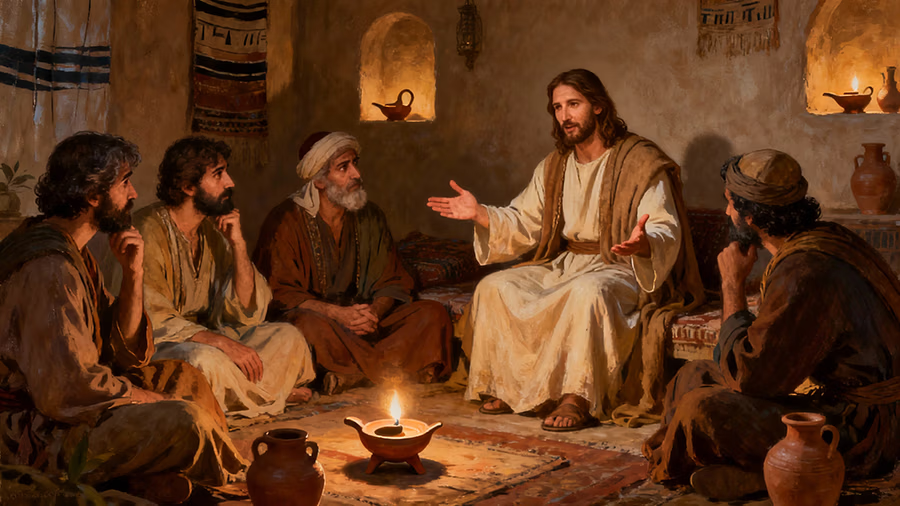
This same principle operates in every believer’s life. We read a Scripture passage for the hundredth time, and suddenly the Holy Spirit illuminates something we never noticed before. That moment is precious, and we must treat it like the pearl merchant treated his discovery. When the Spirit speaks, we need to stop, pray, study, and act on what we have received.
The Bible Messages resource offers verse-by-verse teaching that helps believers access these treasures systematically, combining careful study of Scripture with practical application for daily life. Just as the disciples needed preparation for their ministry, modern believers need solid biblical teaching to recognize and respond to the Spirit’s leading.
When the Holy Spirit Speaks, Act Immediately
One of the most practical applications of this parable is how we respond when the Holy Spirit reveals truth to us. The merchant did not write the pearl’s location on a piece of paper and come back to it later. He immediately understood the value and immediately acted.
The Holy Spirit is not inefficient. When He highlights a Scripture, prompts conviction, or opens understanding, He has a specific purpose. That revelation is meant to have immediate application in our lives. If we delay, if we say we will deal with it later, we often find that the moment passes and the opportunity is lost.
This urgency connects to the broader theme of spiritual preparedness explored throughout the Book of Esther series, where God’s providence required immediate response at critical moments. Esther had to act when her moment came, as explored in depth in Book of Esther 4’s study of courage, faith, and divine timing, and so must we when the Spirit moves.
The Christian life is not about having occasional mountain-top experiences but about consistently responding to God’s daily leading. Each response builds on the previous ones, creating a pattern of obedience that transforms character and deepens relationship.
The Finality of Jesus’ Message
The seven parables in Matthew 13 all share a common urgency: the kingdom of heaven is approaching its final separation. Jesus knew that many people would miss the kingdom while assuming they were safely included. These parables were designed to shake believers out of complacency.
The sobering truth is that many people in churches today believe they are guaranteed entrance into heaven but will find themselves excluded. Jesus did not teach universal salvation. He taught a narrow gate that few find. He described weeping and gnashing of teeth for those cast into outer darkness.
This is not intended to create fear but to create seriousness. This incomparable treasure is not a casual trinket but the most important possession anyone can ever obtain. It demands the same focused intensity that the merchant brought to his search.
The resources available through Today’s Concerns address how these eternal realities intersect with contemporary challenges. Biblical truth applied to current events helps believers maintain proper perspective in confusing times.
Practical Application: Recognizing Your Pearl Today
The question every person must answer is whether they have truly found the pearl of great price and whether they have given everything to obtain it. This is not a one-time decision but a daily orientation of the heart.

Ask yourself: What competes with God for first place in your life? What would you struggle to release if He asked? Where are your second things masquerading as first things? These questions reveal the true state of our commitment.
The good news is that God is patient. Pastor Chuck Frank shares his own testimony of coming to Christ after decades of rebellion, having rejected the gospel thirty or forty times. There is no explanation for such a transformation except the love of God pursuing a lost soul. That same pursuing love is available to everyone who will receive it.
If you are still searching, keep seeking. This treasure is real, and it is available. If you have found it, hold it close and let nothing compete for its place. Build your life around what you have discovered, and invest your time in the Five Smooth Stones of Scripture that create a foundation for enduring faith.
Conclusion: The Value That Changes Everything
This parable contains a simple message with profound implications. When we truly understand the value of our relationship with God and the gift of eternal life, everything else fades into proper perspective. What once seemed important reveals itself as secondary. What we feared losing becomes easy to release.
This is the transformation Jesus offers: not merely a ticket to heaven but a complete reorientation of values, priorities, and purposes. The merchant who sold everything to buy the pearl was not impoverished. He was the wealthiest man in the world because he possessed what mattered most.
May we have eyes to see the pearl of great price when we encounter it. May we have the wisdom to recognize its value. And may we have the courage to give everything in exchange for the kingdom of heaven.
Frequently Asked Questions (FAQs)
What is the main message of the Pearl of Great Price parable?
This parable teaches that the kingdom of heaven is worth more than everything else we could possess. Just as a merchant would sell his entire inventory to obtain one incomparably valuable pearl, believers should prioritize their relationship with God above all earthly concerns and pursuits.
Why did Jesus use a pearl instead of another precious stone?
Jesus chose the pearl because of its unique symbolism. Pearls are formed when an oyster transforms an irritant into something beautiful through layers of nacre. This process mirrors how Christians grow through difficulties, with challenges becoming opportunities for spiritual development rather than obstacles to avoid.
Does selling everything mean Christians must give up all possessions?
The parable uses selling everything as a metaphor for complete prioritization rather than literal poverty. The point is that salvation must hold first place in our lives, with all other pursuits arranged according to their proper relationship to God. It means releasing our grip on anything we value more than Christ.
How does this parable connect to the gates of heaven in Revelation?
Revelation 21:21 describes the twelve gates of the New Jerusalem as twelve massive pearls. This connection reinforces the pearl’s symbolic significance as representing overcoming through transformation and the supreme value God places on those who persevere through trials to enter His eternal presence.
Further Reading
For deeper study of this parable and related biblical themes, consider these trusted resources:
- GotQuestions: Meaning of the Parables of Hidden Treasure and Pearl of Great Price provides accessible theological explanation of these twin parables.
- BibleRef Commentary on Matthew 13:46 offers verse-by-verse analysis of the pearl parable’s key elements.
- Blue Letter Bible: Greek Word Study on Margarites (Pearl) examines the original Greek terminology and its biblical usage.
- BibleHub Commentaries on Matthew 13:46 compiles multiple scholarly perspectives from Matthew Henry, Gill’s Exposition, and other trusted commentators.
- Bible.org: The Parable of the Wedding Banquet provides scholarly analysis of Jesus’ kingdom parables and their interconnected themes.
