
The resurrection of Jesus did not begin with a trumpet blast or an earthquake visible to the whole city. It began before dawn, in a garden, with a grief-stricken woman who had come to tend to the body of the man who had freed her from seven demons. Mary Magdalene was the first person on earth to speak to the risen Christ, and she nearly missed him entirely because she was too devastated to look up.
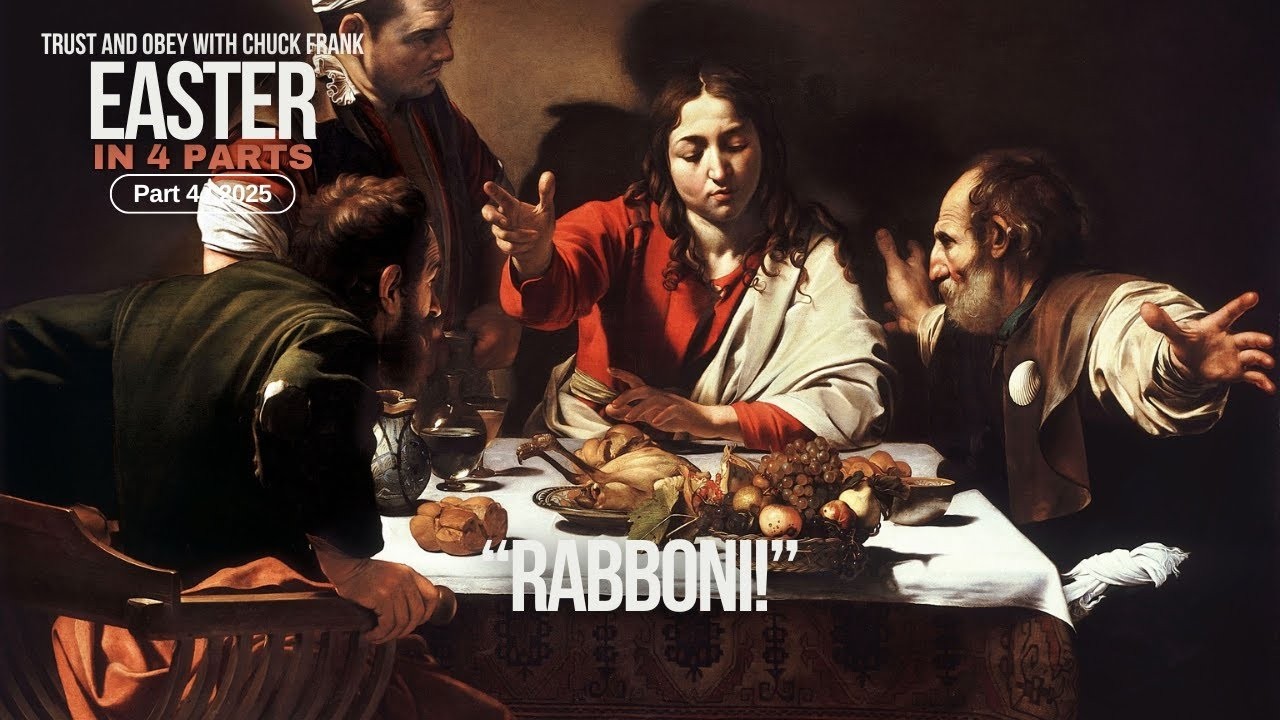
Table of Contents
The Burial: When Secret Disciples Could No Longer Stay Secret
The burial of Jesus in a rich man’s new tomb fulfilled a prophecy Isaiah wrote five hundred years before the event. Joseph of Arimathea and Nicodemus stepped out of the shadows at the moment of greatest personal risk, and in doing so became living proof that the resurrection of Jesus was not a story invented by grieving followers.
After the crucifixion, the soldiers began digging three graves near Golgotha, as was the Roman custom. Each condemned man would be buried with his cross before sundown. Jesus was going to be put in the ground alongside two criminals, exactly as Isaiah had written: “They made His grave with the wicked.” But then something changed.
Joseph of Arimathea, a disciple of Jesus who had kept his faith secret out of fear, went directly to Pilate and asked for the body. That single act was enormously costly. The moment two or three people saw a member of the Sanhedrin take down the body of Jesus, the information chain started moving. He was risking his life, his fortune, and his standing among the most powerful men in Jerusalem. He did it anyway.
He was joined by Nicodemus, another wealthy member of the Sanhedrin, who had famously come to Jesus at night in John 3 so that no one would see him. Nicodemus brought a mixture of myrrh and aloes, about a hundred pounds of it, an extravagance reserved for royalty. Both men, on the strength of what they now believed, stepped publicly into the light at the precise moment when public association with Jesus was most dangerous.
“And they made His grave with the wicked, and with the rich in His death.” Isaiah 53:9 (NKJV)
The soldiers had dug three graves with criminals. Isaiah had said a rich man. Five hundred years before the event, both were true at the same time. This is the kind of prophetic precision that runs through every part of our Easter series: Scripture written centuries before the fact, fulfilled in exact detail, by people who had no knowledge of one another across the span of generations.
They prepared the body in the traditional Jewish manner: washed, dried, anointed with myrrh and aloes, and then wrapped in strips of linen wound separately around each arm and each leg. A linen cloth was laid over the face, and a single long linen sheet was draped from foot to head. Every detail of that preparation matters, because those grave clothes are going to become evidence.
The Garden Tomb
Near the place of crucifixion there was a garden, and in that garden a new tomb hewn from rock in which no one had yet been laid. That is where they placed Jesus, because the Passover preparation day was ending and the tomb was close. The same Isaiah prophecy that foretold the grave with the wicked had also said “with the rich in His death.” A brand-new garden tomb, owned by a wealthy man, fulfilled it precisely.
The Empty Tomb: Evidence That Cannot Be Explained Away
The empty tomb is not simply the absence of a body. It is a crime scene that every theory of the resurrection has to account for. The grave clothes were still there, still in the shape of Jesus’ body, still in position, and Jesus was simply gone from inside them.
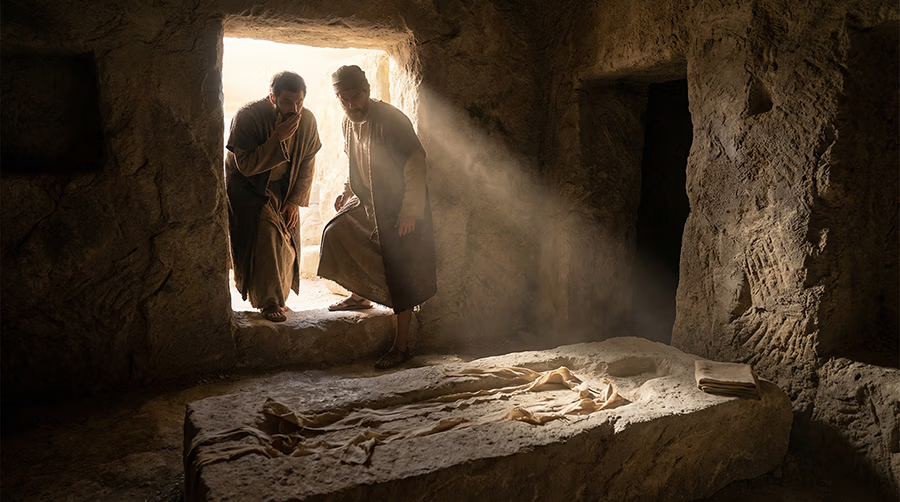
Early on Sunday morning, while it was still dark, Mary Magdalene arrived at the tomb and found the stone rolled away from the entrance. She did not conclude that Jesus had risen. She concluded that someone had taken the body. She ran to Simon Peter and John with the news: “They have taken the Lord out of the tomb, and we do not know where they have laid Him.”
Every disciple, every woman who followed Jesus, every person in that circle had the same assumption when they heard the tomb was empty: someone moved the body. The resurrection was not on anyone’s list of possibilities.
Peter and John ran to the tomb together. John outran Peter, arriving first, and bent down to look inside. He saw the linen strips lying there but did not go in. Then Peter, characteristically, barreled straight through the entrance. He saw the strips of linen lying in place and the face cloth that had covered Jesus’ head folded separately, lying in its own place.
“Then the other disciple, who came to the tomb first, went in also; and he saw and believed.” John 20:8 (NKJV)
John entered after Peter and saw and believed. What convinced him was not a vision or an angel’s announcement. It was the physics of the grave clothes. Every arm and leg had been wrapped individually in linen strips, tied at each end, and pressed into place with a hundred pounds of sticky myrrh and aloe.
There is no human way to unwrap all of that and leave it lying in the position of a body without disturbing the shape. There is no way to slide a body out without pulling the wrappings into a pile of cloth. What John saw was the shape of a wrapped body with no body inside it. Jesus had passed through the grave clothes the same way he would later pass through a locked door. John saw it and believed.
The disciples still did not understand from Scripture that Jesus had to rise from the dead. But the evidence in front of them was already speaking. The grave clothes in the empty tomb are examined in detail in our verse-by-verse study through the Book of Jonah, where Jonah’s three days in the fish and his emergence alive become one of the clearest Old Testament previews of this exact moment.
Raboni: The First Person to Speak to the Risen Christ
Mary Magdalene was the first person in human history to speak with the risen Jesus. In a culture where women could not testify in court and had no legal standing, where a woman who had been possessed by seven demons would have been avoided by respectable society, Jesus chose her to be his first witness and his first messenger. That is not incidental. It is a declaration about the nature of the kingdom he came to establish.
Mary stood outside the tomb weeping after Peter and John had returned home. She looked inside and saw two angels seated where Jesus had lain, one at the head and one at the foot. They asked her why she was weeping. She told them someone had taken her Lord and she did not know where he was. Then she turned around and saw Jesus standing there, and she did not recognize him.
I believe Mary was in shock. She was not making eye contact with anyone. Her eyes were cast downward. She had spoken to angels without realizing they were angels. She spoke to Jesus without looking at his face, assuming he was the gardener, and asked him to tell her where the body was so she could take it.

Then Jesus said one word.
“Mary.”
“She turned and said to Him, ‘Rabboni!’ (which is to say, Teacher).” John 20:16 (NKJV)
Everything changed in that one word. The title she used, Rabboni, is an elevated form of Rabbi. It was a term of deep personal reverence. She knew that voice. She knew exactly who was standing in front of her. Jesus told her not to hold on to him because he had not yet ascended to the Father, and he gave her a message to carry to the disciples: “I am ascending to My Father and your Father, and to My God and your God.”
That message is laden with meaning. He is not just ascending to the Father. He is ascending to your Father. The resurrection of Jesus changes the nature of the relationship between God and every person who believes. As we explore in our study of Galatians 4: From Slavery to Sonship Through Faith in Christ, the resurrection makes adoption possible. God becomes your Father, not just humanity’s Creator.
Mary went to the disciples with the most important message ever delivered: “I have seen the Lord.” She was a woman in a culture that refused to let women testify. She was a former demoniac in a society that would have crossed the street to avoid her. And she was the one Jesus sent. The mission that drives this ministry is grounded in the truth that the kingdom of God has always operated by different rules than the kingdoms of this world.
Peace Be With You: Jesus Appears to the Disciples
On the evening of that first Sunday, the disciples were gathered behind locked doors, paralyzed with fear. The same temple authorities who had just orchestrated the crucifixion of Jesus were still in power, still in the same city, and still looking for followers to silence. Then Jesus stood among them without opening any door.
“Jesus came and stood in the midst, and said to them, ‘Peace be with you.’ When He had said this, He showed them His hands and His side. Then the disciples were glad when they saw the Lord.” John 20:19–20 (NKJV)
He showed them the wounds first. This was not a ghost or a vision. This was the same body that had been nailed to a cross, now glorified and capable of moving through walls but still bearing the marks of what had happened to it. The disciples saw the evidence and were overjoyed.
Then Jesus commissioned them directly: “As the Father has sent Me, I also send you.” He breathed on them and said, “Receive the Holy Spirit.” This was not the same event as Pentecost in Acts 2. This was a unique and particular administration of the Holy Spirit to the apostles specifically, given because of the specific and enormous task that lay ahead of them.They were going to go out and preach, heal, perform miracles, face persecution, and die for what they had seen. They needed something beyond what ordinary courage could supply.

The Call to Go
The disciples had spent three years watching and listening. The 4-3 Formula at the heart of this ministry reflects exactly what Jesus was modeling in this room: the movement from receiving to going, from student to messenger. The Holy Spirit was not given so these men could feel better about what they had been through. It was given so they could go out and do the work. And they did. These frightened men hiding behind locked doors became the people who carried the faith of Jesus Christ to every corner of the known world.
Doubting Thomas: The Gift of an Honest Skeptic
Thomas was not in the room when Jesus appeared. When the other disciples told him what they had seen, he refused to believe it. His condition was precise and non-negotiable: he needed to see the nail marks in Jesus’ hands, put his finger in those marks, and put his hand into the wound in Jesus’ side. Otherwise, he would not believe.
A week later, Jesus appeared again. Thomas was present this time. Jesus addressed him directly:
“Reach your finger here, and look at My hands; and reach your hand here, and put it into My side. Do not be unbelieving, but believing.” John 20:27 (NKJV)
Thomas did not need to touch the wounds. Seeing Jesus standing there, knowing exactly what he had said in private to the other disciples, was enough. He responded with the most complete confession of faith in the entire Gospel of John:
“My Lord and my God!” John 20:28 (NKJV)
This is significant. Thomas was the first disciple to explicitly confess Jesus as God, not just as teacher, rabbi, or Messiah. The physical courage Thomas had always possessed, the man who had said “let us go and die with him” on the road to Bethany, now had something to attach itself to: a risen Lord he could look in the face and call God.
Jesus responded with a statement that reaches across every century to every person reading this now:
“Thomas, because you have seen Me, you have believed. Blessed are those who have not seen and yet have believed.” John 20:29 (NKJV)

That blessing is spoken over hundreds of millions of people across two thousand years of Christian history. It is spoken over every person who has come to faith in the resurrection of Jesus without seeing the risen body, without touching the wounds, and without standing in a room that smells of linen and myrrh and resurrection morning. The Five Smooth Stones toolkit is built for exactly this kind of faith, the kind that grounds itself in Scripture and testimony rather than in direct physical experience.
John’s Purpose and the Call to Believe
John closes his Gospel with a statement of purpose that is also an invitation. He acknowledges that Jesus performed many other signs that are not written in this book. He made a choice about what to include, and the choice was made with a specific goal:
“But these are written that you may believe that Jesus is the Christ, the Son of God, and that believing you may have life in His name.” John 20:31 (NKJV)
Everything in this Gospel, from the wedding at Cana to the resurrection of Lazarus to the empty tomb on Easter morning, was selected and arranged so that you might believe. Not so that you might admire Jesus as a historical figure. Not so that you might find his teachings interesting. So that you might believe, and that by believing, you would have life in his name.
Chuck closes this four-part Easter series with that same invitation. The resurrection of Jesus is not a doctrine to be debated from a safe intellectual distance. It is an offer to be accepted or rejected. And the terms of acceptance are simple, drawn directly from Romans 10:9:
“If you confess with your mouth the Lord Jesus and believe in your heart that God has raised Him from the dead, you will be saved.” Romans 10:9 (NKJV)
That is one sentence. It starts with if, because God made every human being with free will. The choice belongs to you. It asks for confession, because guilty people confess, and every person has a genuine litany of things that need to be brought before God. And it asks you to believe in your heart, not to work it out intellectually from first principles, but to come to it as a child and receive what has been offered. You can explore further resources for this journey through our community and faith growth tools and our full Bible Messages library.
Practical Application
The resurrection of Jesus calls for more than intellectual assent. It calls for a changed life.
- Start with the grave clothes. If you have questions about the resurrection, start with the physical evidence in John 20. The grave clothes are not a minor detail. They are forensic testimony. Spend time with the text before dismissing the claim.
- Notice who Jesus sent first. He sent Mary, a woman with no legal standing and a past that made her an outsider. Ask yourself what assumptions you carry about who God uses and who he does not.
- Let Thomas encourage you. His doubt was honest, specific, and ultimately answered. If you have doubts, bring them directly to God. He can handle them. Jesus did not rebuke Thomas for having doubts; he rebuked him for choosing to remain in them.
- Take the commission seriously. “As the Father has sent Me, I also send you.” That sentence was spoken to eleven frightened men in a locked room. It applies to every believer who has received the Holy Spirit since. You have been sent. The only question is where and to whom.
- Say it out loud. The call in Romans 10:9 requires confession with the mouth. If you have been believing quietly and privately for years, there is something powerful and spiritually significant about speaking it. Consider who in your life needs to hear you say it.
Conclusion
The resurrection of Jesus is the reason this entire series exists. From Lazarus coming out of his cave in Part 1, to the Last Supper and Gethsemane in Part 2, to the cross and It is finished in Part 3, everything has been building to a Sunday morning in a garden where a woman looked up and heard her name spoken by someone who had been dead for three days.
He is not in the tomb. The grave clothes are there, but he is not. The stone is rolled away not to let him out but to let us look in and see what is no longer there. Joseph and Nicodemus stepped out of the shadows. Mary ran to tell the disciples. John saw and believed. Thomas said My Lord and my God. And John wrote it all down so that you might believe and have life in his name.
If you have walked through all four parts of this Easter series, you have walked through the hinge point of human history. The invitation at the end of it is the same one John wrote his entire Gospel to extend: believe, and have life in his name.
For additional study on the resurrection, the Gospel of John, and what it means to live as a follower of the risen Christ, explore our full Bible Messages series and our resources for Christian growth and Scripture study.
Frequently Asked Questions (FAQs)
Why was Mary Magdalene the first to see the risen Jesus?
The Gospel of John does not give a direct explanation, but the pattern across Jesus’ entire ministry is consistent: he repeatedly honored those whom his culture dismissed or excluded. Mary was a woman with no legal standing and a history of demon possession. By appearing to her first and sending her as his messenger to the apostles, Jesus made a definitive statement about who belongs in the kingdom of God. For further reflection on how God works through the overlooked and unexpected, explore our Today’s Concerns series.
Why did John believe when he saw the grave clothes, but the disciples still did not understand?
John witnessed something that was physically impossible to explain any other way: a hundred pounds of sticky myrrh and aloe holding linen strips in the exact position of a human body, with no body inside. His mind could not produce an alternative explanation. The disciples who had returned home had not seen the same evidence up close. Understanding, in the full theological sense, did not come until after the Holy Spirit was given and illuminated everything Jesus had taught them.
Is the Thomas story meant to discourage asking questions?
No. Jesus did not rebuke Thomas for having doubts. He rebuked him for choosing to remain in unbelief despite the testimony of ten eyewitnesses. The distinction matters. Honest questions brought directly to God are not the same thing as a settled refusal to believe regardless of evidence. Thomas asked a specific question, Jesus answered it specifically, and Thomas responded with the most complete confession of faith in the Gospel. Doubt that pursues truth is not the enemy of faith.
What is the significance of the grave clothes being left behind?
The grave clothes are one of the most compelling physical details in the resurrection account. Each limb had been wrapped individually in linen soaked with myrrh and aloe. To remove them would have required unwrapping every strip and pulling everything off, which would have left a disordered pile of cloth. Instead, they were lying in the shape of the body, undisturbed, as if Jesus had simply passed through them. This is consistent with the risen Jesus passing through locked doors later that same day. The grave clothes were not evidence of a stolen body. They were evidence of a resurrection.
Further Reading
- John 20 Verse-by-Verse Commentary at Blue Letter Bible
- John 20 Commentary at Enduring Word
- Why Is the Resurrection of Jesus Christ Important at GotQuestions.org
- Five Truths About the Resurrection of Jesus at Desiring God
- Psalm 16 and the Resurrection at Bible Hub


