
January 24, 2026
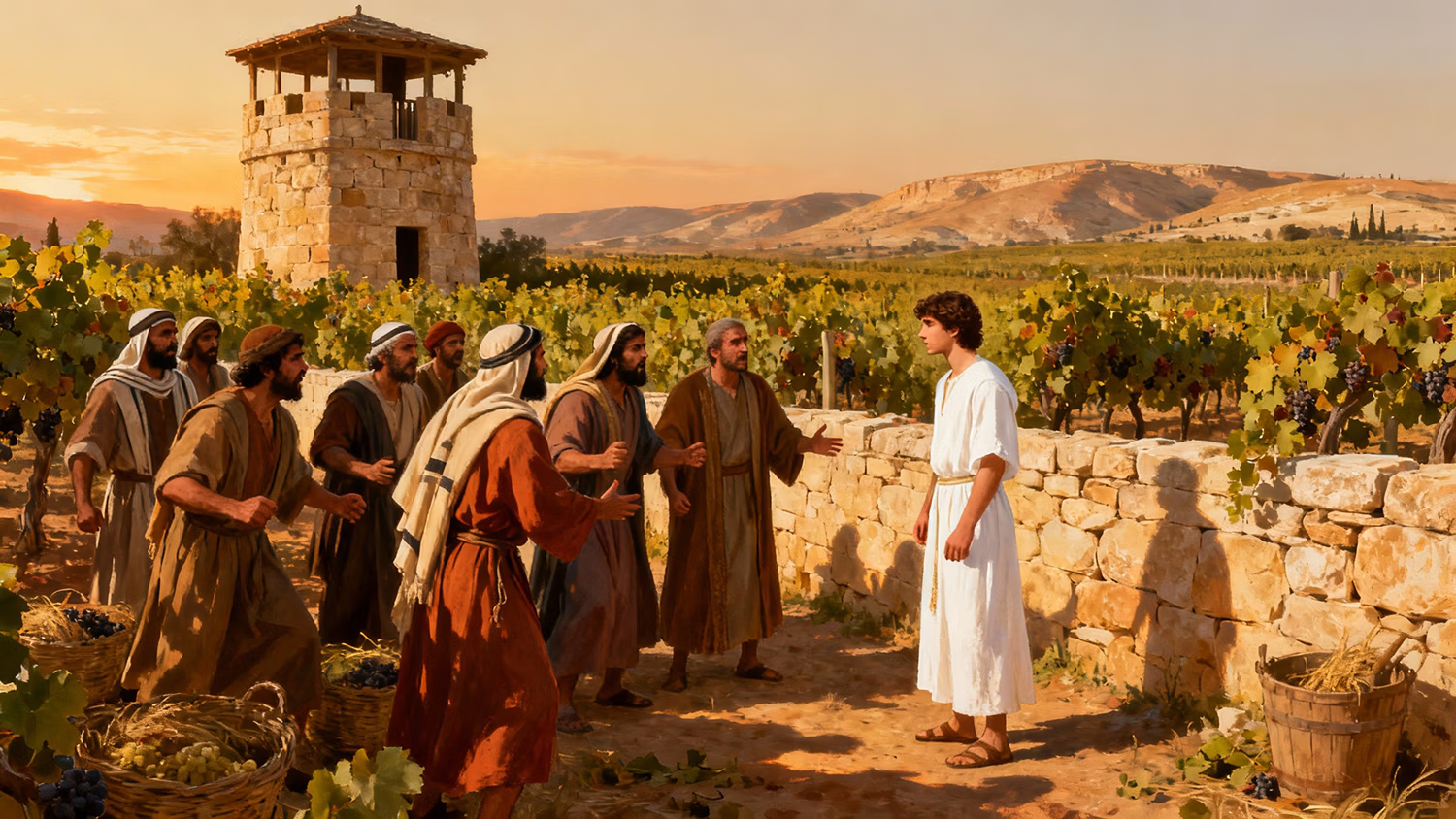
The wicked husbandmen parable is one of Jesus’ most direct confrontations with the religious leaders of Israel. This powerful teaching, recorded in Matthew 21:33-46 and Mark 12:1-12, uses the familiar imagery of a vineyard to reveal how God’s chosen people repeatedly rejected His messengers and would ultimately reject His Son. Understanding this parable helps believers recognize both the severity of rejecting Christ and the incredible grace extended to all who respond to God’s invitation.
Table of Contents
What Is the Parable of the Wicked Husbandmen?
The wicked husbandmen parable describes tenant farmers who refused to give the landowner his rightful harvest, mistreated his servants, and ultimately killed his son, thinking they could seize the inheritance for themselves.
In this teaching, Jesus employed imagery His audience knew well from Isaiah 5:1-7, where the vineyard represents Israel. The wicked husbandmen parable directly challenged the chief priests and Pharisees, who immediately recognized that Jesus was speaking about them. This confrontation occurred during the final week of Jesus’ earthly ministry, making it one of His most pointed and prophetic statements about His coming death and resurrection.
The landowner in the story represents God the Father, who carefully prepared His vineyard with every provision necessary for abundant fruit. As Pastor Chuck Frank explains in his teaching, this preparation included hedging it around, digging a winepress, and building a tower. All the infrastructure for success was in place. The husbandmen, representing Israel’s religious leadership, were entrusted with a tremendous responsibility and given every resource needed to fulfill their calling.
The Servants Sent to Collect the Harvest
God repeatedly sent prophets throughout Israel’s history to call His people back to faithfulness, yet the religious leaders consistently rejected, persecuted, and killed these messengers.
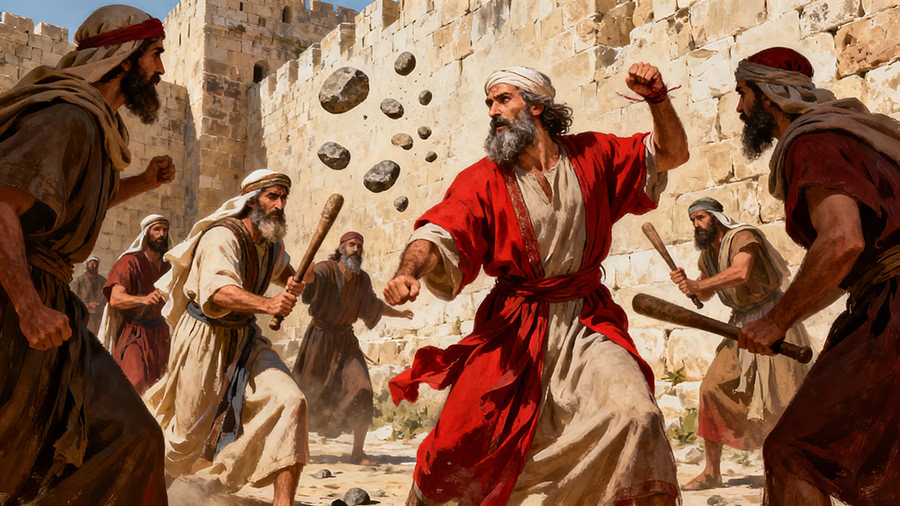
When vintage time approached, the landowner sent servants to collect his rightful portion of the harvest. This pattern of sending messengers represents how God faithfully dispatched prophets throughout the Old Testament era, and these servants were part of a long line of faithful witnesses.
“Again he sent them another servant, and at him they threw stones, wounded him in the head, and sent him away shamefully treated. And again he sent another, and him they killed; and many others, beating some and killing some.” (Mark 12:4-5)
The treatment of these servants parallels the historical persecution of God’s prophets. Jeremiah was beaten and imprisoned. Zechariah was stoned in the temple courtyard. John the Baptist was beheaded. As Pastor Chuck Frank notes, this pattern continued even after Jesus’ resurrection, with Stephen being stoned and Paul facing constant persecution. The wicked husbandmen parable exposed how Israel’s leadership had a long history of rejecting divine messengers, which was a pattern that stretched across generations.
This section of the parable reveals something profound about God’s character: His patience. Rather than immediately judging the wicked husbandmen, He continued sending messengers, giving opportunity after opportunity for repentance. For believers today seeking to understand God’s providence in difficult circumstances, this parable demonstrates that the Lord’s patience should never be mistaken for indifference. He actively works through human history to accomplish His purposes.
The Beloved Son is Sent and Rejected
The landowner finally sent his beloved son, expecting the tenants would respect him, but they conspired to kill him and seize his inheritance.
The climactic moment of the wicked husbandmen parable comes when the owner decides to send his only son:
“Therefore still having one son, his beloved, he also sent him to them last, saying, ‘They will respect my son.’ But those vinedressers said among themselves, ‘This is the heir. Come, let us kill him, and the inheritance will be ours.'” (Mark 12:6-7)
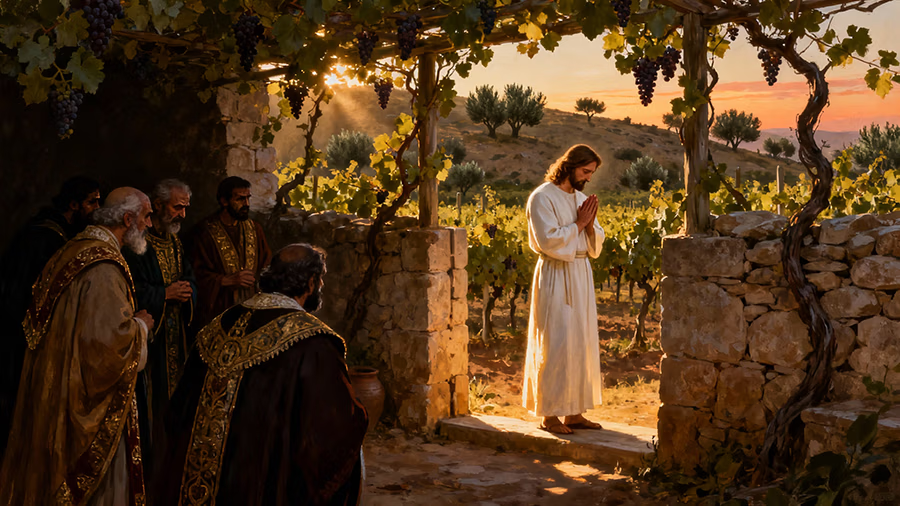
Jesus was describing His own identity and destiny. The religious leaders knew exactly who He was claiming to be. They had repeatedly asked Him, “Are You the Son of God?” knowing the answer. As Pastor Chuck Frank observes, Jesus referred to Himself as the “Son of Man,” a title from Daniel’s prophecy 500 years earlier that identified the Messiah. The leaders knew precisely who Jesus was, yet they chose to reject Him because He threatened their position and power.
The calculation of the wicked husbandmen revealed their true hearts. They reasoned that if they killed the heir, the inheritance would become theirs under Jewish property law. This mirrors the actual conspiracy of the chief priests and Pharisees, who plotted to kill Jesus not out of theological conviction but out of self-interest and protection of their corrupt system.
The wicked husbandmen parable is deeply connected to other parables of Jesus that reveal the heart’s true condition. Just as the rich fool stored up treasure for himself while neglecting his soul, the religious leaders grasped at earthly power while rejecting eternal life.
The Stone the Builders Rejected
Jesus quoted Psalm 118:22 to declare that though He would be rejected and killed, He would become the cornerstone of God’s new spiritual building.
After presenting the wicked husbandmen parable, Jesus asked His audience what the owner would do to these tenants. In Matthew’s account, the religious leaders pronounced their own judgment:
“They say unto him, He will miserably destroy those wicked men, and will let out his vineyard unto other husbandmen, which shall render him the fruits in their seasons.” (Matthew 21:41)
Jesus then quoted Scripture that the leaders knew well:
“Have you not even read this Scripture: ‘The stone which the builders rejected has become the chief cornerstone. This was the LORD’s doing, and it is marvelous in our eyes’?” (Mark 12:10-11)
In ancient construction, the cornerstone was the perfectly squared stone to which every other stone in the building was aligned. If the cornerstone was rejected or improper, the entire structure would be unstable. Jesus was declaring that though the religious “builders” would reject Him, He would become the foundation of an entirely new spiritual building, which is His Church.
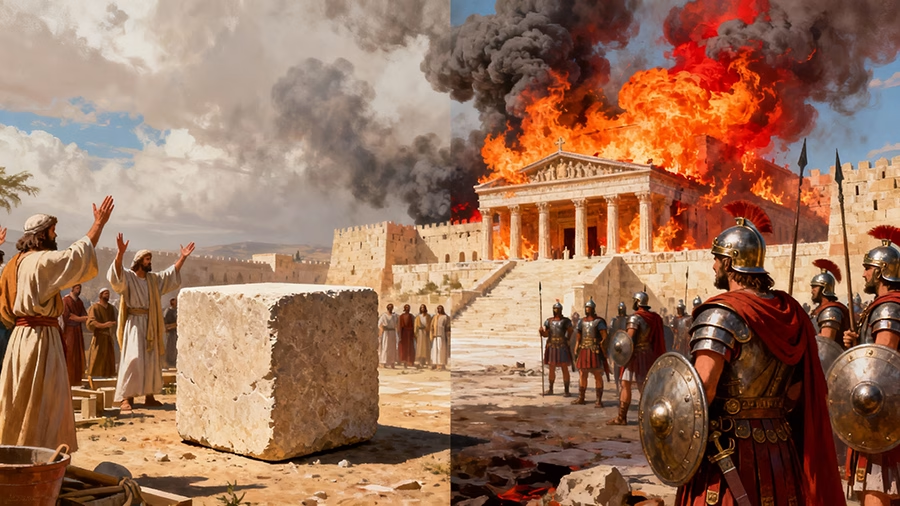
This prophecy found literal fulfillment in AD 70 when Roman forces under Titus destroyed Jerusalem and the Temple. As Pastor Chuck Frank explains, the devastation was catastrophic: a million people killed, over 33,000 Jewish men crucified on the walls, and the magnificent Temple reduced to rubble. The wicked husbandmen parable had warned of this judgment forty years before it occurred.
Understanding biblical prophecy fulfilled in history strengthens our confidence in God’s Word. The Book of Esther series demonstrates how Scripture accurately records historical events while revealing deeper spiritual truths.
The Marriage Feast: God’s Gracious Invitation Extended
Jesus paired the wicked husbandmen parable with the parable of the marriage feast to show that God’s invitation would extend beyond Israel to all who would respond.
In Matthew 22:1-14, Jesus immediately followed with another parable about a king who prepared a wedding feast for his son:
“The kingdom of heaven is like a certain king who arranged a marriage for his son, and sent out his servants to call those who were invited to the wedding; and they were not willing to come.” (Matthew 22:2-3)
This parable expands the theme of the wicked husbandmen parable. The king represents God, the son is Jesus Christ (the bridegroom), and His church is His bride. The invitation went first to those who were “invited,” meaning Israel, God’s chosen people.
As Pastor Chuck Frank teaches, the wedding invitation process in Jesus’ time involved two steps: first announcing the coming event, then summoning guests when everything was ready. Despite multiple invitations and tremendous preparation, the invited guests refused to come. Some went about their business, while others actually seized and killed the king’s servants.
The king’s response was severe but just. He destroyed those murderers and burned their city, which was another prophetic reference to Jerusalem’s destruction in AD 70. But the feast must go on, so he sent servants into the highways to invite anyone they could find, both bad and good, until the wedding hall was filled.
This expansion of the invitation represents the gospel going to the Gentiles. When the chosen people rejected their Messiah, God opened the door to all nations. The mission of Trust and Obey with Chuck Frank reflects this ongoing invitation, calling all people to respond to God’s grace.
The Wedding Garment: Righteousness Required
A guest who refused the king’s wedding garment was cast out, illustrating that those who come to God must accept His provision of righteousness rather than relying on their own.
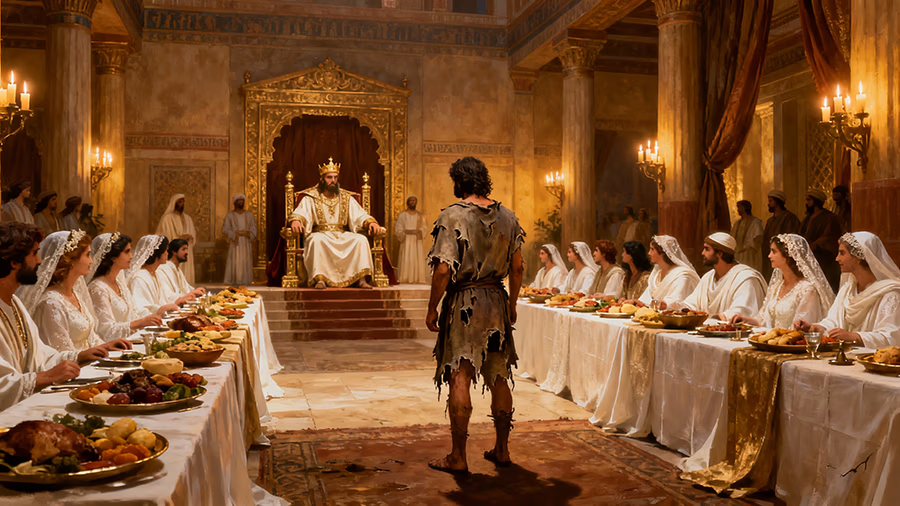
One detail in the marriage feast parable deserves special attention:
“But when the king came in to see the guests, he saw a man there who did not have on a wedding garment. So he said to him, ‘Friend, how did you come in here without a wedding garment?’ And he was speechless.” (Matthew 22:11-12)
In ancient royal weddings, the king provided wedding garments for all guests so the celebration would appear unified and honoring. This guest, likely someone from the highways, refused the offered garment and came in his own clothes.
Pastor Chuck Frank emphasizes what this speechlessness reveals about judgment: when we stand before God, those who rejected His provision of righteousness will be so convicted that they will have no defense. The wedding garment represents the righteousness of Christ, which He freely offers to all who come. Those who refuse it, thinking their own righteousness is sufficient, will be cast into “outer darkness” where there is “weeping and gnashing of teeth.”
Jesus concluded: “For many are called, but few are chosen.” The invitation goes out broadly, but only those who respond in faith, accepting God’s terms rather than their own, enter the kingdom.
This teaching connects directly to the wisdom literature of Proverbs, where Lady Wisdom calls out in the streets, inviting all to her feast, while Lady Folly leads many to destruction.
Contemporary Application: Responding to God’s Invitation
The wicked husbandmen parable and marriage feast challenge modern believers to examine whether they are producing fruit for God’s kingdom and responding to His gracious invitation.
These parables speak powerfully to contemporary Christians and churches. Are we, as stewards of God’s truth, producing the fruit He expects? Or have we, like the religious leaders of Jesus’ day, created comfortable systems that serve our interests rather than God’s purposes?
Pastor Chuck Frank points out that our churches often look “homogeneous,” with everyone smiling and behaving nicely. But Jesus warned that the church would contain both “bad and good” until the final judgment. The sorting will happen at the end, not now. This should produce both humility and urgency in our witness.
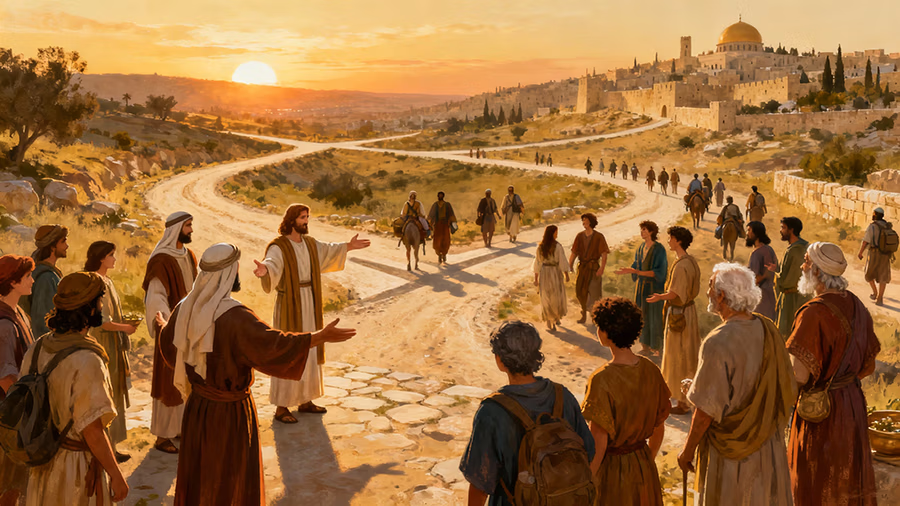
Several practical applications emerge from these parables:
First, recognize that God’s patience is not permission. The wicked husbandmen received multiple opportunities before judgment fell. Our culture’s long enjoyment of gospel privilege does not guarantee its continuation.
Second, accept Christ’s righteousness rather than trusting your own. Like the guest without a wedding garment, those who approach God on their own terms will be speechless in judgment.
Third, understand that rejection of Christ has consequences. The temple’s destruction in AD 70 was a historical judgment with spiritual significance. Future judgment awaits all who reject the Son.
Fourth, embrace God’s gracious invitation. The highways invitation means the gospel is for everyone, including those society considers “bad.” When we explore stories like Ruth, we see how outsiders became integral to God’s redemptive plan.
The Cornerstone Today: Building on Christ
Jesus remains the cornerstone of God’s spiritual building, and all who build their lives upon Him will stand secure when judgment comes.
The wicked husbandmen parable ends with a sobering image:
“And whoever falls on this stone will be broken; but on whomever it falls, it will grind him to powder.” (Matthew 21:44)
There are only two responses to Christ: fall upon Him in brokenness and repentance, or be crushed beneath Him in judgment. There is no neutral ground.
For believers today, Jesus Christ remains the chief cornerstone. The religious establishment of His day rejected Him, but God raised Him from the dead and established His Church. As Pastor Chuck Frank concludes, what seemed like a victory for the wicked husbandmen was actually the beginning of something far greater. From that “mean little temple in that mean little city,” the gospel of Jesus Christ has spread across the entire world.
The Five Smooth Stones series offers foundational truths for building a life on Christ, the cornerstone. Those who build on this foundation will stand when all else crumbles.
Frequently Asked Questions (FAQs)
What is the main message of the wicked husbandmen parable?
The wicked husbandmen parable reveals God’s patience in sending messengers to Israel, the religious leaders’ persistent rejection of those messengers, and the ultimate judgment that would fall on those who rejected God’s Son. It prophesied both Christ’s death and the destruction of Jerusalem in AD 70.
Why did Jesus tell the parable of the wicked husbandmen?
Jesus told this parable to directly confront the chief priests and Pharisees with their spiritual rebellion, to prophesy His own death at their hands, and to announce that the kingdom would be given to those who would produce its fruit, namely the Church composed of believing Jews and Gentiles.
What does the vineyard represent in the parable?
The vineyard represents Israel, God’s chosen people, based on Isaiah 5:1-7 where the same imagery is used. The wicked husbandmen (tenants) represent Israel’s religious leadership, while the servants represent the prophets whom God sent throughout history.
How does the marriage feast parable connect to the wicked husbandmen parable?
Both parables illustrate Israel’s rejection of God’s invitation and the consequences of that rejection. The wicked husbandmen parable focuses on the leaders’ rebellion, while the marriage feast parable emphasizes God’s gracious extension of the invitation to all people, showing that the gospel would go to the Gentiles after Israel’s rejection.
Further Reading
For additional study on the wicked husbandmen parable and related biblical themes, consider these scholarly resources:
- Blue Letter Bible Commentary on Matthew 21 offers verse-by-verse analysis and historical background
- Enduring Word Bible Commentary on Mark 12 provides detailed exposition of Mark’s account
- Ligonier Ministries: The Parable of the Tenants offers Reformed theological perspective
- GotQuestions: Meaning of the Parable of the Vineyard answers common questions about interpretation
- Encyclopedia Britannica: Siege of Jerusalem (70 CE) provides historical context for the prophesied judgment
