
Proverbs 28 is a concentrated call to righteous living in a world that rewards compromise. Written under Solomon’s wisdom, this chapter confronts cowardice, corrupt leadership, dishonest wealth, and the danger of a hardened heart. Whether you are a believer, a leader, or someone searching for a moral compass, Proverbs 28 speaks with urgent and timeless clarity.

Table of Contents
The Wicked Flee, But the Righteous Stand Firm
What does Proverbs 28 say about courage and righteousness?
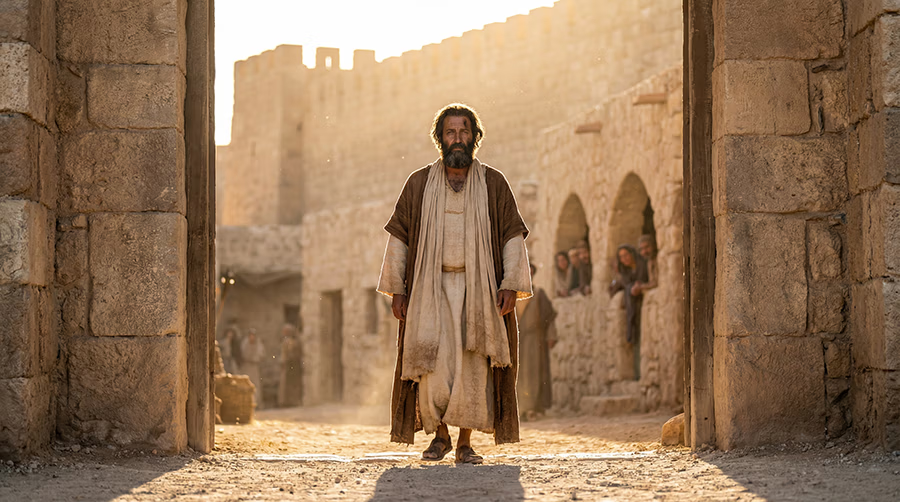
The righteous are described in Proverbs 28 as bold as a lion, while the wicked flee even when no one is chasing them. A clear conscience before God produces fearlessness, while guilt creates its own prison of anxiety and restlessness.
“The wicked flee when no one pursues, but the righteous are bold as a lion.” Proverbs 28:1
There is something deeply instructive here. Wickedness breeds a paranoid restlessness. Those who live outside God’s law are constantly looking over their shoulders, even when no enemy is present. Guilt is its own prosecutor. But the person walking in righteousness possesses a lion-hearted confidence, not because of their own strength, but because they are walking in alignment with God.
This is not a call to arrogance. It is a call to the settled, unshakeable boldness that comes from a clear conscience before God. As you study our comprehensive Proverbs series, you will find this theme of integrity and courage woven throughout every chapter of Solomon’s wisdom.
Transgression, Leadership, and the Law of God
What does Proverbs 28 teach about leadership and justice?
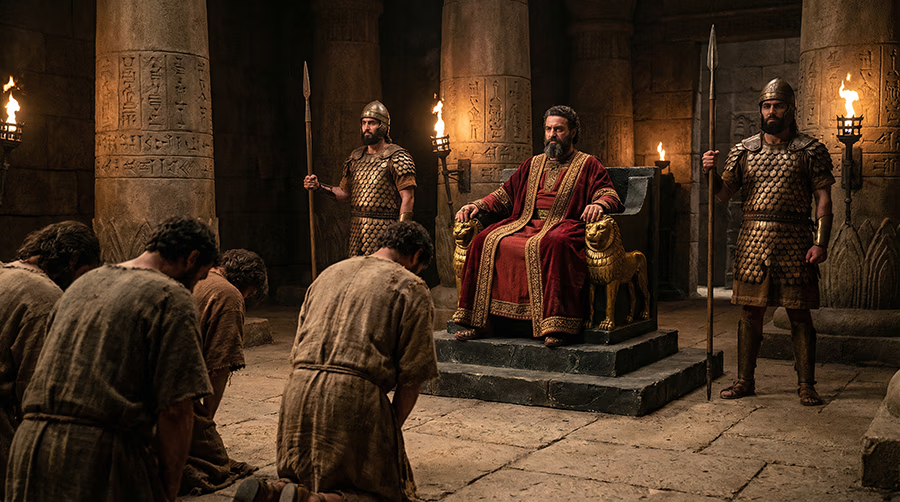
Proverbs 28 directly links a nation’s spiritual health to the character of its leaders. When a land is marked by transgression, it cycles through rulers without stability. But understanding and knowledge in leadership prolong what is right and just.
“Because of the transgression of a land, many are its princes; but by a man of understanding and knowledge right will be prolonged.” Proverbs 28:2
A society reaps the leadership it deserves spiritually. This insight cuts straight to the heart of every political cycle. When a people forsake God’s law, they create a vacuum that unstable, opportunistic rulers rush to fill. Those who keep the law, Solomon tells us, will contend with the wicked rather than applaud them. This theme runs parallel to the prophetic commentary found in Today’s Concerns, where Scripture is applied directly to the pressing political and cultural challenges of our moment.
Proverbs 28 also delivers a sobering warning about oppressive rulers. A wicked ruler over poor people is compared to a roaring lion and a charging bear, predatory, destructive, and without restraint. The ruler who lacks understanding becomes a great oppressor, while the one who hates covetousness will prolong his days. Leadership and character cannot be separated.
Integrity Over Wealth: The Only Acceptable Trade
What does Proverbs 28 say about wealth and honesty?
In a culture saturated with the pursuit of financial success, Proverbs 28 offers a counter-cultural standard. Poverty with integrity outweighs wealth built on compromise. This is not a romanticization of poverty but a clear-eyed declaration that how you gain what you have matters eternally.
“Better is the poor who walks in his integrity than one perverse in his ways, though he be rich.” Proverbs 28:6
Solomon also speaks directly to those who pursue wealth through usury and extortion, stating plainly that what they gather will ultimately be given to those who pity the poor. The wheel of divine justice always turns. This principle complements what Proverbs 21 teaches about God’s sovereignty over the plans of men, including their financial ones.
The person who hastens to be rich without faithfulness will not go unpunished, while the faithful man will abound with blessings. This is not a promise of material comfort. It is a promise of the deep, durable blessing that flows from a life of trustworthy character. For a broader framework on building this kind of faithful life, The 4-3 Formula offers a practical biblical strategy for purpose-driven, obedient living.
Confession, Mercy, and the Peril of a Hardened Heart
What is the biblical wisdom in Proverbs 28 about sin and confession?
Perhaps the most personally convicting section of Proverbs 28 deals with the human tendency to cover and conceal sin rather than confess it. Solomon makes the terms of mercy unmistakably plain.
“He who covers his sins will not prosper, but whoever confesses and forsakes them will have mercy.” Proverbs 28:13
Concealment is the enemy of healing. Every believer faces the temptation to minimize, rationalize, or hide their failures. But Proverbs 28 makes the terms unmistakably clear: covered sin leads to stagnation, while genuine confession and forsaking of sin opens the door to mercy. This is not merely Old Testament wisdom. The Apostle John echoes this exact principle in 1 John 1:9, and it remains the foundation of every authentic spiritual restoration.
Solomon pairs this with a complementary truth: “Happy is the man who is always reverent, but he who hardens his heart will fall into calamity.” Reverence before God is not weakness. It is the wisest posture a human being can take. Proverbs 28 calls believers to a tender, responsive heart rather than the brittle self-sufficiency that leads to catastrophe.
The call to a tender heart connects naturally to the deep reflective teachings available in the QOHELETH series, which draws on the wisdom of Ecclesiastes to challenge modern believers to examine their hearts with honesty and humility.
Self-Trust, Generosity, and the Final Verdict of Proverbs 28
What is the main lesson of Proverbs 28 for Christians today?
Proverbs 28 closes with two final contrasts that bring its entire argument to a head. The first concerns where you place your trust.
“He who trusts in his own heart is a fool, but whoever walks wisely will be delivered.” Proverbs 28:26
The heart is not a reliable compass on its own. This is counterintuitive to modern culture, which constantly tells us to trust our instincts and follow our feelings. But Solomon, the wisest man who ever lived, calls self-trust folly. The alternative is not mindless conformity but walking wisely, which in the context of Proverbs means walking in the fear of the Lord, aligned with His Word and His ways. You will find this theme explored in depth in our study of Proverbs 14, where the fear of the Lord is presented as the anchor of all wisdom.
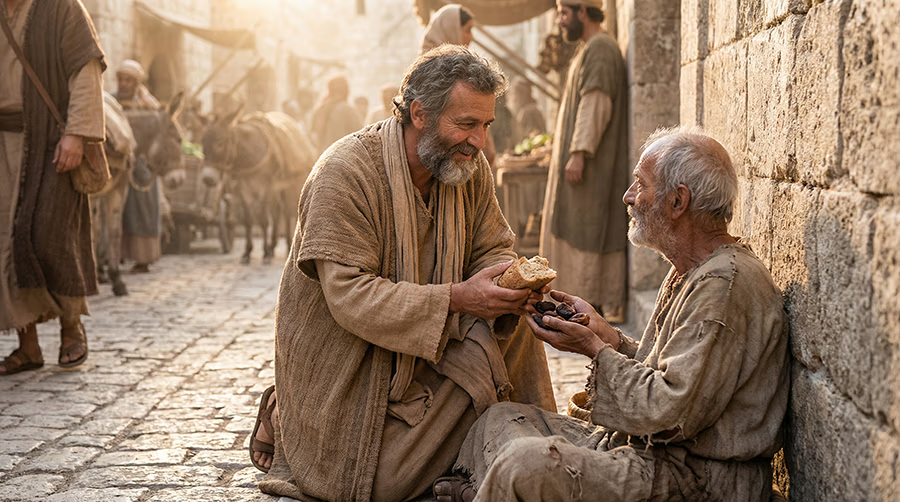
The second closing contrast is about generosity. The one who gives to the poor will not lack, while the one who hides his eyes will face many curses. Proverbs 28 ends where it began: with a clear and unambiguous choice between two ways of living.
“He who gives to the poor will not lack, but he who hides his eyes will have many curses.” Proverbs 28:27
Living Proverbs 28 Today
The world described in Proverbs 28 is not ancient history. It is today’s news cycle, today’s boardroom, today’s household, and today’s heart. Corrupt leadership, dishonest wealth, concealed sin, and prideful self-reliance are not challenges from three thousand years ago. They are the defining struggles of every generation.
Proverbs 28 invites you to make a daily, deliberate choice: walk in integrity, confess what needs confessing, trust God over your own instincts, and give generously. These are not heroic acts reserved for saints. They are the ordinary decisions that, accumulated over a lifetime, define whether you lived as the righteous or the wicked.
If you want to go deeper in your study of Solomon’s wisdom, explore the full range of Bible Messages taught by Chuck Frank, covering verse-by-verse analysis of Scripture with application for modern life. You can also engage with fellow believers seeking to apply these truths in our faith-centered Community.
The wicked flee. The righteous stand bold as a lion. Proverbs 28 asks simply: which one are you choosing to be today?
Frequently Asked Questions (FAQs)
What is the main theme of Proverbs 28?
The central theme of Proverbs 28 is the contrast between righteous and wicked living across every area of life, including leadership, wealth, speech, and integrity. Solomon calls believers to walk in integrity, trust God rather than themselves, and choose confession over concealment.
What does Proverbs 28:1 mean when it says the righteous are bold as a lion?
Proverbs 28:1 teaches that a clear conscience before God produces genuine courage and confidence. The wicked are restless and fearful because guilt generates its own anxiety, while the righteous experience a settled boldness rooted in their walk with God, not in personal bravado.
What does Proverbs 28 say about confession of sin?
Proverbs 28:13 is one of the clearest statements in the Old Testament about sin and mercy: covering sin leads to stagnation, while confessing and forsaking sin opens the door to God’s mercy. This principle is reinforced throughout the New Testament and is foundational to Christian spiritual health.
How does Proverbs 28 apply to leadership today?
Proverbs 28 directly links national and civic stability to the character of its leaders. A ruler who lacks understanding becomes an oppressor, while one who hates covetousness builds enduring governance. This resonates deeply with the ministry’s mission that a Constitutional Republic can only survive with a believing populace.
Further Reading
- Proverbs 28 Full Text, NIV and NKJV (Bible Gateway) — Read the complete chapter in multiple translations for side-by-side comparison.
- Matthew Henry’s Commentary on Proverbs 28 (Bible Study Tools) — A classic Puritan commentary offering verse-by-verse exposition of this chapter.
- Theological Wordbook of the Old Testament on “Sedeq” (Righteousness) (Study Light) — Background on the Hebrew concept of righteousness used throughout Proverbs.
- Ancient Israelite Culture and Legal Context (Biblical Archaeology Society) — Cultural context for Solomonic proverbs related to law, poverty, and leadership.


