
January 17, 2026

Two parables from Jesus reveal complementary truths about kingdom participation. The Parable of the Talents (Matthew 25:14-30) emphasizes faithful stewardship of God-given spiritual gifts and human accountability. The Parable of the Seed Growing Secretly (Mark 4:26-29) reveals mysterious divine sovereignty producing growth beyond human understanding. Together, they balance responsibility with trust in God’s unseen work.
Table of Contents
What Does the Parable of the Talents Teach About Spiritual Gifts?
The Parable of the Talents illustrates how Christ distributes spiritual gifts uniquely to each believer according to their capacity. Faithfulness in using these God-given abilities glorifies the kingdom, while neglecting them represents unfaithfulness that brings divine judgment and lost kingdom opportunities.
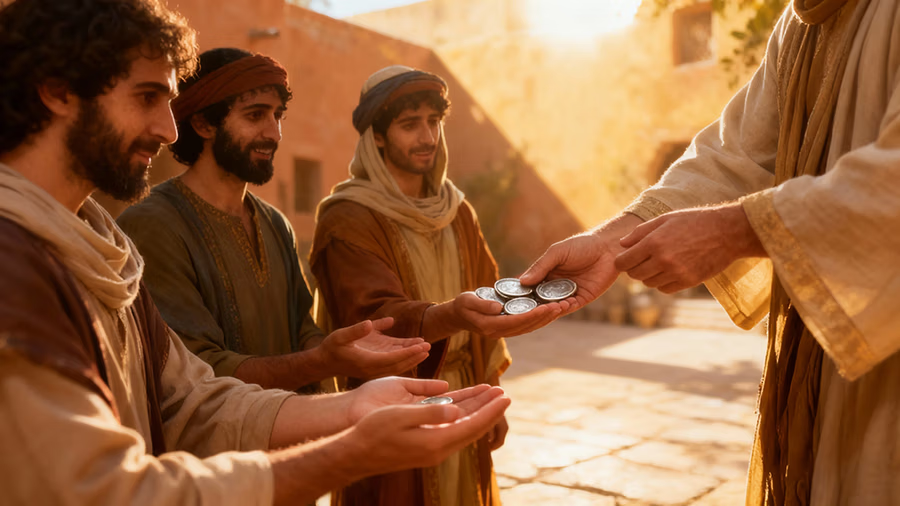
The opening of Matthew 25:14-30 establishes the foundational imagery for understanding spiritual stewardship. Jesus describes the kingdom of heaven as a man traveling to a far country who calls his servants and delivers his goods to them. This master represents Christ himself, who ascended to heaven after breathing the Holy Spirit into His disciples.
The distribution of talents follows a precise pattern. To one servant he gave five talents, to another two, and to another one. The critical phrase appears in verse 15:
“to each according to his own ability.”
This divine allocation principle shatters human assumptions about fairness and equality. God determines each believer’s spiritual portfolio before birth, and no two combinations are identical.
The servants who received five and two talents immediately went to work. They traded with their master’s resources and doubled what they received. This multiplication represents kingdom growth happening through faithful use of spiritual gifts. When believers actively employ their unique abilities for God’s glory, the body of Christ expands and spiritual fruit increases throughout the world.
The servant with one talent made a drastically different choice. He dug in the ground and hid his lord’s money. This action reveals a fundamental misunderstanding of stewardship. God gives spiritual gifts not for safekeeping but for active deployment. The burial of the talent represents believers who know their calling but refuse to act, who recognize their gifts but choose comfort over obedience.
The phrase “after a long time” in verse 19 carries profound significance for every generation of believers. We all wonder when Christ will return. Jesus intentionally leaves this timeline vague, teaching that “a long time” operates on divine rather than human measurement. Tomorrow remains a possibility, yet generations may pass before the Master’s return.
When the master finally settles accounts, he focuses entirely on faithfulness rather than numerical results. The servant with five talents hears the commendation:
“well done, good and faithful servant”
This praise comes not because he produced the highest return on investment but because he faithfully stewarded what he received. The servant with two talents receives identical praise despite generating fewer talents.
This equal commendation demolishes worldly success metrics. The kingdom operates on different mathematics. A CEO managing a Fortune 500 company might possess capacity for only one spiritual gift, while someone society overlooks might carry multiple gifts. God sees hearts, measuring faithfulness rather than visible accomplishments.
The reward for faithful stewardship extends beyond earthly recognition. The master promises rulership over many things and invites his servants to “enter into the joy of the Lord.” This joy represents the energizing presence of God experienced when believers operate in their spiritual gifts. Christianity transforms from dutiful obligation to joyful participation when spiritual gifts activate through obedient use.
First Corinthians 2:9 expands this promise with transcendent language:
“Eye has not seen nor ear heard nor have entered into the heart of man the things which God has prepared for those who love Him.”
The rewards awaiting faithful servants surpass human imagination. Yet most believers struggle to identify their spiritual gifts, much less deploy them effectively.
The servant who buried his talent faced severe consequences. His excuse revealed fear masquerading as caution. He claimed to fear his master’s harshness, yet his inaction demonstrated contempt for his master’s generosity. The master’s response exposes this contradiction. If the servant truly feared accountability, he would have minimally invested the talent to earn interest.
The judgment scene reveals God’s perspective on wasted gifts. The unprofitable servant loses even the single talent he received, and the master casts him into outer darkness where there is weeping and gnashing of teeth. This severe outcome underscores the eternal significance of spiritual stewardship. God takes seriously the unique gifts He distributes, and believers bear responsibility for faithful deployment.
Understanding spiritual gifts requires recognizing their uniqueness to each individual. No believer possesses an identical spiritual gift combination. When you fail to use your specific gifts, the kingdom and the world lose something irreplaceable. Your spiritual portfolio exists for purposes only you can fulfill.
The question confronting every believer becomes: What spiritual gifts has God given me, and am I using them faithfully? Most Christians cannot answer this question. They muddle through religious activity without understanding their unique calling. Discovering and deploying spiritual gifts transforms Christian experience from generic religious obligation to purposeful kingdom participation.
How Does the Parable of the Talents Apply to Modern Believers?
Modern believers must identify their unique spiritual gifts and faithfully deploy them regardless of quantity received. Success measures by faithfulness to calling rather than visible results, since God evaluates hearts over accomplishments while every unused gift represents lost kingdom potential.
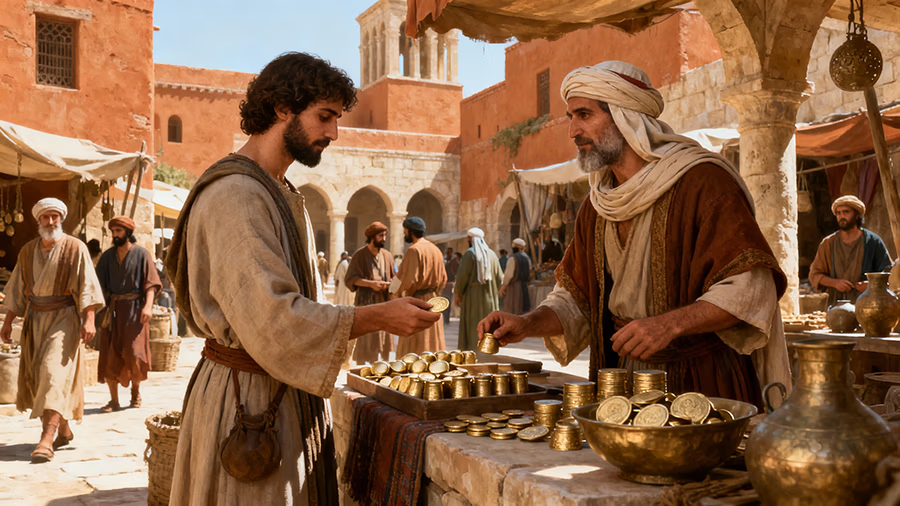
Contemporary Christianity often fixates on measurable outcomes. Churches track attendance, conversions, and budget growth. Ministries celebrate visible success and public recognition. Yet the Parable of the Talents redirects focus toward faithful stewardship over impressive statistics.
Consider two believers: one leading large-scale ministry touching thousands, another quietly serving in obscurity touching few. Worldly assessment values the first more highly. But God’s mathematics operate differently. If both faithfully deploy their assigned gifts, both hear identical commendation:
“well done, good and faithful servant.”
This principle challenges American achievement culture infiltrating churches. Believers pressure themselves to accomplish great things for God, measuring ministry success by attendance numbers and social media engagement. Yet Jesus teaches that faithfulness in using whatever gifts God provides matters infinitely more than comparative accomplishments.
The pressure to perform often paralyzes believers into inaction. Like the servant who buried his talent, many Christians fear failure more than they trust God’s grace. They reason that unused gifts cannot produce disappointing results. Yet this self-protective logic guarantees the very failure they fear.
Faithful stewardship requires risk-taking. The servants who doubled their talents had to trade, invest, and potentially lose everything. They trusted their master’s wisdom in distributing talents according to ability. This trust freed them to act boldly without guaranteeing outcomes. The wisdom for words, work, and righteous living found in Proverbs 13 emphasizes diligent labor as pathway to blessing, reinforcing the parable’s call to active stewardship.
Modern believers need similar trust. Your spiritual gifts come perfectly calibrated to your capacity. God does not set you up for failure by assigning gifts you cannot handle. He also does not waste kingdom resources by withholding gifts you could deploy. Whatever portfolio you receive matches exactly what you can faithfully steward.
The Proverbs study series available through the Trust and Obey platform explores practical wisdom for daily obedience. These teachings demonstrate how biblical principles shape contemporary decision-making across every life dimension. When believers ground their stewardship in scriptural wisdom, they gain confidence to deploy gifts boldly.
Identifying spiritual gifts starts with honest self-assessment. What activities energize rather than drain you? Where do others consistently affirm your contributions? What ministry opportunities recur in your path? These questions help illuminate gifting patterns that might otherwise remain hidden.
Community plays a vital role in gift discovery. The Christian fellowship provides mirrors reflecting spiritual gifts back to believers who cannot see their own abilities clearly. When multiple people affirm a particular strength, pay attention. God often speaks through the body of Christ to reveal individual callings.
The Book of Esther series demonstrates how ordinary people become instruments of divine purpose when they faithfully steward their positions. Esther’s courage, Mordecai’s wisdom, and their strategic partnership illustrate how spiritual gifts multiply impact when believers work together toward kingdom purposes.
Prayer remains essential for gift activation. Ask God to reveal your spiritual gifts clearly. Request wisdom for faithful deployment. Seek courage to risk failure in obedient service. These prayers align with God’s revealed will, making their answers certain though timing remains mysterious.
Experimentation aids gift discovery. Try various ministry opportunities to discern where God has equipped you. Some activities will feel forced and awkward. Others will resonate deeply, producing energy and fruit beyond your natural abilities. These resonant areas likely indicate spiritual gifting.
The faithful character development emphasized throughout Trust and Obey teachings creates the foundation for effective gift deployment. Character flaws undermine spiritual effectiveness regardless of gifting strength. Holiness, humility, and integrity amplify gift impact while pride, dishonesty, and selfishness corrupt otherwise powerful abilities.
Remember that spiritual gifts serve kingdom purposes rather than personal advancement. The servants in the parable traded their master’s resources for their master’s benefit. Similarly, believers deploy spiritual gifts to glorify God and build His kingdom rather than establish personal empires or gain human applause.
What Is the Parable of the Seed Growing Secretly?
The Parable of the Seed Growing Secretly in Mark 4:26-29 reveals how kingdom growth happens mysteriously through God’s sovereign work. Believers participate through faithful planting and watering, but transformation occurs through divine processes beyond human understanding or control.

Mark 4:26-29 presents a shorter parable that complements the Parable of the Talents perfectly. Jesus describes the kingdom of God as seed cast upon the ground. The sower sleeps and rises night and day, yet the seed sprouts and grows without his knowledge of the process.
This parable addresses a fundamental human frustration: we want to understand how everything works. We demand explanations for spiritual growth, kingdom expansion, and personal transformation. Yet Jesus teaches that mystery pervades kingdom operations. The earth yields crops by itself, first the blade, then the head, then the full grain.
The phrase “by itself” carries tremendous theological weight. Kingdom growth does not depend entirely on human effort or understanding. God built growth mechanisms into creation itself. Just as soil contains nutrients that nourish seeds without farmer intervention, spiritual reality contains divine dynamics that produce kingdom fruit beyond human engineering.
This truth liberates believers from impossible burdens. You cannot manufacture spiritual growth through technique mastery or strategic planning alone. You plant seeds through faithful proclamation and obedient living. You water through prayer and discipleship. But God causes growth through mysterious processes operating beyond your observation.
Nicodemus’ nighttime encounter with Jesus illustrates this mystery beautifully. As a Sanhedrin member, Nicodemus risked everything by seeking Jesus secretly. He acknowledged Jesus as a teacher sent from God, yet could not grasp spiritual rebirth. When Jesus declared that no one enters the kingdom without being born again, Nicodemus responded with confusion:
“How can a grown man return to his mother’s womb?”
Jesus’ explanation emphasized the mystery. The wind blows where it wishes. You hear its sound but cannot tell where it comes from or where it goes. Similarly, everyone born of the Spirit experiences this mysterious transformation. Nicodemus asked, “How can this be?” This question encapsulates the parable’s central truth. We often cannot know how spiritual transformation happens.
This mystery extends to prayer. Believers approach God with specific situations needing divine intervention. We often visualize clear paths for God to answer our prayers. We present both the problem and what we consider the most logical solution. Yet God almost never follows our suggested routes.
Instead, God works through creative, unexpected means that we do not recognize until much later. His chess game operates at levels far beyond our comprehension. He orchestrates circumstances involving multiple people across time in ways we cannot predict or control. This reality explains why Scripture teaches that we do not know what to pray for.
Thanksgiving and confession provide safer prayer territory. We clearly know our sins and can specifically confess them. We recognize blessings and can genuinely thank God for them. But intercession for specific outcomes requires humility about divine methodology. We pray constantly as commanded, yet hold our proposed solutions loosely.
The gradual growth pattern appears throughout creation. Plants move through predictable stages: seedling, sprouting, growing, dying, and reproducing. Yet the mechanisms driving these stages remain largely mysterious. We understand some biological processes, but the fundamental animating force behind life transcends scientific explanation.
Similarly, spiritual growth follows recognizable stages while operating through mysterious means. New believers start with simple faith, like a blade pushing through soil. Maturity develops as they study Scripture and experience trials, like a head forming on grain. Eventually, full maturity produces rich fruit visible to everyone, like grain ready for harvest.
The phrase “when the grain ripens” indicates recognizable completion. Everyone can identify mature grain ready for harvest. Yet the growth process leading to that moment largely escapes observation. This pattern suggests that Christians should focus less on understanding transformation mechanics and more on recognizing transformation results.
The harvest represents gathering people to Christ rather than final judgment. This parable addresses evangelism specifically. Disciples plant gospel seeds through proclamation. God causes mysterious growth through Holy Spirit conviction. Eventually, transformed lives become visible for harvest into the kingdom.
Adam Clarke observed that God destined every person born to become a Christian. This statement does not imply universal salvation but universal potential. Every person possesses capacity to respond to the gospel. The seed can grow in any soil willing to receive it. Human free will determines whether individuals allow growth or resist God’s work.
This truth encourages evangelism. You plant seeds without knowing which will produce fruit. Some gospel presentations fall on hard hearts and produce nothing. Others mysteriously germinate years later when circumstances soften previously resistant souls. Faithful proclamation matters regardless of immediate results, because God works beyond visible timelines.
The parable also addresses discouragement in ministry. Faithful believers plant and water yet see limited fruit. They wonder if their efforts matter. Yet kingdom growth happens constantly through means they cannot observe. Seeds planted years ago suddenly sprout. Prayers offered in secret produce visible answers through unexpected channels.
How Do These Two Parables Work Together?
The Parable of the Talents emphasizes faithful human stewardship while the Seed Growing Secretly highlights mysterious divine sovereignty. Together they reveal balanced kingdom partnership: believers faithfully deploy gifts while trusting God’s sovereign work beyond human understanding or control.
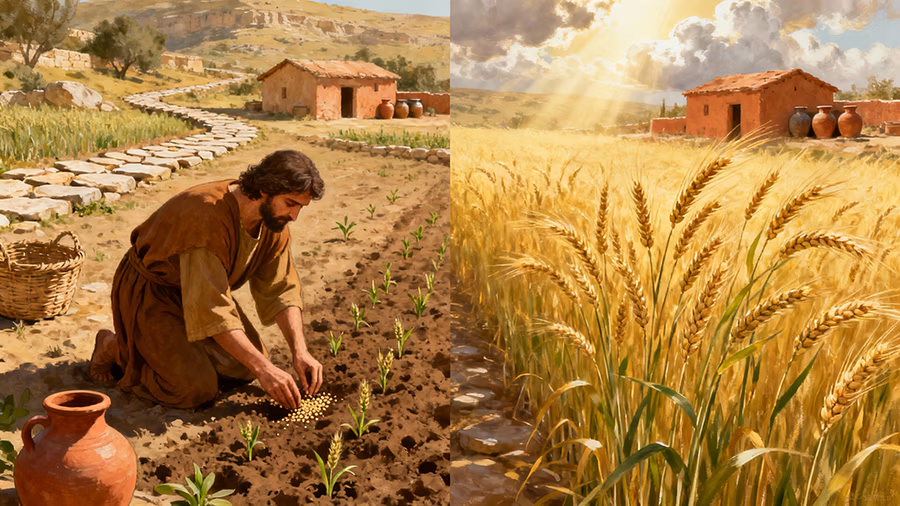
These parables form complementary perspectives on kingdom participation. The Parable of the Talents stresses human responsibility. God gives gifts expecting faithful deployment. Believers bear accountability for stewardship choices. Rewards follow faithful service while judgment follows negligence.
The Parable of the Seed Growing Secretly emphasizes divine sovereignty. God causes growth through mysterious processes. Human effort participates without controlling outcomes. Believers plant and water but cannot manufacture spiritual transformation. The wisdom for righteous living and discernment in Proverbs 20 explores this balance between human action and divine sovereignty in practical Christian living.
Holding both truths simultaneously prevents dangerous extremes. Overemphasizing human responsibility produces anxious striving and performance-based spirituality. Believers exhaust themselves trying to produce kingdom growth through human effort alone. They measure ministry success by visible metrics and despair when results disappoint.
Overemphasizing divine sovereignty produces passive fatalism. Believers assume God accomplishes everything regardless of human participation. They neglect gift deployment, evangelism, and discipleship because “God will do what God will do.” This perspective dishonors the Master who distributed talents expecting faithful use.
Biblical balance recognizes both realities. Believers faithfully deploy spiritual gifts as the Parable of the Talents commands. Simultaneously, they trust mysterious divine work beyond their understanding as the Seed Growing Secretly describes. This combination produces fruitful ministry without crushing responsibility.
Consider evangelism. Believers faithfully proclaim gospel truth using their unique communication gifts. They share testimonies, answer questions, and demonstrate Christ-like character. Yet they recognize that salvation comes through God’s mysterious work in human hearts. No technique guarantees conversion, because transformation operates beyond human control.
This balanced perspective maintains evangelistic urgency without producing guilt over limited visible results. You faithfully plant seeds through your unique gifts. God causes growth through His mysterious sovereign work. Some seeds sprout immediately, others germinate years later, and some never break ground during your lifetime.
The Today’s Concerns section applies biblical principles to contemporary cultural challenges. These teachings demonstrate how timeless scriptural truth addresses modern confusion. When believers understand both human responsibility and divine sovereignty, they engage current events with wisdom rather than anxiety.
The G-Drop commentary series connects scriptural principles to unfolding circumstances. These Spirit-led reflections help believers recognize God’s hand in contemporary situations. They illuminate how divine providence works through human agency without negating personal responsibility.
Prayer life benefits tremendously from balanced perspective. Believers pray with passionate urgency because prayer matters and God invites intercession. Yet they hold outcomes loosely because God works through means beyond human comprehension. They thank God for answers that arrive through unexpected channels rather than demanding specific methodologies.
Ministry partnerships flourish under balanced theology. Believers recognize their unique spiritual gifts while valuing different gifts in others. They work diligently without assuming everything depends on human effort. They trust God’s sovereign work while refusing to use divine sovereignty as excuse for laziness.
The mission of Trust and Obey recognizes that constitutional republics require believing populations. This truth reflects both human responsibility and divine sovereignty. Citizens must actively cultivate virtue and biblical understanding. Yet ultimate transformation comes through God’s mysterious work in hearts and cultures.
Personal spiritual growth follows this same pattern. Believers pursue holiness through spiritual disciplines, Scripture study, and community accountability. Yet transformation happens through God’s mysterious sanctifying work. You cooperate with grace without manufacturing change through willpower alone.
The balanced perspective produces humility. When ministry produces fruit, you recognize God’s sovereign work beyond your contribution. When efforts seem fruitless, you trust mysterious kingdom growth happening beyond observation. Success does not produce pride, and apparent failure does not produce despair.
George Washington’s prayer concludes these parables beautifully. He acknowledges God’s protection while requesting grace to faithfully discharge assigned duties. He recognizes divine sovereignty while accepting human responsibility. This prayer embodies the balanced perspective these parables teach.
What Are the Practical Steps for Discovering Spiritual Gifts?
Every believer possesses unique spiritual gifts requiring discovery and deployment. Yet most Christians remain ignorant of their specific gifting, wandering through religious activity without targeted purpose. Breaking this pattern demands intentional steps toward gift identification.
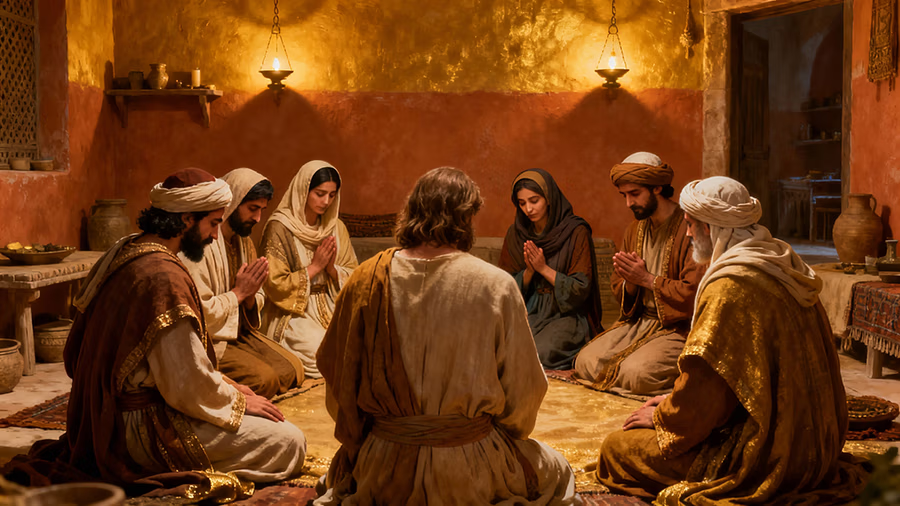
Prayer initiates the discovery process. Ask God specifically to reveal your spiritual gifts. This request aligns with His revealed will because He desires believers to operate in their callings. Pray consistently and expectantly, trusting that answers will come through various means over time.
Scripture study provides foundational understanding. Read passages describing spiritual gifts, including Romans 12, 1 Corinthians 12, Ephesians 4, and 1 Peter 4. Note which gifts resonate deeply, producing excitement or recognition. These emotional responses often indicate personal gifting patterns.
The Bible Messages series offers verse-by-verse teaching that deepens scriptural understanding. These comprehensive studies help believers grasp theological foundations necessary for identifying how God designed them for kingdom service. When biblical knowledge increases, gift recognition naturally follows.
Community feedback supplies external perspective. Ask mature believers to identify strengths they observe in you. Their observations often reveal gifting patterns invisible to self-assessment. When multiple people independently affirm similar strengths, pay serious attention to these consistent affirmations.
Experimentation reveals gifting through practical experience. Volunteer for various ministry opportunities even without certainty about gifting. Some activities will feel awkward and draining. Others will energize and produce disproportionate fruit. These energizing activities likely indicate spiritual gifting areas.
Notice what activities drain versus energize you. Spiritual gifts typically produce energy even when requiring significant effort. Operating outside your gifting drains energy even when tasks seem simple. This energizing pattern provides important clues about divine design.
Track where God opens doors repeatedly. When similar opportunities recur despite lack of pursuit, consider whether God highlights specific calling areas. Divine orchestration often manifests through recurring themes in circumstances, conversations, and opportunities.
The Five Smooth Stones toolkit provides scriptural foundations for spiritual growth. These key scriptures build strong faith foundations enabling confident gift deployment. When believers ground themselves in essential biblical truth, they gain boldness to step into uncertain ministry opportunities.
Consider your life experiences. God often prepares believers for specific ministry through difficult circumstances. Your trials equip you to minister to others facing similar challenges. Pain that seemed purposeless often becomes powerful testimony enabling ministry to hurting people.
Recognize that gifts manifest differently across life seasons. Young believers might emphasize teaching gifts through Sunday school. Mid-life believers might deploy hospitality gifts through home fellowship. Retired believers might activate mercy gifts through visitation ministry. Gifting remains consistent while expression adapts to circumstances.
Spiritual gifts differ from natural talents, though they may overlap. Natural talents come through genetics and environment. Spiritual gifts come through Holy Spirit empowerment for kingdom purposes. Sometimes God redeems natural talents as spiritual gifts. Other times spiritual gifts emerge in areas where natural ability seems absent.
The Resources page provides tools supporting spiritual development. These materials help believers grow in biblical understanding, prayer discipline, and practical obedience. Utilizing available resources accelerates progress toward gift discovery and faithful deployment.
Avoid comparison traps. Your spiritual gifts differ from everyone else’s by divine design. Comparing yourself to others produces either pride or discouragement, both destructive to faithful stewardship. Focus on faithfully deploying whatever gifts God gave you rather than envying gifts He gave others.
Remember that faithfulness matters more than visibility. Some spiritual gifts produce public ministry touching hundreds. Others produce private ministry touching few. Both receive identical divine commendation when exercised faithfully. Resist cultural pressure to pursue visible platform ministry if God designed you for behind-the-scenes service.
Character development remains foundational. Spiritual gifts operating through flawed character produce limited fruit. The pursuit of holiness, humility, and integrity multiplies gift effectiveness exponentially. Never prioritize gift discovery over character transformation.
Start where clarity exists. Perhaps you cannot identify all your spiritual gifts yet. Begin using whatever gifts you recognize right now. Faithful deployment of known gifts often reveals additional gifting over time. Obedience creates momentum toward fuller calling discovery.
How Should Believers Respond When They Recognize Their Spiritual Gifts?
Gift discovery demands immediate response. The servants in the parable who received talents immediately went and traded with them. They did not wait for perfect circumstances or complete understanding. Recognition prompted action, and action produced multiplication.
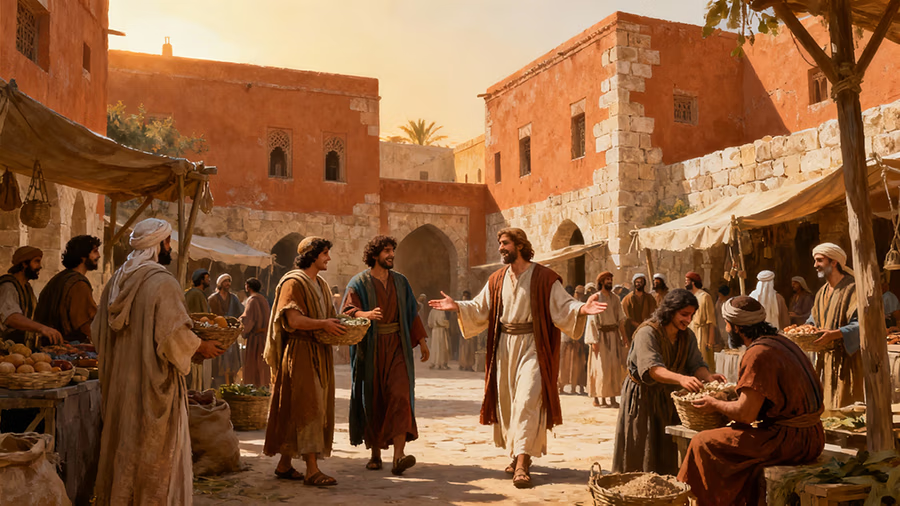
Begin with available opportunities rather than waiting for ideal platforms. The servant with two talents did not refuse to serve until he received five. He faithfully deployed what he had where he was. Similarly, believers should use their gifts in present circumstances rather than dreaming about future ministry scenarios.
Serve in your local church body. Every congregation needs believers faithfully exercising spiritual gifts for mutual edification. Join ministry teams, volunteer for service opportunities, and participate actively in community life. These local engagements provide immediate contexts for gift deployment.
Start small and let God expand your influence. Jesus taught that faithfulness in little things qualifies believers for greater responsibility. Despising small beginnings often prevents believers from reaching significant ministry impact. Honor present opportunities regardless of how insignificant they seem.
Pursue excellence without perfectionism. Faithful stewardship means developing your gifts through practice and learning. Mistakes provide growth opportunities rather than disqualification. The goal is faithful deployment producing improvement over time rather than flawless performance preventing action.
Seek mentorship from mature believers operating in similar gifts. Their experience provides wisdom helping you avoid common pitfalls. They can encourage you through discouraging seasons and celebrate victories with genuine understanding. Mentorship accelerates gift development significantly.
Remain teachable and humble. Pride corrupts spiritual gifts, producing ministry that glorifies self rather than God. Humility keeps gifts properly oriented toward kingdom purposes. When believers recognize that gifts come from God rather than personal achievement, gratitude replaces arrogance.
Collaborate with believers possessing complementary gifts. The body of Christ functions best when members work together rather than competing independently. Your gifts combined with others’ gifts produce exponentially greater kingdom impact than isolated individual efforts.
The 4-3 Formula provides strategic frameworks for spiritual growth and obedient discipleship. These biblical patterns help believers move from knowledge to action, from conviction to transformation. Applying structured approaches to spiritual development accelerates progress toward faithful calling fulfillment.
Expect opposition when deploying spiritual gifts faithfully. The enemy opposes kingdom advancement and attacks believers operating effectively. Spiritual warfare intensifies around fruitful ministry. Prepare for resistance while trusting God’s protection and provision.
Maintain balance between gift deployment and personal spiritual health. Burnout undermines long-term faithfulness. Rest, worship, Scripture study, and community fellowship sustain believers through demanding ministry seasons. You cannot pour out indefinitely without being refilled.
Measure success by faithfulness rather than visible results. The parable emphasizes that God evaluates how you stewarded gifts rather than how much you produced. Some believers serve faithfully in difficult fields producing limited visible fruit. God sees their faithfulness and rewards accordingly.
Keep your focus on glorifying God rather than building personal platforms. Ministry success often brings recognition, creating subtle temptations toward self-promotion. Regularly examine motivations, ensuring that gift deployment serves kingdom purposes rather than ego gratification.
Trust God’s timing for increased responsibility. The master in the parable decided when servants received greater authority. Similarly, God determines when believers receive expanded ministry opportunities. Faithful stewardship in present assignments prepares you for future callings.
Continue developing your gifts through training and study. Spiritual gifts come from God but benefit from refinement. Reading, conferences, courses, and practice all enhance gift effectiveness. Never assume that initial gift discovery means you have maximized potential. The faithful leadership demonstrated in Book of Esther 10 shows how Mordecai’s commitment to growth and excellence positioned him for greater kingdom impact.
The Proverbs Daily Planner helps believers develop consistent spiritual disciplines. These daily practices create foundations supporting faithful gift deployment. Wisdom gained through regular Scripture meditation informs how believers exercise their unique callings.
Remember that all spiritual gifts ultimately serve love. First Corinthians 13 emphasizes that gifts without love accomplish nothing of eternal value. Let love motivate gift deployment, shape how you serve others, and define success beyond mere activity metrics.
Celebrate how God uses other believers’ different gifts. Resist jealousy when others receive recognition or operate in gifts you desire. Rejoice in kingdom advancement regardless of which specific gifts produce growth. This generous spirit honors the Master who distributes gifts according to His perfect wisdom.
Conclusion: Entering Into the Joy of the Lord
The Parable of the Talents and the Parable of the Seed Growing Secretly together present a complete picture of kingdom participation. God calls believers to faithful stewardship of unique spiritual gifts while working mysteriously beyond human understanding to accomplish His purposes.
Every believer possesses spiritual gifts designed for specific kingdom purposes. These gifts differ by divine design, distributed according to capacity rather than equality. Faithfulness in deployment matters infinitely more than comparative results or visible success.
The Master returns to settle accounts with His servants. That moment approaches whether we feel prepared or not. “After a long time” could mean tomorrow or generations from now. Uncertainty about timing increases urgency for immediate faithful action.
When you stand before Christ, He will not primarily ask about your sins. His atoning sacrifice covers confessed sin for believers. Instead, He will ask what you did with the spiritual gifts He gave you. Can you clearly identify those gifts? Have you faithfully deployed them for kingdom purposes?
The reward for faithful stewardship transcends human imagination:
“Eye has not seen nor ear heard what God has prepared for those who love Him.”
This promise includes immediate joy experienced when operating in spiritual gifts and future glory awaiting faithful servants.
Enter into the joy of the Lord today. Stop waiting for perfect circumstances or complete understanding. Identify your spiritual gifts through prayer, community feedback, and experimentation. Begin deploying them faithfully in available opportunities.
Trust God’s mysterious work beyond your observation. You cannot manufacture kingdom growth through human effort alone. Plant seeds through faithful proclamation and service. Water through prayer and discipleship. Trust God for growth happening through means you cannot see or control.
The mission of Trust and Obey recognizes that constitutional republics require believing populations living out biblical truth. This transformation happens through individual believers faithfully deploying spiritual gifts while God works mysteriously in hearts and cultures.
Remember George Washington’s prayer acknowledging both divine sovereignty and human responsibility. We depend on God’s protection and provision while faithfully discharging assigned duties. This balance produces fruitful ministry without crushing anxiety.
The choice confronts every believer: will you faithfully steward your spiritual gifts, or will you bury them in the ground? Will you participate in kingdom advancement through obedient deployment, or will you forfeit eternal rewards through fearful inaction?
The Master distributed talents expecting faithful use. The soil contains mysterious life-giving properties producing growth. Your faithful stewardship combined with God’s sovereign work accomplishes kingdom purposes beyond imagination.
Take practical steps today toward gift discovery and deployment. Pray specifically for revelation. Ask community members for feedback. Experiment with ministry opportunities. Notice what energizes rather than drains you.
Most importantly, act on whatever clarity you currently possess. If you recognize one spiritual gift, start using it immediately. Faithful deployment of known gifts often reveals additional gifting over time. Obedience creates momentum toward fuller calling discovery.
“Well done, good and faithful servant.”
These words await every believer who faithfully stewards spiritual gifts regardless of quantity received. Pursue this commendation through radical obedience today.
Frequently Asked Questions (FAQs)
What exactly are spiritual gifts in the Parable of the Talents?
Spiritual gifts are unique supernatural abilities given by the Holy Spirit to each believer for kingdom purposes. Unlike natural talents, these gifts empower ministry beyond human capacity and exist specifically for glorifying God and building His church.
How do I know if I have buried my spiritual gifts?
If you cannot clearly identify your spiritual gifts or have not actively used them for kingdom purposes, you may have buried them like the unfaithful servant. Honest self-examination, prayer, and community feedback reveal whether you are faithfully stewarding or hiding what God gave you.
Does God judge believers who fail to use their spiritual gifts?
Yes, the Parable of the Talents clearly teaches accountability for stewardship. While salvation comes through grace alone, believers face judgment regarding how they stewarded spiritual gifts, with eternal rewards or loss depending on faithfulness.
Why does God give different quantities of spiritual gifts to different people?
God distributes gifts according to each person’s capacity to handle them faithfully. This sovereign decision reflects His perfect knowledge of every believer and serves His purposes beyond human understanding, requiring trust rather than comparison.
Further Reading
For deeper exploration of spiritual gifts and their biblical foundation, consider these trusted resources:
- Understanding Spiritual Gifts – Gospel Coalition provides comprehensive theological perspective on identifying and using spiritual gifts, including speaking gifts and serving gifts.
- Spiritual Gifts – John Piper, Desiring God offers biblical teaching on discovering and deploying spiritual gifts for strengthening the faith of others and building up the body of Christ.
- What Are Spiritual Gifts? – Bible Study Tools presents a comprehensive guide to understanding, discovering, and developing spiritual gifts with practical steps for believers.
- Spiritual Gifts in the Bible – Crosswalk delivers detailed exploration of biblical spiritual gifts, how they function in the church, and practical guidance for identifying your unique gifting.
