
February 7, 2026

Jesus teaches two powerful parables in Matthew 13 about spiritual discernment and eternal priorities. The Wheat and the Tares reveals how believers and unbelievers coexist until final judgment, while The Hidden Treasure illustrates salvation’s inestimable value, worth sacrificing everything to secure through wholehearted commitment to Christ.
Table of Contents
What Is The Parable of The Wheat and the Tares Really About?
The parable addresses one of the most perplexing questions believers face: why does God allow evil to flourish alongside good in this world? In first-century Palestine, farmers understood this agricultural nightmare intimately. The enemy in Jesus’ story sowed darnel, a poisonous weed that looked exactly like wheat through most of its growth cycle. Only in the final week before harvest did the difference become unmistakable, as the darnel turned gray while wheat developed its golden grain.
This wasn’t just a theoretical problem. Roman law specifically addressed the crime of sowing weeds in another person’s field because it happened frequently enough to threaten livelihoods. A destroyed harvest could force a farmer to sell his land cheaply to creditors, making this sabotage a particularly nasty form of agrarian warfare. Jesus chose this vivid, relatable scenario to teach profound spiritual truth that connects deeply with the biblical foundation for spiritual warfare many believers encounter today.
The Field Is the World: Understanding Jesus’ Explanation
Another parable He put forth to them, saying: “The kingdom of heaven is like a man who sowed good seed in his field; but while men slept, his enemy came and sowed tares among the wheat and went his way. But when the grain had sprouted and produced a crop, then the tares also appeared.”
Jesus later explained this parable directly to His disciples, leaving no room for speculation. The one who sows good seed represents Christ Himself. The field symbolizes the entire world, not just the church. The good seed represents genuine believers, while darnel represents those who belong to Satan. The enemy sowing discord is the devil, and the harvest signifies the end of the age when angels will execute final judgment.

This explanation transforms how believers approach contemporary Christian citizenship while developing faithful character through daily obedience to Scripture’s commands. When we engage with political landscapes and navigate cultural challenges, we recognize that wheat and darnel grow together in every institution, including churches, governments, and communities.
Why God Allows the Tares to Remain Until Harvest
The servants in Jesus’ parable wanted immediate action. “Sir, did you not sow good seed in your field? Then how does it have weeds in it?” Their impulse mirrors our own frustration when we see evil prospering. We want righteousness to triumph now. We want clear boundaries between good and evil, immediate justice for wrongdoing, and visible separation between believers and unbelievers.
But the landowner’s response reveals divine wisdom that transcends human impatience. Attempting to uproot darnel prematurely would damage wheat because their roots had become entangled. God’s patience serves a purpose we often fail to appreciate when we study divine providence in biblical history. This period of coexistence isn’t divine indifference but strategic restraint designed to allow maximum opportunity for genuine conversion while protecting true believers from collateral damage.
Consider the prophetic fulfillment we witnessed in Isaiah’s ancient words, spoken 700 years before Christ. Isaiah predicted that people in Jesus’ time would have hardened hearts, unable to comprehend spiritual truth despite hearing it plainly. This same dynamic continues today. Many see the same evidence, hear the same truth, yet respond with completely different hearts.
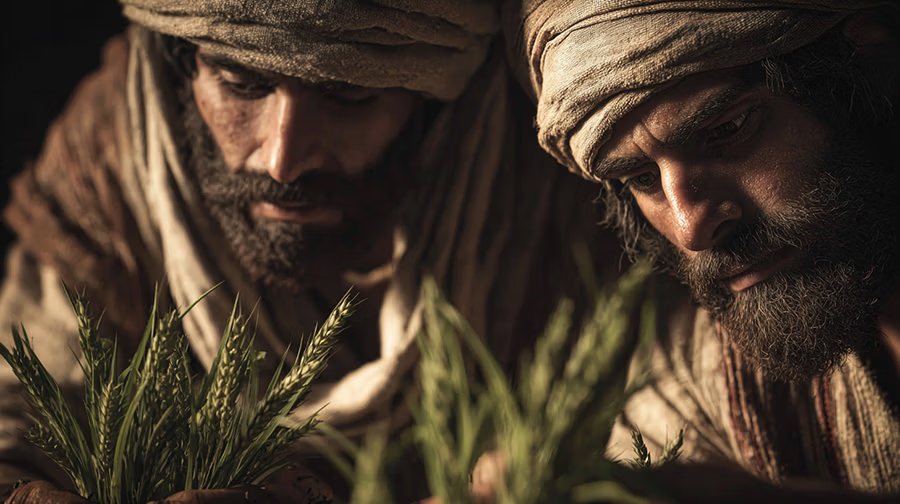
The parable also addresses church leadership directly. The phrase “while his men were sleeping” carries a sobering warning about spiritual vigilance. When pastors, elders, and Christian leaders become complacent or preoccupied with secondary concerns, the enemy gains opportunities to sow discord in ways that directly impact efforts to foster obedient, purpose-driven followers through scriptural teaching.
The Separation at Harvest: Divine Justice Revealed
Then Jesus sent the multitude away, and went into the house: and his disciples came unto him, saying, Declare unto us the parable of the tares of the field. He answered and said unto them, He that soweth the good seed is the Son of man; The field is the world; the good seed are the children of the kingdom; but the tares are the children of the wicked one.
The harvest represents the end of this age, when God will finally execute perfect justice. Angels will gather everything that causes sin and everyone who practices lawlessness, casting them into the furnace of fire where there will be weeping and gnashing of teeth. Meanwhile, the righteous will shine like the sun in their Father’s kingdom. This isn’t metaphorical language softening harsh reality but Jesus’ direct description of eternal destinies.
Understanding this parable provides essential context for Christian hope during difficult times. The 2024 election cycle demonstrated how millions of believers prayed desperately for one more chance to preserve our constitutional republic. God granted that chance, but He didn’t remove all opposition or solve every problem miraculously. Instead, He gave us opportunity coupled with responsibility, connecting directly to contemporary biblical reflection on modern culture through faith-centered analysis.
The Hidden Treasure: Discovering Salvation’s Inestimable Worth
The kingdom of heaven is like a very precious treasure hidden in a field, which a man found and hid again. Then in his joy, he goes and sells all he has and buys that field, securing the treasure for himself.
After teaching about wheat and darnel, Jesus immediately followed with the parable of the hidden treasure. This wasn’t random sequencing but deliberate instruction building on the previous lesson. If the first parable addresses how we navigate a mixed world until judgment, the second explains what makes that navigation worthwhile by revealing salvation’s supreme value.
In first-century agrarian society, banking was primitive, corrupt, and accessible only to the wealthy. Common laborers had no safe place to store valuables. Houses were regularly sacked during village conflicts. The only secure option was finding a remote location, burying your treasure in a container, and hoping you lived long enough to retrieve it. Sometimes people died without revealing their hiding places, leaving treasures lost for generations until someone accidentally discovered them while exploring spiritual graces that often remain hidden from those who don’t actively seek God.

Rabbinical law addressed this scenario specifically. If you found money or treasure while working in someone else’s field, it belonged to you, not the landowner. This contrasts sharply with modern property law but reflects ancient understanding. The laborer in Jesus’ parable found treasure he wasn’t seeking. He was simply doing his work when he stumbled upon extraordinary wealth.
The Joy That Motivates Complete Sacrifice
The most striking element in this parable isn’t the treasure itself but the finder’s emotional response. He discovered something so valuable that joy overwhelmed him. This joy motivated him to sell everything he owned to buy the field and legally secure the treasure. Jesus emphasizes the joy factor deliberately, showing that genuine response to salvation isn’t grudging obligation but overwhelming delight.
This challenges prosperity gospel teachings that equate earthly wealth with divine favor. The man in Jesus’ parable already owned possessions, but he gladly liquidated everything to secure greater treasure. When Jesus told the rich young ruler to sell his possessions and give to the poor, then follow Him, the young man couldn’t do it because he valued temporary wealth more than eternal treasure. His refusal proved he didn’t truly prize salvation despite claiming to keep all commandments from youth, demonstrating the difference between mere religious performance and genuine biblical wisdom for daily living that transforms our priorities.
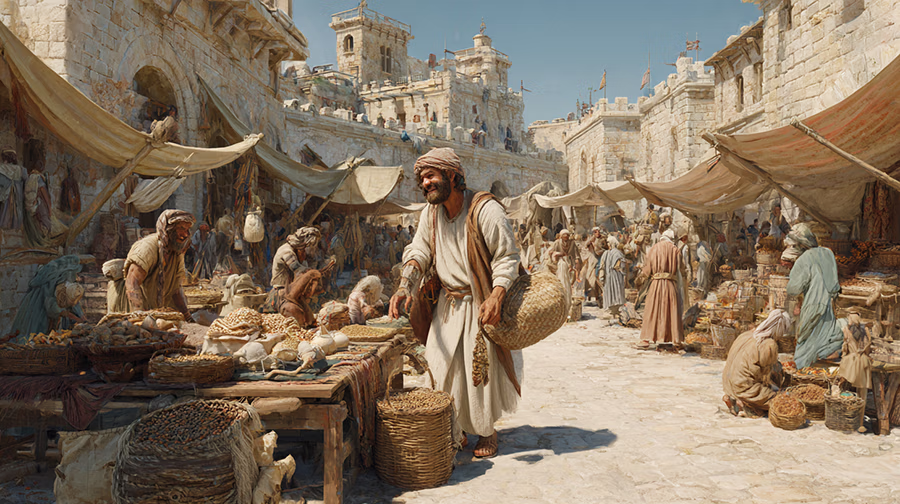
The parable reveals that salvation comes by grace, not works. The laborer didn’t earn treasure through his agricultural labor. He stumbled upon it unexpectedly. Similarly, we don’t earn salvation through religious performance or moral achievement. It’s God’s gift, extended through grace to everyone who trusts in Christ. Yet once we discover this treasure, appropriate response involves complete commitment.
Consider this profound reality: our earthly life represents one inch of red rope compared to endless length representing eternity. Whatever sacrifice we make in these brief decades pales in comparison to eternal consequences. The treasure finder understood proportion. He recognized that no earthly possession could compare to what he’d discovered. That same perspective should characterize every believer’s approach to maintaining spiritual priorities.
How These Parables Address Contemporary American Christianity
These twin parables speak directly to our current cultural moment. American Christianity has often been too passive, too preoccupied with secondary concerns, allowing spiritual vigilance to slip. The warning about leadership sleeping connects powerfully to our need for verse-by-verse Bible teaching through comprehensive expository messages that keep believers grounded in truth.
The 2024 election illustrated this principle powerfully. Many believers recognized that losing that election might mean losing our republic. People prayed in groups, prayed relentlessly, prayed hard that God would grant one more chance. He did grant that chance, but not by removing all opposition. Instead, He gave opportunity coupled with work, just as the parable teaches. Twenty million illegal immigrants entered our country, threatening fair elections. God granted conservative government to address these wrongs, but He expects His people to work diligently.
This connects directly to the treasure discovery. Have we truly valued our Christian heritage and constitutional freedoms as treasure they represent? Or have we treated them casually, assuming they’d always remain available? The parable calls us to recognize what we have, understand its worth, and commit everything necessary to preserve it when God’s providence reveals opportunities.
The Prophetic Context: Isaiah’s Warning About Hardened Hearts
Hearing you will hear and shall not understand, and seeing you will see and not perceive. For the hearts of this people have grown dull. Their ears are hard of hearing, and their eyes they have closed. Lest they should see with their eyes and hear with their ears, lest they should understand with their hearts and turn so that I should heal them.
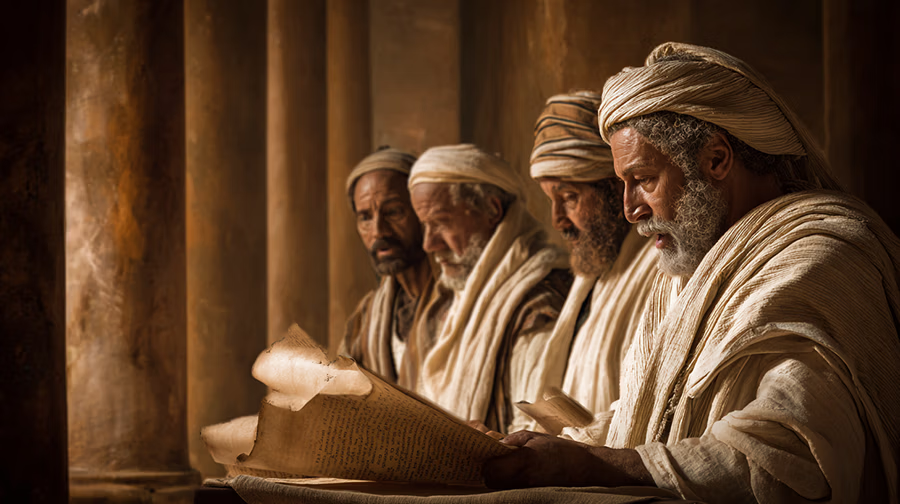
Jesus quotes Isaiah’s prophecy to explain why He taught in parables. Isaiah spoke these words 700 years before Christ, predicting that people in Jesus’ generation would have hardened hearts unable to comprehend spiritual truth. To put this in perspective, imagine someone in 1325 AD, when Robert the Bruce ruled Scotland during wars with England, describing specific events about Donald Trump in our time, including an assassination attempt he would survive. That’s how far removed Isaiah’s prophecy was from its fulfillment, yet it came to pass exactly as predicted.
This prophetic accuracy demonstrates that Jesus operated in complete accord with ancient prophecies written about Him in ways that illuminate current events with biblical truth for believers seeking understanding. His first coming had been foretold repeatedly in Scripture regarding His lineage, birthplace, ministry, death, and resurrection. Everyone missed it despite studying these prophecies constantly. Now Jesus warned that His second coming leaves no room for second chances.
The parable reinforces this urgency. We’re living in the growing season, not harvest time yet. But harvest is coming. The treasure discovery adds complementary urgency: once you find treasure, you must act decisively to secure it. Delayed obedience is disobedience. Halfhearted commitment proves you haven’t truly grasped treasure’s value.
Practical Application: Living as Wheat Among Tares
How should believers navigate daily life knowing we’re wheat growing among darnel? First, we maintain our identity without compromise. We don’t adopt worldly values or conform to cultural pressure, but neither do we withdraw into isolated groups. We engage our communities, workplaces, and political processes as salt and light, preserving and illuminating without being corrupted.
Second, we exercise discernment without becoming judgmental. This parable teaches that appearances deceive. People who seem identical to genuine believers may be counterfeits, while those who seem unlikely candidates for grace may be authentic wheat. Only God sees hearts perfectly. We evaluate teaching and behavior against Scripture through diligent Bible study across multiple book series, but we leave final judgment to God.
Third, we prioritize evangelism and discipleship. Since darnel and wheat grow together, our mission includes helping darnel become wheat through gospel proclamation. God’s patience in delaying harvest provides opportunity for conversion. Our responsibility involves faithfully sharing truth, living authentic Christianity, and trusting the Holy Spirit to transform hearts.
Fourth, we prepare for harvest. The separation is coming. Jesus described it with stark clarity: some will shine like the sun in the Father’s kingdom while others face the furnace of fire with weeping and gnashing of teeth. This isn’t scare tactics but sobering reality. We ensure our own salvation is secure through faith in Christ, then we help others discover treasure while time remains.
George Washington’s Prayer: The Founder’s Hidden Treasure
The transcript includes George Washington’s personal prayer journal entry, revealing how America’s founder valued his relationship with Christ above all earthly achievements. This prayer demolishes modern revisionist history claiming the founders were deists or culturally religious but not genuinely Christian. Listen to Washington’s opening: “Oh most glorious God in Jesus Christ, my merciful and loving father, I acknowledge and confess my guilt.”
Washington, who risked everything for American independence, who could have become king but chose representative government, who set the precedent for peaceful transfer of power, valued his salvation as treasure worth more than fame, power, or historical legacy. He wrote, “Remember that I am but dust. And remit my transgressions, negligences, and ignorances, and cover them all with the absolute obedience of thy dear son.”
Here we see the treasure discovery lived out. Washington found the treasure of salvation and built his entire life around securing it. He didn’t compartmentalize faith from civic duty but recognized that a constitutional republic can only survive with a believing populace. His prayer demonstrates joy that motivated complete commitment: “Make me to know what is acceptable in thy sight, and therein to delight.”
The Relationship Between These Two Parables
Matthew’s Gospel presents these parables sequentially for good reason. The first parable could discourage believers by acknowledging evil’s persistent presence until judgment. Without the second parable following it, we might focus only on difficulty and compromise, losing sight of what makes endurance worthwhile. But Jesus immediately follows the challenging teaching with encouraging truth.
Together they provide balanced perspective. Yes, we live in a mixed field where evil influences surround us constantly. Yes, we must exercise patience and trust God’s timing rather than attempting premature solutions that cause more harm than good. But we endure these challenges joyfully because we’ve discovered treasure worth any sacrifice. The difficulty of living as wheat among darnel becomes manageable when we remember the inestimable value of what we’ve secured.
These parables also reinforce each other’s urgency. The first warns that harvest is coming and separation is inevitable. The second demands immediate decisive action once treasure is discovered. Combined, they create powerful motivation for wholehearted commitment now, while opportunity remains. Tomorrow isn’t guaranteed. The harvest approaches. The treasure awaits those who value it appropriately.
Responding to Jesus’ Teaching Today
These parables demand response. You can’t hear them neutrally and continue unchanged. Jesus told these stories to provoke decision, to clarify stakes, to separate those who truly value His kingdom from those who give lip service while loving the world. The first parable forces you to ask: Am I wheat or darnel? Do I genuinely belong to God’s kingdom or merely look like someone who does?
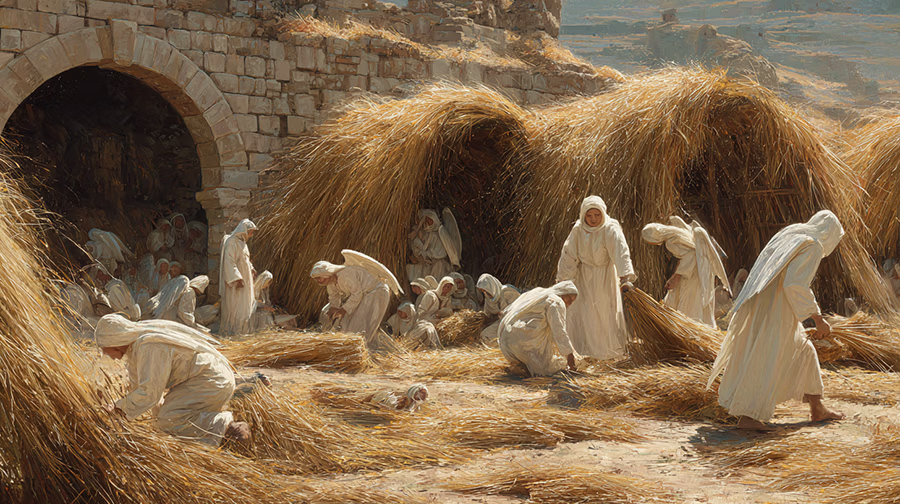
The treasure discovery confronts you with different questions: Have I truly found this treasure? If so, does my life reflect the joy and commitment of someone who found something worth everything? Or do I treat salvation casually, maintaining my earthly priorities while adding Jesus as supplemental insurance?
For believers who’ve truly discovered treasure, these parables provide encouragement during difficult seasons. When you’re frustrated by evil’s apparent prosperity, remember the first teaching. God’s patience serves His purposes. When you’re tempted to compromise for temporary gain, remember treasure discovered. Nothing earthly compares to what you’ve secured in Christ. When you’re discouraged by slow progress, remember both parables together: you’re wheat growing among darnel, working diligently while trusting God’s harvest timing, motivated by joy.
Conclusion: Embracing Both Patience and Urgency
The Wheat and the Tares parable combined with The Hidden Treasure teaching creates a perfect balance of patience and urgency that every believer needs. We exercise patience regarding God’s timing for final judgment, trusting His wisdom in allowing wheat and darnel to grow together until harvest. We don’t take judgment into our own hands or attempt to create perfect purity before God’s appointed time.
Simultaneously, we embrace urgency regarding our personal response to salvation. Once we discover the treasure, we act immediately and decisively. We don’t delay commitment or offer halfhearted obedience. We gladly sacrifice everything temporary to secure what’s eternal. This balanced approach keeps us faithful in waiting while zealous in responding.
As harvest approaches and we see increasing separation between truth and deception, righteousness and wickedness, genuine faith and counterfeit religion, these parables become more relevant than ever. They call us to wise discernment without harsh judgment, to patient endurance without passive complacency, to joyful commitment without grudging obligation. May we live as wheat that produces abundant fruit while we await the final harvest, having secured our treasure through faith in Christ and wholehearted commitment to His kingdom.
Frequently Asked Questions (FAQs)
Why Does God Allow Evil People to Prosper Alongside Believers?
The Wheat and the Tares parable explains that attempting to separate believers from unbelievers prematurely would damage genuine believers because roots become entangled during growth. God’s patience provides maximum opportunity for conversion while protecting His people from collateral damage of premature judgment. He will execute perfect justice at harvest time, the end of this age, when angels gather all who practice lawlessness into judgment.
What Does The Hidden Treasure Parable Teach About Salvation?
This parable teaches that salvation represents inestimable value worth sacrificing everything to secure. It comes by grace, not works, since the laborer found treasure unexpectedly rather than earning it through effort. Yet once discovered, appropriate response involves joyful commitment of everything we have to secure it, recognizing nothing earthly compares to eternal treasure found in Christ.
How Should Christians Live Knowing Wheat and Tares Grow Together?
Believers should maintain their identity without compromise while engaging communities as salt and light. We exercise biblical discernment without becoming harshly judgmental, prioritize evangelism since God’s patience provides conversion opportunities, and prepare for harvest by ensuring salvation is secure through faith in Christ while helping others discover this treasure before time runs out.
What Practical Steps Can I Take to Value Salvation Like Hidden Treasure?
First, regularly meditate on eternity’s reality compared to this life’s brevity using daily scripture meditation practices. Second, examine your priorities to ensure salvation and kingdom work truly come first in actual practice, not just theory. Third, practice sacrificial generosity, demonstrating you value eternal treasure above earthly wealth. Fourth, invest time in comprehensive Bible study, growing in understanding of what you possess in Christ.
Further Reading
For additional study on these parables and related biblical themes, consider these authoritative resources:
Blue Letter Bible Commentary on Matthew 13 – Comprehensive verse-by-verse analysis of Jesus’ parables in Matthew 13, including detailed word studies, cross-references, and original language insights for deeper understanding of these teachings.
Got Questions: Parable of the Wheat and Tares – Clear explanation of The Wheat and the Tares parable’s meaning, symbolism, and application for modern believers seeking to understand God’s patience and timing in final judgment.
Enduring Word Commentary: Matthew 13 – David Guzik’s detailed exposition connecting these parables to broader biblical theology and contemporary application for believers navigating today’s cultural challenges.
