
October 30, 2025
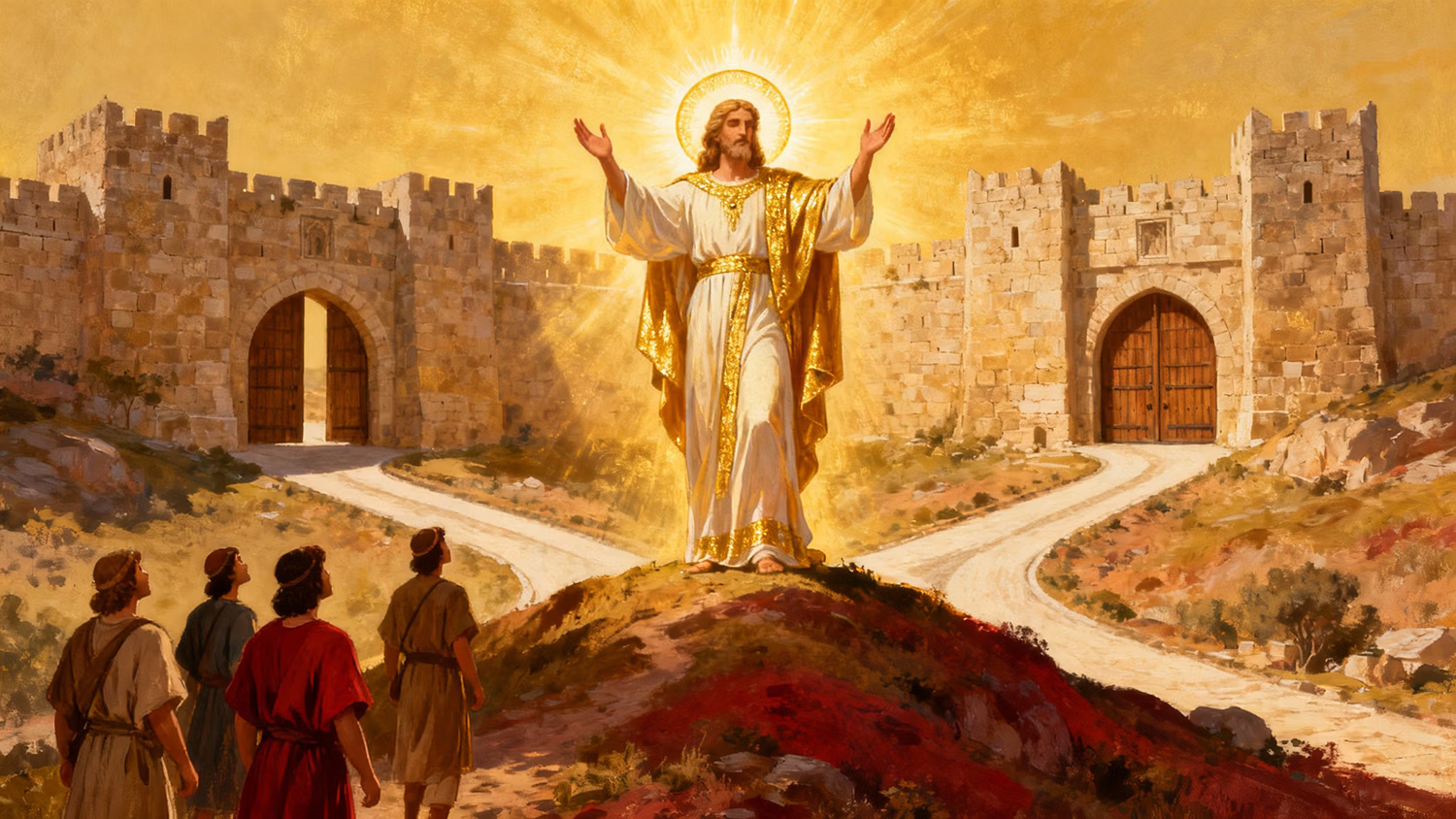
Proverbs 8 reveals wisdom as God’s eternal companion, present at creation and crying out for humanity to embrace righteousness. This chapter presents wisdom personified, calling from the crossroads of life, offering understanding superior to gold or rubies, and promising life, favor, and divine blessing to all who diligently seek her.
Table of Contents
The Voice That Calls from the Crossroads
What does Proverbs 8 teach about wisdom’s call? Proverbs 8 teaches that wisdom actively seeks humanity, crying out at life’s crossroads and city gates. Unlike hidden knowledge, wisdom makes herself accessible to all, calling the simple to gain prudence and fools to develop understanding, demonstrating God’s desire for everyone to embrace truth and righteousness.
The opening verses of Proverbs 8 paint a vivid picture:
Does not wisdom cry out, and understanding lift up her voice? She takes her stand on the top of the high hill, beside the way, where the paths meet.
Proverbs 8:1-2
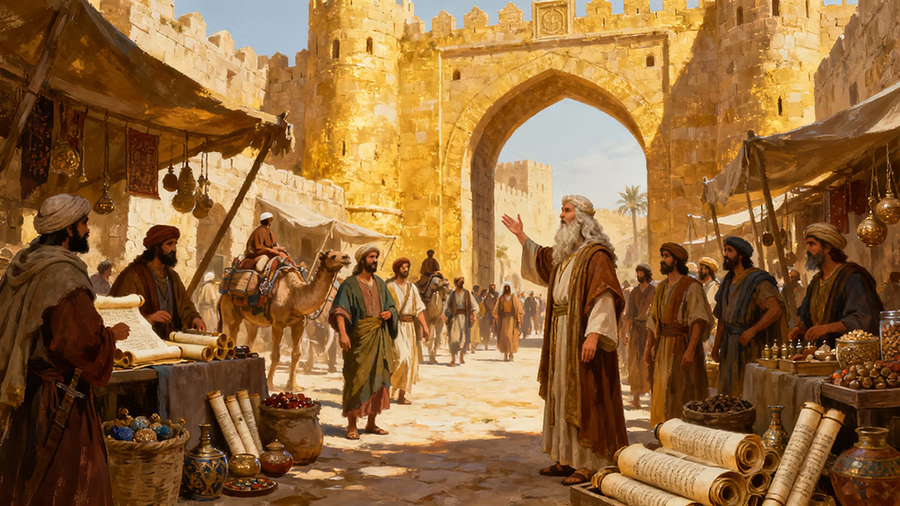
This is not a passive invitation but an active, urgent appeal. Wisdom doesn’t hide in academic halls or seclude herself in ivory towers. Instead, she positions herself at the busiest intersections of human activity, at the gates of the city, where the paths meet, calling out to every passerby.
This public proclamation demonstrates a fundamental truth about divine wisdom: God’s truth is not esoteric or reserved for an intellectual elite. Rather, it is offered freely to all who will listen. The passage specifically addresses “you simple ones” and “you fools,” showing that wisdom’s invitation extends particularly to those who recognize their need for understanding. Through our comprehensive study of biblical wisdom for daily living, we discover that God’s instruction is accessible and practical for every believer.
The imagery of the crossroads is particularly significant. Every person faces decision points in life where one path leads to righteousness and another to destruction. At these critical junctures, wisdom cries out, offering guidance and direction. When we explore Proverbs 18’s wisdom for words and relationships, we see this same pattern of practical instruction that applies to the crossroads moments we face daily.
The Excellence of Wisdom’s Words
Why does Proverbs 8 emphasize the truthfulness of wisdom’s speech? Proverbs 8 emphasizes wisdom’s truthfulness because divine instruction contains no deception, perversity, or hidden agendas. Every word from wisdom’s mouth is righteous and plain to those who understand, contrasting sharply with the crooked speech of folly and establishing God’s Word as the only reliable foundation for life.
Listen, for I will speak of excellent things, and from the opening of my lips will come right things. For my mouth will speak truth; wickedness is an abomination to my lips.
Proverbs 8:6-7
These verses establish the absolute integrity of wisdom’s communication. In a world filled with deception, half-truths, and manipulative rhetoric, wisdom offers something radically different: complete honesty and righteousness.
The text declares:
All the words of my mouth are with righteousness; nothing crooked or perverse is in them. They are all plain to him who understands, and right to those who find knowledge.
Proverbs 8:8-9
This clarity is crucial for believers navigating an increasingly complex moral landscape. When we examine current challenges through resources like Today’s Concerns biblical reflection, we apply these timeless principles to contemporary situations.
Wisdom’s words carry divine authority because they originate from God Himself. Unlike human philosophies that shift with cultural trends, divine wisdom remains constant. This is why the instruction continues:
Receive my instruction, and not silver, and knowledge rather than choice gold; for wisdom is better than rubies, and all the things one may desire cannot be compared with her.
Proverbs 8:10-11
The economic language here is deliberate. Silver, gold, and rubies represented the highest earthly values in the ancient world. Yet wisdom surpasses them all because material wealth cannot purchase understanding, righteousness, or eternal life. Our Five Smooth Stones scripture toolkit demonstrates how prioritizing spiritual truth over temporal gain builds an unshakeable foundation for Christian living.
Wisdom’s Relationship with Prudence and Knowledge
How does Proverbs 8 define wisdom’s relationship with other virtues? Proverbs 8 defines wisdom as dwelling with prudence and finding knowledge and discretion. Wisdom encompasses not only understanding truth but also applying it with discernment. True wisdom includes hating evil, pride, and arrogance while embodying counsel, sound judgment, understanding, and strength for righteous living.
I, wisdom, dwell with prudence, and find out knowledge and discretion. The fear of the Lord is to hate evil; pride and arrogance and the evil way and the perverse mouth I hate.
Proverbs 8:12-13
This passage reveals that wisdom is not merely intellectual assent to truth but involves moral alignment with God’s character.
The fear of the Lord, repeatedly identified throughout Scripture as the beginning of wisdom, manifests in a hatred of evil. This is not a passive dislike but an active rejection of everything contrary to God’s nature. Pride, arrogance, evil conduct, and perverse speech all oppose divine wisdom and must be rejected by those who seek understanding.
Furthermore, wisdom declares:
Counsel is mine, and sound wisdom; I am understanding, I have strength.
Proverbs 8:14
This combination of attributes is essential for godly leadership and righteous living. Through our Christian community fellowship, believers can encourage one another in developing these interconnected virtues that characterize mature faith.

Wisdom’s Role in Leadership and Governance
What does Proverbs 8 teach about wisdom’s role in government? Proverbs 8 teaches that righteous leadership depends entirely on divine wisdom. Kings reign, rulers decree justice, and princes govern effectively only through wisdom’s guidance. This establishes that legitimate authority must be rooted in God’s principles, not human ambition, making wisdom essential for those in positions of power and influence.
By me kings reign, and rulers decree justice. By me princes rule, and nobles, all the judges of the earth.
Proverbs 8:15-16
This declaration is particularly relevant for those committed to the mission that a constitutional republic can only survive and thrive with a believing populace. Without divine wisdom guiding governmental decisions, justice becomes arbitrary and leadership self-serving.
This principle applies not only to political leaders but to all who exercise authority in any sphere: parents, pastors, business leaders, and community organizers. Effective, righteous leadership flows from understanding and applying God’s wisdom. Through examination of topics in G-Drop spontaneous scriptural commentary, we see how biblical wisdom addresses contemporary leadership challenges.
The promise that follows is equally significant:
I love those who love me, and those who seek me diligently will find me.
Proverbs 8:17
Divine wisdom is not reserved for a select few but is available to all who earnestly pursue it. This democratic accessibility of wisdom stands in stark contrast to worldly systems that hoard knowledge as a means of controlling others.
Moreover, wisdom offers something beyond mere governance:
Riches and honor are with me, enduring riches and righteousness. My fruit is better than gold, yes, than fine gold, and my revenue than choice silver.
Proverbs 8:18-19
While earthly authority may bring temporary wealth and prestige, wisdom provides enduring prosperity rooted in righteousness.
Wisdom’s Eternal Nature and Presence at Creation
What does Proverbs 8 reveal about wisdom’s existence before creation? Proverbs 8 reveals that wisdom existed with God before creation, established from everlasting. Wisdom was present when God formed the heavens, marked the foundations of the earth, and set boundaries for the seas, demonstrating that divine order preceded and undergirds all physical reality. This eternal nature points to Jesus Christ as God’s wisdom incarnate.
The passage takes a profound theological turn:
The Lord possessed me at the beginning of His way, before His works of old. I have been established from everlasting, from the beginning, before there was ever an earth.
Proverbs 8:22-23
This declaration of wisdom’s pre-existence has sparked theological discussion for centuries, particularly regarding its connection to Christ as the Word made flesh.
The detailed description that follows provides a majestic overview of creation:
When there were no depths I was brought forth, when there were no fountains abounding with water. Before the mountains were settled, before the hills, I was brought forth; while as yet He had not made the earth or the fields, or the primal dust of the world.
Proverbs 8:24-26
This chronology emphasizes that wisdom preceded all physical creation. Before the formation of oceans, mountains, or even the dust from which humanity was formed, wisdom existed with God. This is not merely poetic language but a theological statement about the eternal nature of divine wisdom and its role as the blueprint for all creation.

Wisdom as Master Craftsman in Creation
How does Proverbs 8 describe wisdom’s role during creation? Proverbs 8 describes wisdom as a master craftsman beside God during creation, actively participating in establishing the cosmos. When God prepared the heavens, drew boundaries for the seas, and laid earth’s foundations, wisdom rejoiced in His presence, delighting in the inhabited world and humanity, revealing the joyful, purposeful nature of divine creation.
When He prepared the heavens, I was there, when He drew a circle on the face of the deep, when He established the clouds above, when He strengthened the fountains of the deep, when He assigned to the sea its limit, so that the waters would not transgress His command, when He marked out the foundations of the earth, then I was beside Him as a master craftsman.
Proverbs 8:27-30
The term “master craftsman” (or in some translations, “skilled worker”) indicates active participation in the creative process. Wisdom was not a passive observer but an essential element in God’s creative work. This reinforces the principle that divine wisdom undergirds all natural order and physical laws.
The passage continues with a beautiful description of wisdom’s joy:
And I was daily His delight, rejoicing always before Him, rejoicing in His inhabited world, and my delight was with the sons of men.
Proverbs 8:30-31
This reveals the relational nature of divine wisdom. Wisdom delights both in communion with God and in connection with humanity.
This joy in creation and humanity explains why wisdom so passionately calls out to people at the crossroads. The same wisdom that participated in forming the universe now seeks to guide individual lives toward purpose and fulfillment. Our study of Books of the Bible scriptural overview helps us understand how this divine wisdom is woven throughout all Scripture.
The New Testament makes explicit what Proverbs 8 hints at: Jesus Christ is the wisdom of God incarnate. Paul writes:
Christ the power of God and the wisdom of God.
1 Corinthians 1:24
And John’s Gospel opens by declaring:
In the beginning was the Word, and the Word was with God, and the Word was God. He was in the beginning with God. All things were made through Him.
John 1:1-3
These parallels between Proverbs 8 and the New Testament revelation of Christ are profound.

The Urgent Call to Embrace Wisdom
What consequences does Proverbs 8 associate with accepting or rejecting wisdom? Proverbs 8 presents stark consequences: those who find wisdom find life and obtain God’s favor, while those who reject wisdom wrong their own souls and love death. This urgent contrast emphasizes that embracing divine wisdom is not optional for those seeking abundant life but is the fundamental choice between life and death, blessing and curse.
The chapter concludes with an urgent appeal:
Now therefore, listen to me, my children, for blessed are those who keep my ways. Hear instruction and be wise, and do not disdain it. Blessed is the man who listens to me, watching daily at my gates, waiting at the posts of my doors.
Proverbs 8:32-34
This call to vigilance emphasizes that pursuing wisdom requires intentionality and persistence. The imagery of watching daily at wisdom’s gates and waiting at her doors suggests a disciplined commitment to seeking divine understanding. This is not a one-time decision but a lifestyle orientation. Through Proverbs 25’s wisdom for leadership and relationships, we see this same call to consistent, diligent pursuit of godly understanding.
The promise that follows is magnificent:
For whoever finds me finds life, and obtains favor from the Lord.
Proverbs 8:35
This is the ultimate reward for seeking wisdom: not merely improved circumstances or earthly success, but life itself in the fullest sense and divine favor. This echoes Jesus’ declaration:
I have come that they may have life, and that they may have it more abundantly.
John 10:10
However, the warning is equally serious:
But he who sins against me wrongs his own soul; all those who hate me love death.
Proverbs 8:36
To reject wisdom is to embrace death. This is not merely physical death but spiritual death, separation from the source of life itself. The one who hates wisdom ultimately demonstrates a love for death, whether consciously or unconsciously.
This stark choice between life and death echoes throughout Scripture, from Moses’ challenge to Israel:
Choose life.
Deuteronomy 30:19
To Jesus’ declaration:
I am the way, the truth, and the life.
John 14:6
Our exploration of the 4-3 Formula biblical framework demonstrates how this choice translates into practical discipleship.
Living According to Proverbs 8 Today
How can Christians apply Proverbs 8’s teachings to contemporary life? Christians apply Proverbs 8 by actively listening for wisdom’s call in daily decisions, prioritizing divine instruction over worldly values, pursuing righteousness with discipline, and recognizing Christ as God’s wisdom incarnate. This means making Scripture-based choices, rejecting cultural compromise, seeking godly counsel, and maintaining vigilant devotion to understanding God’s truth for every circumstance.
The principles of Proverbs 8 are not merely ancient wisdom but living truth applicable to modern challenges. In a culture that increasingly rejects absolute truth and moral standards, wisdom’s call to righteousness, hatred of evil, and alignment with divine order becomes countercultural yet essential.
First, believers must position themselves to hear wisdom’s voice. This requires regular engagement with Scripture, participation in Christian community fellowship, and cultivation of spiritual disciplines that create space for divine instruction. Just as wisdom calls at the crossroads, we must recognize the decision points in our lives where godly wisdom must guide our choices.
Second, we must actively reject the pride, arrogance, and perverse speech that wisdom hates. This means examining our attitudes, speech patterns, and behavior through the lens of Scripture, allowing God’s Word to expose and correct anything inconsistent with divine character. Resources like Bible Messages verse-by-verse teaching provide the systematic scriptural foundation necessary for this transformation.
Third, we must recognize that true wisdom is found in Christ. The apostle Paul declares:
In Christ are hidden all the treasures of wisdom and knowledge.
Colossians 2:3
Therefore, pursuing wisdom means pursuing deeper relationship with Jesus through prayer, study, obedience, and worship. Our mission to illuminate current events with biblical truth flows from this Christ-centered wisdom.
Finally, we must share wisdom’s call with others. Just as wisdom cries out at the gates and crossroads, believers are commissioned to proclaim truth in a world desperately needing divine guidance. This happens through personal testimony, teaching, and prophetic commentary that applies Scripture to contemporary issues, exemplified in series like G-Riff reflective commentary and QOHELETH ancient wisdom for modern living.

Conclusion: Answering Wisdom’s Call
Proverbs 8 presents wisdom not as an abstract concept but as a living reality that existed with God before creation, participated in forming the universe, and now actively calls to every person. This wisdom, ultimately revealed in Jesus Christ, offers life, favor, and divine blessing to all who diligently seek her.
The urgent question facing every person is the same one presented at the crossroads where wisdom calls: Will we listen and embrace divine instruction, or will we disdain wisdom and choose death? In a generation marked by moral confusion and spiritual compromise, the clarity of Proverbs 8 provides both a warning and an invitation.
As believers committed to the principle that a constitutional republic requires a believing populace, we recognize that national righteousness flows from individual pursuit of divine wisdom. When citizens reject God’s truth, societies collapse into chaos and tyranny. But when people embrace wisdom’s call, justice prevails, leadership serves righteously, and communities flourish.
May we be found watching daily at wisdom’s gates, waiting at her doors, receiving instruction rather than silver, and valuing knowledge above gold. For in finding wisdom, we find life itself and obtain favor from the Lord. Through accessing resources for Christian growth, maintaining connection through confidential prayer support, and engaging with reflections on Scripture, we position ourselves to hear and respond to wisdom’s eternal call.
The choice is ours: life or death, blessing or curse, wisdom or folly. May we choose wisely.
Frequently Asked Questions (FAQ’s)
What is the main message of Proverbs 8?
Proverbs 8’s main message is that divine wisdom, personified as calling from life’s crossroads, existed with God before creation and offers life, righteousness, and divine favor to all who diligently seek her. Rejecting wisdom is choosing death, while embracing wisdom means finding abundant life through alignment with God’s eternal truth revealed ultimately in Jesus Christ.
How does Proverbs 8 relate to Jesus Christ?
Proverbs 8 relates to Jesus Christ as the personification of God’s wisdom that was “with God in the beginning” parallels John 1’s description of Christ as the Word. Jesus is identified in the New Testament as “the wisdom of God” (1 Corinthians 1:24), and His pre-existence, role in creation, and offer of life fulfill what Proverbs 8 prophetically describes about divine wisdom.
Why does Proverbs 8 personify wisdom as female?
Proverbs 8 personifies wisdom as female following the Hebrew grammatical gender of the word “wisdom” (chokmah) and creating a literary parallel to the “foolish woman” described elsewhere in Proverbs. This personification makes wisdom’s call more vivid and relatable while emphasizing its nurturing, life-giving qualities that draw people toward righteousness and understanding.
What does it mean that wisdom was beside God as a master craftsman?
Wisdom being beside God as a master craftsman means divine wisdom actively participated in creation, serving as the blueprint and guiding principle for all that exists. This establishes that natural order, physical laws, and cosmic design all flow from God’s wisdom, making the universe intelligible and demonstrating that rejecting divine wisdom means living contrary to reality itself.
Further Reading and Resources
- Blue Letter Bible – Proverbs 8 Commentary – Detailed verse-by-verse commentary on Proverbs 8 from biblical scholar David Guzik
- Bible Gateway – Proverbs 8 Multiple Translations – Compare various Bible translations of Proverbs 8 for deeper understanding
- Bible Project – Proverbs Overview – Visual overview of the entire book of Proverbs providing context for chapter 8
- Ligonier Ministries – The Fear of the Lord – R.C. Sproul’s teaching on what it means to fear God in relation to wisdom literature
