
January 10, 2026

Every decision creates a fork in the road. Proverbs 10 confronts readers with stark contrasts that illuminate life’s most fundamental choice: the path of righteousness versus the way of wickedness. Through thirty-two vivid comparisons, Solomon strips away moral ambiguity and presents believers with clear consequences for their words, work, integrity, and character.
Table of Contents
The structure of Proverbs 10 marks a dramatic shift from earlier chapters. Where Proverbs 1-9 offered extended teachings and parental appeals, chapter 10 launches into Solomon’s individual proverbs with compressed power. Each verse operates as a standalone truth, yet together they build an undeniable case: our choices matter profoundly, producing consequences that extend far beyond immediate circumstances into eternal realities. For believers seeking to apply biblical wisdom for daily living, these ancient contrasts provide unflinching guidance for modern moral challenges.
Solomon’s method reveals God’s design through opposition. Light becomes brighter against darkness, truth sharper against lies, diligence more valuable when contrasted with laziness. These aren’t abstract philosophical concepts but practical distinctions that shape families, communities, and nations. The sharp choice between wisdom and folly that Proverbs 9 presents through Lady Wisdom and Lady Folly now manifests in individual proverbs showing daily consequences of that fundamental decision. Understanding these principles becomes essential for Christians committed to building a society where faith and governance align, recognizing that a constitutional republic can only survive and thrive with a believing populace grounded in scriptural truth that demands moral clarity.
The Foundation of Family Legacy
What does Proverbs 10 teach about family relationships? Proverbs 10:1 reveals that a wise son brings joy to his father while a foolish son causes grief to his mother, establishing the principle that our choices profoundly impact our families and demonstrate the spiritual wisdom we’ve embraced or rejected.
The opening verse establishes the critical connection between personal wisdom and family dynamics. “A wise son makes a glad father, but a foolish son is the grief of his mother.” This proverb addresses the generational impact of wisdom and folly. Parents invest years nurturing, teaching, and praying for their children, and the trajectory their children choose brings either joy or sorrow.
This principle extends beyond individual households to society itself. When young people embrace biblical wisdom, they strengthen families, communities, and nations. Conversely, when they reject godly instruction, the resulting grief extends far beyond personal disappointment. The current cultural crisis facing America demonstrates this truth as generations raised without biblical foundations struggle with identity, purpose, and moral clarity.
Understanding this connection motivates believers to pursue wisdom not merely for personal benefit but for the sake of those who love them and depend on them. Parents modeling wisdom through faithful character development create environments where children witness truth lived out consistently, making biblical principles attractive rather than merely theoretical.
Righteousness Delivers from Death
How does righteousness protect believers according to Proverbs 10? Verses 2-3 declare that treasures of wickedness profit nothing while righteousness delivers from death, and the Lord sustains the righteous soul while rejecting wicked desires, establishing God’s active protection of those who pursue righteousness.
Treasures of wickedness profit nothing, but righteousness delivers from death. The Lord will not allow the righteous soul to famish, but He casts away the desire of the wicked. (Proverbs 10:2-3)
These verses confront the seductive lie that wickedness can provide lasting security or satisfaction. Material gain acquired through unrighteous means cannot deliver from death’s ultimate judgment. The phrase “delivers from death” carries both immediate and eternal implications. Righteousness protects believers from the destructive consequences of sin that lead to physical, relational, and spiritual death.
God’s active involvement in sustaining the righteous appears prominently here. He doesn’t merely observe righteousness passively but actively prevents the righteous from famishing while casting away wicked desires. This divine intervention demonstrates God’s commitment to those who pursue His ways. Believers can trust that choosing righteousness over temporary gain aligns them with God’s protective care.
This principle challenges contemporary Americans facing economic uncertainty and moral compromise. The temptation to gain advantage through unethical means appears constantly in business, politics, and personal relationships. Proverbs 10 declares that such gains ultimately profit nothing while righteousness provides the only security that transcends earthly circumstances and extends into eternity.
The Virtue of Diligent Work
What does Proverbs 10 teach about work and diligence? Verses 4-5 contrast slack hands that produce poverty with diligent hands that generate wealth, while emphasizing the wisdom of working during opportunity versus the shame of sleeping during harvest, establishing biblical principles for productive labor and faithful stewardship.
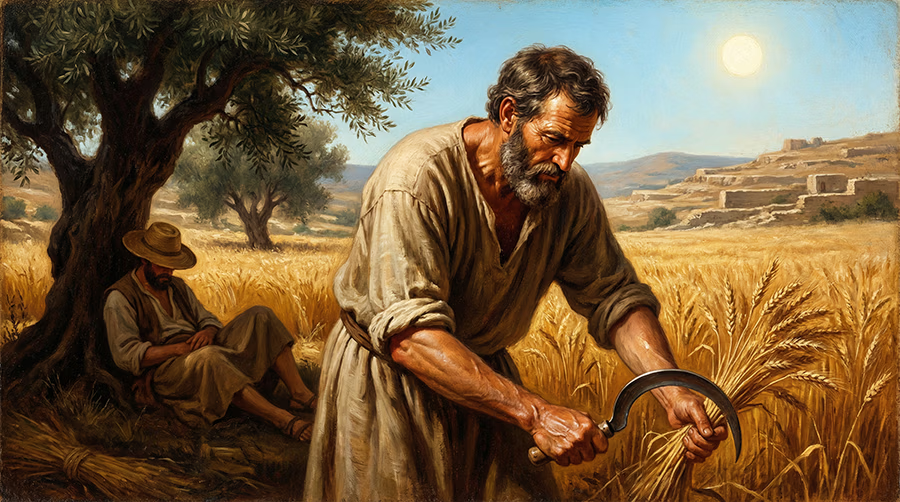
The proverbs addressing work ethic reveal God’s design for human productivity. “He who has a slack hand becomes poor, but the hand of the diligent makes rich. He who gathers in summer is a wise son; he who sleeps in harvest is a son who causes shame.” These verses don’t merely address economic outcomes but speak to character, stewardship, and faithfulness in fulfilling responsibilities.
Diligence reflects spiritual maturity and recognition of divine calling. When believers approach work as worship and service to God rather than merely earning income, their labor takes on eternal significance. The agricultural metaphors of gathering in summer and sleeping during harvest illustrate the importance of recognizing and seizing opportunities when they present themselves.
Contemporary culture often promotes shortcuts, get-rich-quick schemes, and entitlement mentalities that contradict biblical wisdom. The decay of work ethic in modern society contributes to economic instability and moral decline. Christians who embrace comprehensive Bible studies that include Proverbs understand that faithful labor honors God and demonstrates the practical outworking of biblical values that strengthen both individuals and nations.
The connection between diligence and provision appears throughout Scripture. God designed humans for productive work before the Fall, and redemption doesn’t eliminate work but restores its proper purpose and dignity. Believers modeling diligence in their vocations demonstrate the transformative power of biblical wisdom in practical terms. Proverbs 13 expands on these principles of diligent work and righteous living, showing how faithful labor brings both temporal and eternal rewards.
The Power and Peril of Words
How does Proverbs 10 describe righteous versus wicked speech? Multiple verses contrast the mouth of the righteous as a well of life and choice silver versus the wicked mouth covered with violence, establishing that speech reveals character and produces either blessing or destruction.
Proverbs 10 returns repeatedly to the theme of speech, revealing its profound impact on both speaker and hearer. “The mouth of the righteous is a well of life, but violence covers the mouth of the wicked” (verse 11). “The tongue of the righteous is choice silver; the heart of the wicked is worth little” (verse 20). “The lips of the righteous feed many, but fools die for lack of wisdom” (verse 21).
These contrasts demonstrate that speech flows from character. Righteous people speak life-giving words because their hearts contain wisdom and love. Their words provide refreshment like a well in a desert, value like choice silver, and nourishment that feeds hungry souls. Conversely, wicked speech originates from hearts filled with violence, worthlessness, and foolishness.
The contemporary information age amplifies the power of words through social media, news cycles, and digital communication. Christians face constant pressure to engage in slander, gossip, and divisive rhetoric. Proverbs 10’s wisdom calls believers to a higher standard, recognizing that words carry weight and consequences. The teaching here complements Proverbs 18’s insights on words and relationships, providing comprehensive biblical guidance on controlling our tongues.
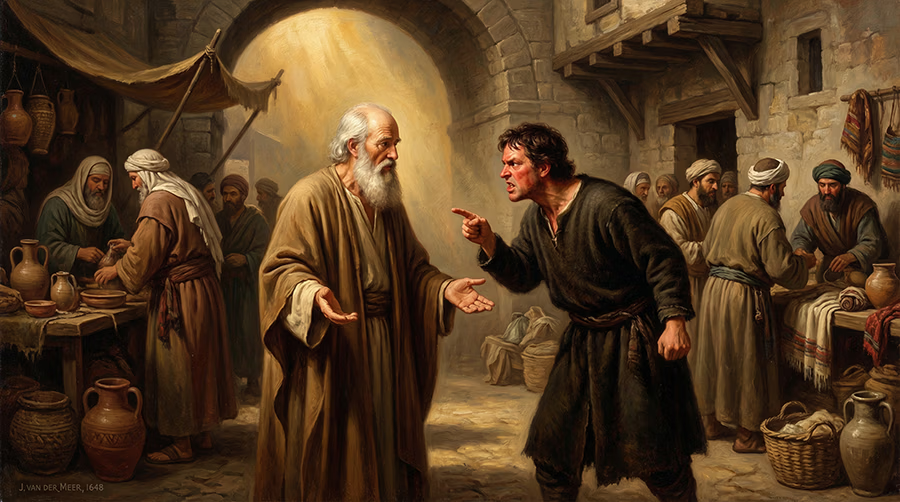
Verse 19 provides specific guidance: “In the multitude of words sin is not lacking, but he who restrains his lips is wise.” Excessive talking often leads to sin through exaggeration, gossip, or careless statements. Wisdom requires restraint, thoughtfulness, and intentionality in speech. Those engaged in contemporary commentary on cultural and political issues must balance truthfulness with wisdom, speaking clearly while avoiding the trap of multiplying words unnecessarily.
Walking in Integrity
What does integrity mean in Proverbs 10? Verse 9 declares that walking with integrity provides security while perverted ways lead to exposure, establishing that honest, consistent character creates safety while deception ultimately fails and brings shame.
He who walks with integrity walks securely, but he who perverts his ways will become known. (Proverbs 10:9)
Integrity means wholeness, consistency between private character and public behavior, alignment between profession and practice. Those who walk with integrity experience security because they have nothing to hide, no contradictions to manage, no false fronts to maintain. Their lives rest on the solid foundation of truth.
The proverb’s warning that perverted ways “will become known” reflects the inevitable exposure of deception. Hidden sins eventually surface, bringing shame that compounds the original transgression. Recent years have witnessed countless examples of public figures whose private corruption eventually emerged, destroying reputations and causing widespread damage.
For believers committed to advancing biblical principles in public discourse through platforms like 647 Truth Starts Now, integrity becomes non-negotiable. The credibility of Christian witness depends not merely on correct theology but on consistent character. Hypocrisy destroys influence more effectively than any external opposition.
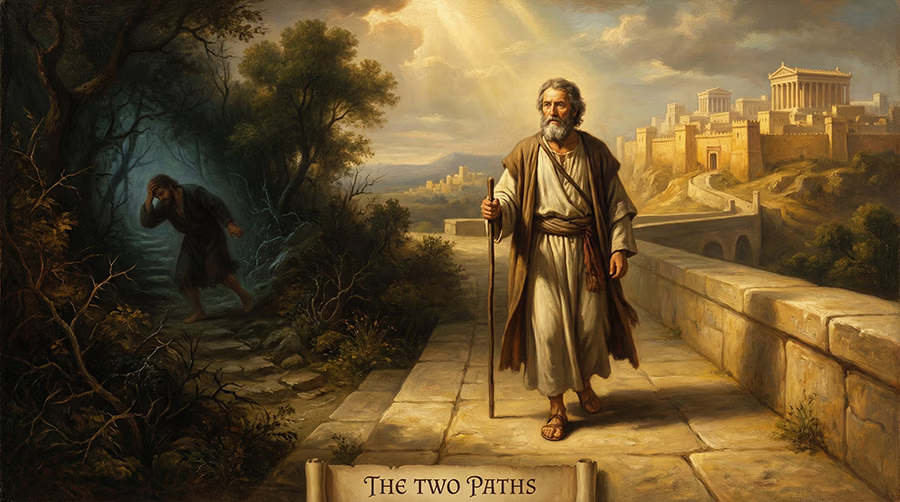
The call to integrity extends to every area of life: business dealings, family relationships, church involvement, and civic engagement. A constitutional republic built on self-governance requires citizens whose private character supports public virtue. Without integrity among the populace, no system of government can long survive the corrosive effects of hidden corruption.
The Eternal Distinction
What ultimate difference does Proverbs 10 establish between righteous and wicked? The concluding verses declare that the righteous will never be removed and inherit the earth while the wicked will not inherit it, establishing the eternal consequences of choosing wisdom or rejecting God’s ways.
The chapter’s final verses bring its contrasts to their ultimate conclusion. “The righteous will never be removed, but the wicked will not inherit the earth” (verse 30). This promise extends beyond temporal circumstances to eternal realities. While righteous people may face persecution, suffering, and even martyrdom in this life, their relationship with God guarantees eternal security.
This principle confronts the apparent prosperity of the wicked and suffering of the righteous that often troubles believers. Proverbs 10 maintains the long view, recognizing that temporary circumstances don’t determine ultimate outcomes. The wicked may accumulate wealth and power, but they cannot inherit the earth promised to the righteous.

The hope of eternal reward sustains faithful believers through trials and temptations. Understanding that present choices have eternal consequences transforms daily decisions from mere pragmatism to purposeful discipleship. Those studying verse-by-verse teaching through books like Proverbs discover this eternal perspective woven throughout Scripture.
Practical Application for Contemporary Believers
How should Christians apply Proverbs 10 today? Believers must embrace its contrasts between righteousness and wickedness as daily decision-making principles, allowing these truths to shape speech, work, relationships, and public witness while recognizing that godly character strengthens both personal faith and national foundations.
Proverbs 10’s wisdom demands practical application in every sphere of life. In speech, believers should practice restraint, speak truth seasoned with grace, and use words to build up rather than tear down. In work, Christians should embrace diligence as worship, recognizing that faithful labor honors God and demonstrates biblical values to watching culture.
The chapter’s emphasis on integrity challenges believers to examine the consistency between their profession and practice. Hypocrisy undermines Christian witness more effectively than any external opposition. Living with integrity requires daily dependence on God’s grace and the Holy Spirit’s transforming work.
For those concerned about America’s moral and political trajectory, Proverbs 10 offers a blueprint for renewal. A nation’s character reflects its people’s character. As believers embrace biblical wisdom in their personal lives, they create the believing populace necessary for a constitutional republic to thrive.
The choice between righteousness and wickedness confronts every person in countless daily decisions. Proverbs 10 declares that these choices matter profoundly, producing consequences that extend far beyond immediate circumstances into eternal realities. Wisdom calls believers to choose the path of righteousness, trusting God’s promise to sustain, protect, and ultimately reward those who walk in His ways.
Conclusion
Proverbs 10 presents Solomon’s timeless wisdom through sharp contrasts between righteous and wicked living, addressing family relationships, economic stewardship, speech, integrity, and ultimate destiny.
These principles transcend cultural boundaries and historical periods, offering contemporary believers practical guidance for navigating moral challenges while demonstrating Christ-like character. As Christians apply these truths to daily decisions, they strengthen both personal faith and national foundations, recognizing that biblical wisdom remains essential for individuals seeking godly living and nations pursuing constitutional governance.
The choice between righteousness and wickedness shapes not only personal destiny but also the character of entire civilizations, making Proverbs 10’s wisdom perpetually relevant for every generation.
Further Reading
For deeper study of Proverbs and biblical wisdom literature, explore these trusted resources:
- Blue Letter Bible: Proverbs 10 Commentary by David Guzik – Comprehensive verse-by-verse analysis
- Enduring Word: Proverbs 10 Study Guide – Practical application and historical context
- Desiring God: Book of Proverbs Resources – Theological insights on wisdom literature
- The Gospel Coalition: Proverbs Commentary – Contemporary application articles
- Bible Gateway: Proverbs Study Tools – Multiple translations and study resources
Frequently Asked Questions (FAQs)
What is the main theme of Proverbs 10?
Proverbs 10’s main theme contrasts righteous and wicked living through paired comparisons addressing speech, work, integrity, and character. Each verse demonstrates that wisdom leads to life, blessing, and security while folly produces death, destruction, and shame.
How does Proverbs 10 apply to modern Christians?
Proverbs 10 applies to modern Christians by providing practical principles for speech, work ethic, relationships, and moral choices. These timeless truths guide believers in maintaining integrity, practicing diligence, controlling speech, and choosing righteousness in contemporary contexts.
Why does Proverbs 10 emphasize the consequences of speech?
Proverbs 10 emphasizes speech consequences because words reveal heart character and produce either life or destruction. Righteous speech feeds, refreshes, and blesses while wicked speech harms, deceives, and destroys, making speech control essential for godly living.
What does Proverbs 10 teach about work and diligence?
Proverbs 10 teaches that diligent hands produce wealth while slack hands cause poverty, and gathering during harvest demonstrates wisdom while sleeping during opportunity brings shame. Biblical work ethic honors God, demonstrates stewardship, and reflects spiritual maturity in practical terms.
