
Proverbs 21 is a sweeping collection of Solomon’s wisdom on divine sovereignty, personal integrity, and righteous living. From God’s authority over the hearts of kings to the dangers of pride and laziness, this chapter delivers 31 practical, soul-searching proverbs that speak as clearly to modern believers as they did to ancient Israel.

Table of Contents
What Does Proverbs 21 Teach?
Proverbs 21 opens with one of the most reassuring truths in all of Scripture: no earthly ruler operates outside the reach of God’s hand. For believers navigating a world that often feels chaotic and ungoverned, this chapter is both a corrective and a comfort. Solomon’s words remind us that righteousness is not a performance — it is a heart condition that God himself weighs. Across 31 verses, Proverbs 21 calls us to examine our motives, guard our words, pursue justice, and ultimately trust that deliverance belongs to the Lord alone.
If you have been journeying through our Proverbs daily study series, this chapter builds beautifully on the themes of character, diligence, and divine order that Solomon has been weaving throughout.
God’s Sovereignty Over Every Heart
Proverbs 21 does not ease into its subject. It opens with a thunderclap of theological truth that has comforted and humbled the faithful for three thousand years.
“The king’s heart is in the hand of the Lord, like the rivers of water; He turns it wherever He wishes.” — Proverbs 21:1
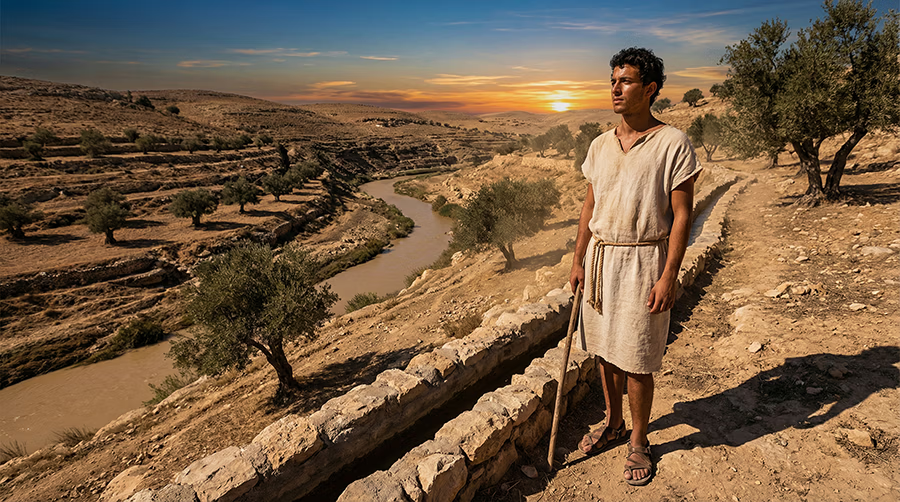
No seat of power is beyond God’s reach. The greatest political authority Solomon could imagine — a king — is described as a river channel that God redirects at will. This is not a statement of coercion but of sovereignty. The God who formed the mountains and set the stars in motion also shapes the decisions of presidents, prime ministers, and every governing authority. This truth has profound relevance today. When we engage with today’s most pressing cultural and political concerns through a biblical lens, we do so from a position of confidence — not fear — because we know who holds the hand that holds the scepter.
Verse 2 adds a necessary personal check: “Every way of a man is right in his own eyes, but the Lord weighs the hearts.” We are all capable of convincing ourselves that our motives are pure. God is not impressed by our self-assessments. He examines the interior, not the exterior. This is wisdom that cuts, because it demands honesty.
Righteousness Over Empty Ritual
Verse 3 delivers one of the most countercultural statements in the entire book of Proverbs:
“To do righteousness and justice is more acceptable to the Lord than sacrifice.” — Proverbs 21:3
God is not satisfied with the mechanics of religion when the heart behind it is corrupt. Sacrifice, in Solomon’s day, was the central act of worship. Yet here, Solomon — the man who built the very Temple in Jerusalem — declares that doing justice outranks offering sacrifice. This mirrors the prophets: Isaiah, Amos, and Micah all echo this same conviction. The Lord desires mercy and justice, not empty ceremony.
This theme connects directly to the danger of pride flagged in verse 4. A “haughty look, a proud heart, and the plowing of the wicked are sin.” Pride corrupts even good deeds by redirecting their purpose from God’s glory to self-promotion. Just as Proverbs 8 reveals wisdom’s call to humility and divine order, so Proverbs 21 reminds us that God-honoring action must flow from a heart that has been made right.
The True Cost of Shortcuts
Proverbs 21 speaks bluntly about what happens when people choose the fast lane over the faithful lane.
“The plans of the diligent lead surely to plenty, but those of everyone who is hasty, surely to poverty.” — Proverbs 21:5
Diligence and patience are partners. Solomon has addressed this theme with great consistency throughout the book, and Proverbs 13’s teaching on words, work, and righteous living explores the same truth in rich detail. Verse 6 goes further and warns that “getting treasures by a lying tongue is the fleeting fantasy of those who seek death.” Dishonest gain is not just financially risky — it is spiritually lethal. The person who cheats, deceives, and manipulates to get ahead is, in Solomon’s words, reaching toward death with both hands.
Verse 7 adds: “The violence of the wicked will destroy them, because they refuse to do justice.” There is no long-term profit in wickedness. The house built on injustice cannot stand. This is a principle the Five Smooth Stones toolkit for biblical faith and obedience returns to again and again — the foundation of a flourishing life is righteousness, not resourcefulness.
Compassion for the Poor and the Joy of Justice
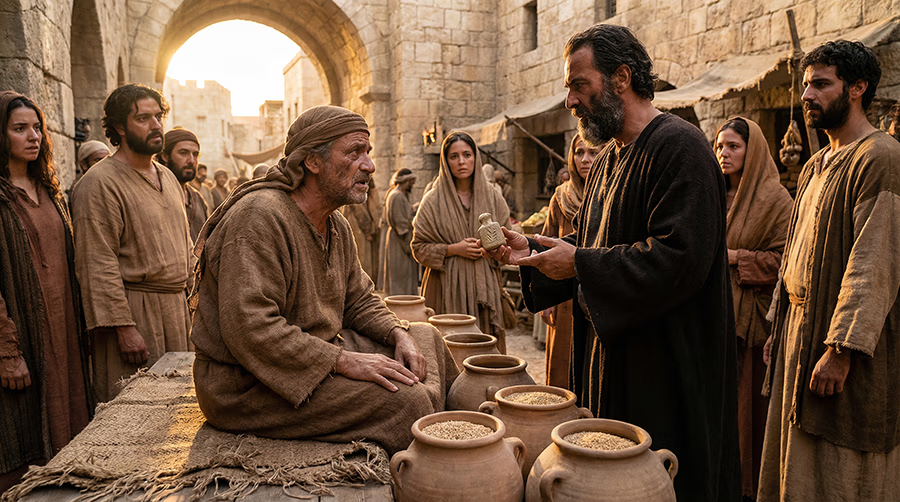
Verse 13 of Proverbs 21 lands with quiet severity: “Whoever shuts his ear to the cry of the poor will also cry himself and not be heard.” This is not merely a social observation. It is a spiritual principle: how we respond to those in need shapes how God responds to us. The man who hoards his compassion will find himself without it when he needs it most.
Verse 15 then introduces a beautiful contrast:
“It is a joy for the just to do justice, but destruction will come to the workers of iniquity.” — Proverbs 21:15
Righteousness is not a burden to the genuinely righteous. It is a delight. Justice, generosity, and integrity feel like freedom to the person whose heart has been shaped by God. For those whose hearts run the other direction, the same standard becomes a source of destruction. This connection between justice and generosity is explored further in our article on charitable giving and biblical wisdom for modern generosity.
Guard Your Mouth, Guard Your Soul
Among the most practical verses in Proverbs 21 is verse 23:
“Whoever guards his mouth and tongue keeps his soul from troubles.” — Proverbs 21:23
The tongue is a gateway. What we say reveals who we are, and how we speak shapes what we become. Solomon returns to this theme constantly throughout Proverbs, and Proverbs 17’s teaching on peace, character, and the power of restraint explores this in depth. Words spoken in anger, pride, or deception leave lasting damage — to relationships, to reputation, and to the soul itself.
Verse 24 identifies the arrogant person by name: “A proud and haughty man — ‘Scoffer’ is his name; he acts with arrogant pride.” The scoffer is not simply someone with a sharp wit. He is someone who has placed himself above correction, above truth, and ultimately above God. And verse 25 adds the companion warning: “The desire of the lazy man kills him, for his hands refuse to labor.” Laziness and pride share a common root — the refusal to submit to God’s design for human flourishing through diligent work and humble service.
Victory Belongs to the Lord
Proverbs 21 closes on a note of magnificent theological confidence:
“There is no wisdom or understanding or counsel against the Lord. The horse is prepared for the day of battle, but deliverance is of the Lord.” — Proverbs 21:30-31
Prepare faithfully. Trust completely. This is the posture Proverbs 21 calls every believer into. We are not passive — we plan, we work, we build, we engage. But we hold our preparations with open hands, knowing that every outcome rests in the hands of God. No human strategy, however brilliant, can outmaneuver the Lord. No coalition, however powerful, can stand against his purposes.
This is the beating heart of the mission at Trust and Obey with Chuck Frank — that a believing people who trust and obey God’s Word are equipped to live wisely, speak boldly, and love faithfully in every season of life. Whether you are facing personal trials or watching the nation wrestle with its moral foundations, Proverbs 21 gives you both the anchor and the compass: God is sovereign, righteousness matters, and deliverance is his alone to give.
As you continue exploring Solomon’s wisdom, the depth of Proverbs 20’s teaching on discernment and righteous living and Proverbs 24’s call to build with wisdom and defend the vulnerable offer natural next steps in your study. You can access the full collection of biblical teaching tools and study resources through our Resources page.
Practical Application: Walking Out Proverbs 21 This Week
Proverbs 21 is not merely a chapter to admire — it is a chapter to apply. Consider these three action steps:
- Examine your motives. Before a significant decision this week, ask: “Is the Lord weighing my heart here, and what would He find?”
- Choose righteousness over appearance. Identify one area where ritual has replaced genuine obedience, and take one concrete step toward authentic faith.
- Guard your words. Before responding in a tense conversation, pause and apply the wisdom of verse 23 — guard your mouth, guard your soul.

Frequently Asked Questions (FAQs)
What is the main theme of Proverbs 21?
Proverbs 21 centers on God’s absolute sovereignty, the superiority of righteousness over empty ritual, and the personal disciplines — diligence, humility, honest speech, and compassion — that mark a life aligned with God’s wisdom. Every verse tests whether our character is built on genuine faith or hollow performance.
What does Proverbs 21:1 mean by the king’s heart being like rivers of water?
Proverbs 21:1 uses the image of an irrigation channel to describe God’s effortless direction of human authority. Just as a farmer redirects water wherever it is needed, God redirects the decisions of even the most powerful rulers to accomplish his purposes — without overriding their will.
How does Proverbs 21 apply to modern Christian life?
Proverbs 21 speaks directly to everyday choices about work ethic, generosity, pride, speech, and trust in God’s sovereignty. Its warnings against laziness, dishonest gain, and arrogance are as relevant today as they were in Solomon’s 10th-century BC court, and its call to justice and compassion is foundational to a vibrant Christian witness.
Is there a connection between Proverbs 21 and other chapters in the book?
Absolutely. Proverbs 21 builds on recurring Solomonic themes found throughout the book. The call to diligence echoes Proverbs 10’s sharp contrast between righteousness and wickedness, while the warning against sexual immorality and moral compromise in Proverbs 7 and the self-control themes of Proverbs 23 all weave together into a unified portrait of godly character.
Further Reading
- Proverbs 21 Commentary — Enduring Word by David Guzik — Verse-by-verse exposition of Proverbs 21 with historical and theological context.
- Proverbs 21 — Blue Letter Bible — Original language study tools, cross-references, and interlinear study for Proverbs 21.
- Proverbs 21 — Bible Gateway (NKJV) — Full chapter text with multiple translation options.


