
The Book of Esther 10 concludes this remarkable story by revealing Mordecai’s elevation to second-in-command of the Persian Empire and his commitment to serving his people with wisdom and integrity. This brief but powerful chapter demonstrates how God’s providence orchestrates history through faithful servants who seek the welfare of others rather than personal gain, establishing a model of godly leadership that resonates through the ages.

Table of Contents
What Does the Book of Esther 10 Teach About God’s Providence?
The Book of Esther 10 demonstrates God’s sovereign hand working through human choices and circumstances to accomplish His divine purposes. Though God’s name never appears in Esther, His providential care saturates every verse. From Esther’s orphaned beginnings to Mordecai’s rise as prime minister, we witness how the Almighty orchestrates events across years to protect His people and fulfill His promises. This chapter stands as the capstone to a story that began with a drunken king’s decision and culminates in the Jewish people’s deliverance and their champion’s elevation to unprecedented authority.
Understanding the True Meaning of Providence
Providence means more than God simply foreseeing events. The word itself comes from the Latin “pro” meaning “on behalf of” and “videre” meaning “to see.” When God exercises providence, He doesn’t merely observe history unfolding but actively “sees to” the details, making provision for what needs to happen. This understanding transforms how we read the Book of Esther 10 and apply its lessons to our contemporary challenges.
The Persian Empire stretched from India to Ethiopia, encompassing 127 provinces under King Ahasuerus’s rule. In this vast kingdom, God positioned a Jewish orphan girl as queen and her adoptive father as prime minister. Neither achieved their positions through political maneuvering or personal ambition. Rather, divine providence arranged circumstances so that when Haman’s genocidal plot threatened every Jew, God already had His deliverers in place. The Book of Esther 10 records the aftermath, showing us that God’s plans extend beyond crisis management to long-term blessing and restoration.
Just as we see God’s providence demonstrated throughout the Book of Esther series, from Esther’s initial selection to Haman’s downfall, this final chapter reminds us that divine purpose continues working even after immediate dangers pass. Mordecai didn’t retire after saving his people; instead, he spent the rest of his tenure using his influence for their ongoing welfare.
Mordecai’s Greatness and the Model of Servant Leadership
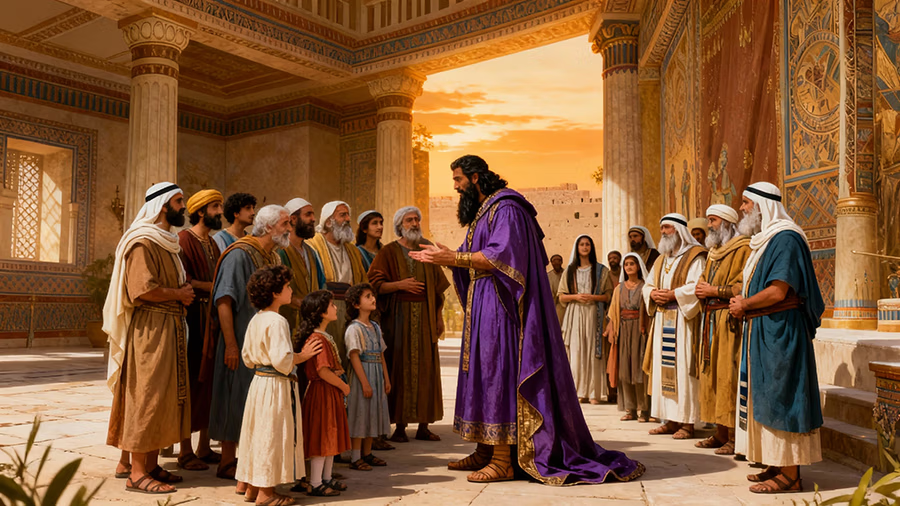
For Mordecai the Jew was second only to King Ahasuerus and great among the Jews and in favor with his many kinsmen. One who sought the good of his people and one who spoke for the welfare of his entire nation. (Esther 10:3)
What True Greatness Looks Like
What makes the Book of Esther 10 remarkable is not merely that Mordecai achieved high position but how he used that authority. Scripture describes him as one “who sought the good of his people and spoke for the welfare of his entire nation.” This phrase captures the essence of godly leadership: using power not for personal enrichment but for serving others.
Ancient Near Eastern history documents countless officials who leveraged their positions for personal gain, accumulating wealth and crushing rivals. Mordecai stands in stark contrast. Having narrowly escaped execution and witnessed his enemy’s destruction, he could have used his new authority for revenge against those who supported Haman’s plot. Instead, he dedicated himself to the welfare of all his people, speaking peace and seeking their prosperity.
This servant-hearted leadership reflects the character development that occurs when believers submit to God’s sovereignty and embrace opportunities to extend biblical wisdom for daily living. Mordecai’s humility and integrity demonstrate that true greatness consists not in the height of one’s position but in the depth of one’s commitment to others’ wellbeing.
The Book of Esther 10 presents Mordecai as “second only to King Ahasuerus,” yet he remained grounded in his identity as “Mordecai the Jew.” He didn’t abandon his heritage to assimilate completely into Persian culture. While he served the empire faithfully, his primary commitment remained to his people and their God. This balance between cultural engagement and spiritual distinctiveness provides crucial guidance for Christians navigating secular environments today.
The Power of Free Will Within Divine Sovereignty
One of the most profound tensions in Scripture emerges clearly through the Book of Esther: how does human free will operate within God’s absolute sovereignty? The story demonstrates that God’s providence doesn’t eliminate human choice but actually depends on faithful individuals making right decisions at critical moments.
The Critical Choices That Shaped History
Consider the key choices documented throughout Esther’s narrative. Haman freely chose, in his pride and rage, to decree the destruction of all Jews because Mordecai wouldn’t bow to him. The drunken King Ahasuerus freely chose to give Haman his signet ring, authorizing this genocidal edict. Mordecai freely chose to inform Esther about the assassination plot against the king, creating a debt of gratitude that would later prove crucial. Esther freely chose, not once but twice, to approach the king uninvited, risking her life to save her people.

These weren’t predetermined actions where individuals had no real choice. Each person could have decided differently. Yet God’s providence worked through their free decisions to accomplish His purposes. As the Book of Proverbs teaches in Proverbs 18, “The human mind plans the way, but the Lord directs the steps” (Proverbs 16:9). We make genuine choices, yet God’s sovereignty ensures that His ultimate purposes prevail.
This principle applies to contemporary Christian living as powerfully as it did in ancient Persia. When we face decisions about how to respond to injustice, whether to take risks for others’ benefit, or how to use whatever influence God grants us, our choices matter enormously. God has given us free will precisely so that we might choose to align ourselves with His purposes and participate in His providential work.
The Book of Esther 10 stands as the final testimony that God rewards those who make faithful choices. Mordecai could have kept silent about the assassination plot. He could have counseled Esther to remain passive and avoid risk. He could have used his elevated position for personal enrichment. At each juncture, he chose the path of faithfulness, and God’s providence transformed those choices into salvation for his people and blessing for himself.
George Washington and the Providence of God in America’s Founding
The transcript accompanying the Book of Esther 10 teaching draws a powerful parallel between Mordecai’s story and George Washington’s life, demonstrating how God’s providence operates across different eras and cultures. Like Mordecai, Washington found himself in positions of authority he never sought through personal ambition, and he consistently used that authority to serve others rather than enrich himself.

Historical records document multiple instances where Washington should have died but was miraculously preserved. During the French and Indian War at Braddock’s defeat, an ancient Indian chief later testified that he ordered seventeen of his best marksmen to target only Washington. They fired repeatedly at close range, putting bullet holes through Washington’s coat, yet never struck him. The chief concluded that Washington was under the special guardianship of the Great Spirit and ordered his warriors to stop shooting at him.
A Man of Deep Prayer and Dependence on God
Washington’s personal prayer journal reveals a man of deep Christian faith who understood himself as dependent on God’s providence. One of his evening prayers demonstrates his spiritual sensitivity and humility:
O most glorious God in Jesus Christ, my merciful and loving father, I acknowledge and confess my guilt in the weak and imperfect performance of the duties of this day. I have called on thee for pardon and forgiveness of sins, but so coldly and carelessly that my prayers are become my sin and stand in need of pardon… Remember that I am but dust and remit my transgressions, negligences, and ignorances, and cover them all with the absolute obedience of thy dear Son.
This prayer, recorded in Washington’s own handwriting, reflects the same dependence on divine grace that characterized Mordecai’s life. Both men recognized that whatever positions they achieved came not through their own merit but through God’s providential ordering of events. Both used their influence to seek the welfare of their people rather than personal glory.
The parallel extends to the founding of nations. Just as Mordecai helped establish policies that protected and prospered the Jewish people within the Persian Empire, Washington helped found a Constitutional Republic based on principles derived from biblical wisdom. The mission at Trust and Obey with Chuck Frank emphasizes this connection, teaching that a Constitutional Republic can only survive and thrive with a believing populace.
Washington’s farewell address warned future generations: “Of all the dispositions and habits which lead to political prosperity, Religion and Morality are indispensable supports. In vain would that man claim the tribute of Patriotism, who should labor to subvert these great pillars of human happiness.” He understood what the Book of Esther 10 demonstrates: that godly leadership rooted in moral principle produces lasting benefit for nations.
The Story of Joseph: Another Testament to Providence
The Book of Esther 10 naturally connects to Joseph’s story in Genesis, another powerful demonstration of God’s providence working through injustice and human choices to accomplish divine purposes. Joseph’s brothers sold him into slavery out of jealousy. He suffered false accusation and imprisonment. Yet God orchestrated these apparent disasters so that Joseph would be positioned as Egypt’s prime minister exactly when a devastating famine required his administrative wisdom to save countless lives.

God’s Purpose Transforms Evil into Good
When Joseph finally revealed himself to his brothers, he articulated one of Scripture’s clearest statements on providence: “You intended to harm me, but God intended it for good, to accomplish what is now being done, the saving of many lives” (Genesis 50:20). This principle echoes throughout the Book of Esther 10 and its preceding chapters. Haman intended to destroy the Jews, but God intended that very plot to elevate Mordecai and establish permanent protection for His people.
Both Joseph and Mordecai demonstrate that God’s providence doesn’t eliminate suffering or injustice in the short term. Joseph spent years in slavery and prison before his exaltation. Mordecai faced the threat of genocide and nearly lost Esther when she risked approaching the king. Yet God used even these trials to position His servants for maximum effectiveness when the critical moment arrived.
This understanding provides immense comfort for believers facing contemporary challenges. The principles revealed in the Book of Esther 10 apply directly to our situations. When we experience setbacks, injustice, or circumstances that seem contrary to God’s promises, we can trust that His providence is still at work, arranging details we cannot see, preparing us for purposes we do not yet understand.
The Book of Jonah series provides another perspective on this same truth. Even when God’s servants actively resist His purposes, like Jonah fleeing to Tarshish, divine providence accomplishes the intended outcome. God’s plans succeed not because He forces compliance but because His sovereignty encompasses even our rebellion and transforms it toward His ultimate goals.
Wisdom for Modern Statesmen: Praying for Mordecai-Like Leaders
The Book of Esther 10 confronts us with a sobering reality: the majority of people in positions of governmental authority today lack the moral compass and servant-hearted leadership that characterized Mordecai. This observation isn’t cynicism but realism based on observable patterns in contemporary politics and governance. Too many officials pursue personal enrichment, partisan advantage, and self-perpetuation in power rather than genuinely seeking their constituents’ welfare.
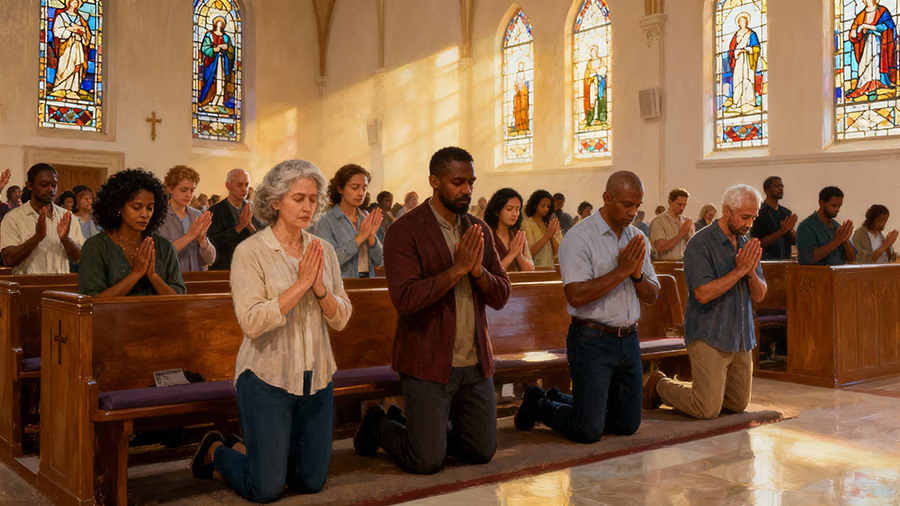
This makes the Book of Esther 10’s model even more urgent for our time. We desperately need statesmen who understand that authority is a trust to be exercised for others’ benefit, not a prize to be exploited for personal gain. We need leaders who possess the wisdom to navigate complex challenges, the integrity to resist corruption, and the courage to stand for truth even at personal cost.
The Book of James provides crucial guidance for the kind of wisdom required in leadership: “If you are wise and understand God’s ways, prove it by living an honorable life, doing good works with the humility that comes from wisdom” (James 3:13). This passage contrasts godly wisdom with the jealousy and selfish ambition that characterize worldly approaches to power. True wisdom produces purity, peace, gentleness, mercy, good fruit, impartiality, and sincerity.
Mordecai’s Example of Earned Respect
Mordecai exemplified these qualities. The Book of Esther 10 specifically notes that he was “great among the Jews and in favor with his many kinsmen.” Popularity based on genuine service differs fundamentally from popularity based on manipulation or pandering. Mordecai earned respect by consistently seeking others’ welfare, speaking truth, and maintaining integrity even when easier paths presented themselves.
Christians bear responsibility to pray for leaders who will exercise authority with this kind of wisdom. The Book of Esther 10 reminds us that God can elevate unlikely individuals to positions of influence and work through them to bless entire nations. Our prayers should ask God to raise up modern Mordecais who will use whatever authority they receive to pursue justice, protect the vulnerable, speak truth to power, and seek the common good rather than partisan advantage.
Understanding the principles taught through Today’s Concerns commentary series helps believers apply biblical truth to contemporary political and social issues. The challenge isn’t to withdraw from civic engagement but to engage in ways that reflect the servant leadership modeled in the Book of Esther 10.
The Timeless Relevance of the Book of Esther 10
Though this chapter consists of only three verses, its implications resonate powerfully for contemporary believers. The Book of Esther 10 addresses perennial questions about how God’s sovereignty relates to human responsibility, how faithful individuals should exercise authority, and how believers can maintain spiritual distinctiveness while serving in secular contexts.
First, the chapter affirms God’s continuing providence even after dramatic deliverance. The story could have ended with Haman’s execution and the Jews’ victory over their enemies in Book of Esther 9. Instead, the Book of Esther 10 shows us that God’s purposes extend beyond crisis resolution to long-term flourishing. Mordecai’s ongoing influence as prime minister meant sustained advocacy for Jewish welfare throughout his tenure.
This truth encourages believers to think beyond immediate problems toward sustained faithfulness. God doesn’t just rescue us from specific dangers; He positions us to impact our spheres of influence for His kingdom purposes over the long haul. Whether in business, education, government, medicine, or any other field, Christians should see their positions not as mere careers but as providentially ordained opportunities for service.
Second, the Book of Esther 10 demonstrates that true greatness consists in using power for others’ benefit. Mordecai could have become wealthy through his position. Ancient Near Eastern officials regularly accepted bribes and exploited their authority for personal enrichment. Mordecai instead focused on speaking peace and seeking the welfare of his entire nation. This servant-hearted approach to leadership reflects Jesus’s teaching that whoever wants to be great must become a servant (Matthew 20:26).
The practical application challenges believers in every context. Do we use whatever influence or authority God grants us to serve our own interests or others’ needs? Do we seek recognition and reward, or do we focus on making genuine contributions to our communities’ wellbeing? The Book of Esther 10 calls us to the higher standard Mordecai exemplified.
Third, this chapter affirms that maintaining spiritual identity while engaging secular culture is both possible and necessary. Mordecai served the Persian Empire faithfully but never stopped being “Mordecai the Jew.” He didn’t compartmentalize his faith as irrelevant to his public responsibilities. Rather, his Jewish faith informed how he exercised authority, shaping his commitment to justice and his concern for the vulnerable.
Contemporary Christians face similar challenges. How do we engage our workplaces, schools, and communities in ways that honor Christ without compromising biblical truth? How do we avoid both the extreme of total withdrawal from “worldly” institutions and the opposite extreme of complete assimilation that abandons distinctive Christian witness? The Book of Esther 10 provides a model: faithful presence that maintains spiritual integrity while genuinely serving the common good.
The Call to Action: Becoming God’s Plan A
The teaching accompanying the Book of Esther 10 concludes with a powerful prayer that applies these principles to America’s current challenges. This prayer acknowledges that believers have often remained silent when we should have spoken, passive when we should have acted, and focused on ourselves when we should have sought others’ welfare.

The prayer identifies us as “God’s plan A,” challenging the notion that we’re waiting for God to implement some separate strategy to address our nation’s spiritual and moral crisis. Rather, God is waiting for His people to rise up in faith, seek His wisdom, and courageously engage the challenges before us. This doesn’t mean political activism divorced from spiritual foundation but rather prophetic witness grounded in prayer, rooted in Scripture, and expressed through servant-hearted engagement.
The Book of Esther 10 demonstrates what happens when faithful individuals embrace their God-given opportunities to influence their cultures. Mordecai didn’t wait for someone else to lead. He didn’t assume that God’s sovereignty meant his choices were irrelevant. Instead, he consistently made decisions aligned with God’s purposes, trusted divine providence to accomplish what he couldn’t control, and used his influence to benefit others.
This same calling extends to believers today. We cannot control national outcomes or force spiritual revival, but we can make faithful choices in our spheres of influence. We can pray for wisdom like that demonstrated in Proverbs 8, pursue character development through studying biblical principles, and engage our communities with the truth and grace that characterized Mordecai’s leadership.
The prayer accompanying the Book of Esther 10 teaching pleads: “Dear God, awaken the silent bleaching bones of the American church and energize them into an army of God.” This imagery from Ezekiel’s vision of dry bones reminds us that spiritual renewal requires divine intervention. Yet it also requires human response. God breathed life into those dry bones when Ezekiel prophesied as commanded. Similarly, our culture’s spiritual renewal will require God’s people speaking His truth, living His principles, and courageously engaging rather than retreating.
The Book of Esther 10 stands as an enduring testament that one faithful person in the right position at the right time can impact nations. Esther saved her people through courageous action. Mordecai blessed his people through faithful leadership. Their examples challenge us to consider: How is God positioning me to influence my sphere? What opportunities for servant-hearted leadership has He placed before me? How can I use whatever authority or influence I possess to seek others’ welfare and advance His kingdom purposes?
Conclusion: Living in Light of God’s Providence
The Book of Esther 10 concludes a remarkable biblical narrative by pointing us toward timeless truths about God’s character and our calling. Though brief, this final chapter encapsulates the entire book’s message: God’s providence operates continuously, often invisibly, always purposefully, working through human choices to accomplish divine purposes that extend far beyond what we can imagine.
Mordecai’s story began with loss and captivity. His parents died, leaving him to raise his young cousin Esther. Yet divine providence transformed this tragedy into the foundation for national deliverance. Through circumstances neither of them orchestrated, God positioned both Mordecai and Esther exactly where they needed to be when their people faced existential threat. The Book of Esther 10 reveals the lasting fruit of their faithfulness: ongoing advocacy, sustained influence, and enduring blessing for generations.
This same providence continues operating in our lives and our world today. We may not see the full picture or understand how our current circumstances fit into God’s ultimate purposes, but the Book of Esther 10 encourages us to trust that He is “seeing to” every detail, arranging events we cannot control, preparing us for purposes we do not yet perceive.
Our responsibility mirrors Mordecai’s: to maintain spiritual integrity, exercise whatever influence God grants us with servant-hearted humility, speak truth even when costly, and consistently seek the welfare of others rather than personal advantage. As we do so, we participate in God’s providential work, becoming agents through whom His purposes advance in our generation.
The Book of Esther 10 ultimately directs our attention not to human heroes but to the divine Author orchestrating human history. May we, like Mordecai, prove faithful in whatever roles Providence assigns us, confident that God will accomplish His purposes through our obedient choices and use even our weaknesses to display His glory.
Frequently Asked Questions (FAQs)
What is the main message of the Book of Esther 10?
The Book of Esther 10 reveals that God rewards faithful service by elevating Mordecai to prime minister, where he continued using his authority to seek the welfare of his people rather than personal gain. This brief chapter demonstrates that true greatness consists in servant-hearted leadership that persists beyond crisis moments to create lasting blessing.
How does the Book of Esther 10 demonstrate God’s providence?
Though God’s name never appears in Esther, the Book of Esther 10 shows His providential hand by documenting how He orchestrated events over years to position Mordecai as second only to the king. This elevated position allowed sustained advocacy for Jewish welfare, demonstrating that God’s purposes extend beyond immediate deliverance to long-term flourishing.
Why is Mordecai’s leadership in the Book of Esther 10 significant for today?
The Book of Esther 10 presents Mordecai as a model of godly leadership who used power to serve others rather than enrich himself. His commitment to seeking his people’s welfare and speaking peace provides a stark contrast to contemporary leaders who exploit authority for personal benefit, challenging believers to pursue servant-hearted influence in their own spheres.
What does the Book of Esther 10 teach about free will and God’s sovereignty?
The Book of Esther 10 demonstrates that God’s sovereignty doesn’t eliminate human choice but works through our genuine decisions to accomplish His purposes. Mordecai made real choices at every step, yet divine providence ensured those faithful choices produced outcomes far beyond what he could have orchestrated, showing how human responsibility and divine sovereignty operate simultaneously.
Further Reading and Resources
For deeper study of the themes presented in the Book of Esther 10, explore these trusted biblical resources:
- Blue Letter Bible Commentary on Esther 10 – Matthew Henry’s classic exposition of Mordecai’s greatness and God’s providential ordering
- Desiring God: The Providence of God – John Piper’s comprehensive exploration of how God’s purposeful sovereignty operates throughout Scripture
- Bible Study Tools: Providence of God Definition – Theological dictionary entry explaining the biblical doctrine of divine providence
- George Washington’s Prayer Journal at CBN – Historical documentation of Washington’s Christian faith and dependence on God’s providence
- The Gospel Coalition Commentary on Esther – Contemporary scholarly analysis of themes throughout the book including chapter 10’s conclusion


