
Book of Esther 9 chronicles the Jewish people’s miraculous victory over their enemies on the 13th day of Adar, establishing the joyful feast of Purim. This chapter reveals God’s providential hand orchestrating justice, reversing Haman’s wicked plot, and transforming mourning into celebration through Esther and Mordecai’s faithful courage.

Table of Contents
Understanding God’s Providence in Book of Esther 9
What is God’s providence in the Book of Esther 9? God’s providence in Book of Esther 9 manifests through seemingly coincidental events orchestrated for His purposes: Queen Vashti’s refusal, Esther’s selection, Mordecai’s vigilance, delayed rewards, and perfect timing that transformed certain death into triumphant deliverance for the Jewish people.
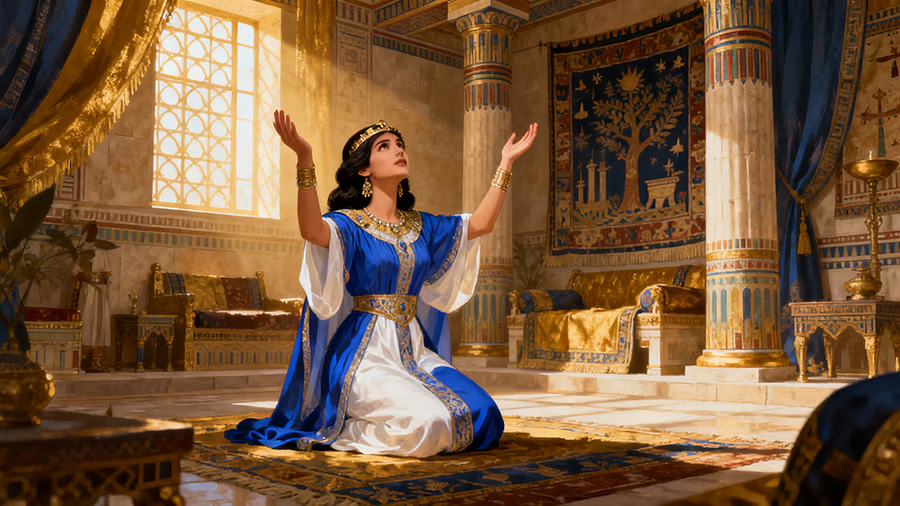
The Book of Esther 9 stands as one of Scripture’s most powerful testimonies to divine providence. Unlike other biblical books, God’s name never explicitly appears in Esther, yet His fingerprints cover every page. As we explore the remarkable victory described in Book of Esther 9 through our comprehensive Bible Messages series, we discover a God who works behind the scenes, moving chess pieces across time to fulfill His purposes for His chosen people.
Before diving into the events of this climactic chapter, we must appreciate the extraordinary chain of providential events that made this victory possible. Each detail, whether minute or monumental, reveals the sovereign hand of God orchestrating circumstances for His glory and His people’s deliverance.
Consider the first domino: Queen Vashti’s refusal to appear before the drunken King Ahasuerus. As detailed in our study of Book of Esther 1, she was nine months pregnant when commanded to parade unveiled before intoxicated nobles. Her dignified refusal, though it cost her crown, created the opening for Esther to become queen. Without this seemingly unfortunate event, there would be no Jewish advocate in the Persian palace.
The Chain of Divine Interventions
How does God work providentially throughout the Book of Esther? God’s providence operates through natural circumstances orchestrated supernaturally: Esther’s favor with palace officials, Mordecai overhearing assassination plots, delayed rewards creating opportunities, dice determining timelines, and multiple life-sparing moments that position His people for deliverance.
The selection of Esther from hundreds of candidates reveals divine favor, as explored in Book of Esther 2. The head eunuch immediately took special interest in her, assigning the best servants, providing the finest apartment, and coaching her on the king’s preferences. Such favor cannot be attributed to mere chance. Through these circumstances, our study of biblical wisdom for daily living shows how God positions His servants strategically.
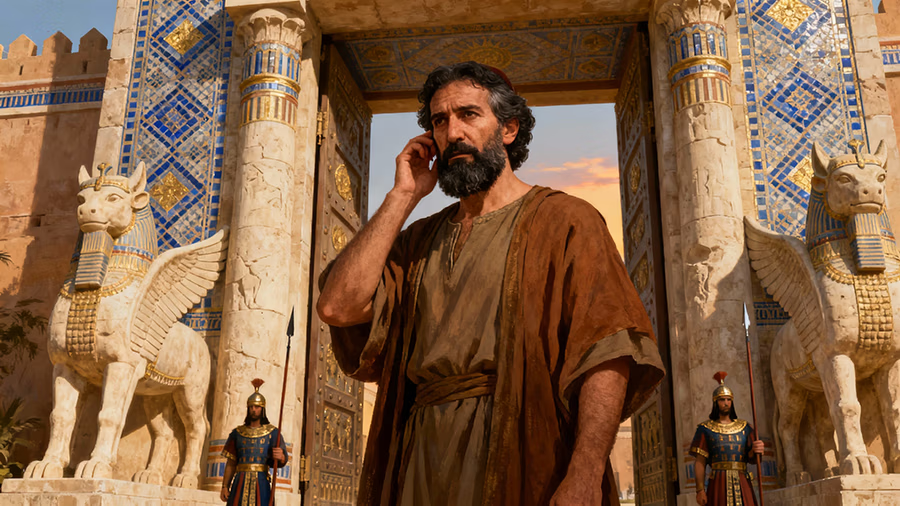
Mordecai’s presence at the palace gate proved equally providential. His vigilant concern for his adopted daughter placed him precisely where he could overhear two palace guards plotting King Ahasuerus’s assassination, as documented in Book of Esther 3. This intelligence, passed through Esther, saved the king’s life and was recorded in the royal chronicles. Yet mysteriously, Mordecai received no immediate reward for this loyal service. This “oversight” became crucial later when the king’s sleeplessness led him to discover the unrewarded deed at exactly the right moment.
The casting of “pur” (lots) by Haman to determine when the Jewish genocide would occur provides another striking example of God’s sovereign control. What appeared as random chance resulted in the decree being scheduled for the last month of the year, the 13th day of Adar. This “coincidental” delay gave sufficient time for all necessary interventions to unfold. God took advantage of Haman’s cavalier gambling with lives and pushed the execution date nearly a year into the future.
Esther’s two approaches to the king, both risking death, succeeded when the king extended his golden scepter. Persian law dictated death for anyone approaching the throne uninvited, yet twice the king spared Esther’s life and welcomed her petitions. The cumulative weight of these “coincidences” reveals unmistakable divine orchestration.
The Historic Background: A 940-Year-Old Bill Comes Due
What historical event does Book of Esther 9 fulfill? Book of Esther 9 fulfills divine judgment against the Amalekites from 1,410 BC. When King Saul disobeyed God’s command to completely destroy Agag and the Amalekites, God’s unfinished business remained. Haman, an Agagite descendant, represents that ancient enemy finally facing justice.
The events of Book of Esther 9 didn’t occur in a vacuum. They represent the culmination of a conflict stretching back nearly a millennium. In 1,410 BC, God commanded King Saul to completely destroy the Amalekites, ancient enemies who had attacked Israel during the Exodus. Saul partially obeyed but spared King Agag and the best livestock, preferring celebrity status over complete obedience to God.
This disobedience cost Saul his kingdom and allowed David to become king after God’s own heart. Yet the incomplete judgment left unfinished business. Haman, identified as “the Agagite” throughout Esther, descended from that spared line. The Book of Esther 9 reveals God holding an ancient bill that remained unpaid for 940 years.

When we examine how faith and politics intersect in Scripture through our Today’s Concerns series, we see that God’s justice may be delayed but never forgotten. The Persian Empire setting in 470 BC became the stage where this ancient account would finally be settled. God’s providence orchestrated not just Esther’s deliverance of the Jews but also the completion of judgment against Amalek through Haman’s descendants.
This historical context transforms our understanding of Book of Esther 9 from a simple victory story into a profound demonstration of God’s faithfulness across generations. He remembers His promises, pursues justice for His people, and ensures that even centuries-old commands reach fulfillment in His perfect timing.
The Day of Battle: Reversal and Victory
What happened on the 13th of Adar in Book of Esther 9? On the 13th of Adar, the day enemies expected to destroy the Jews, a dramatic reversal occurred. The Jews, authorized by Mordecai’s counter-decree, defended themselves successfully. They killed 500 enemies in Susa alone, including Haman’s ten sons, demonstrating God’s protective hand.
Now in the twelfth month, that is the month Adar, on the thirteenth day when the king’s command and edict were to be put into effect, on the day when the enemies of the Jews hoped to gain mastery over them, it turned out to the contrary so that the Jews themselves gained mastery over those who hated them.
This pivotal verse in Book of Esther 9 captures the essence of divine reversal. Both decrees remained in force: Haman’s original order to annihilate the Jews and Mordecai’s counter-decree authorizing Jewish self-defense. The enemies had months of preparation time, yet when battle commenced, the Jews prevailed decisively.
The text reveals that “the dread of them had fallen on all the people.” Over their century in Persia, the Jewish people had earned respect through industriousness, intelligence, family cohesion, and law-abiding citizenship. More significantly, the Persian population had learned about Jewish history: their monotheistic faith, the miraculous Exodus from Egypt, and their God who intervened on their behalf while also disciplining disobedience.
The Strategic Wisdom of Mordecai
The Jews assembled in their cities throughout the 127 provinces, gathering strength through unity. This wasn’t passive waiting but active preparation enabled by Mordecai’s wisdom in the counter-decree. The provincial officials, nobles, satraps, and royal administrators all supported the Jews because fear of Mordecai had fallen upon them. His elevation to prime minister carried weight throughout the empire.

In Susa, the citadel fortress of the capital, Jewish defenders killed 500 enemies plus Haman’s ten sons. The specific mention of these ten sons demonstrates the complete removal of Haman’s line, fulfilling the ancient judgment against Agag’s descendants. Significantly, the text repeatedly emphasizes that despite their victory, the Jews “did not lay their hands on the plunder.”
This detail carries profound importance. The battle wasn’t about enrichment but survival and justice. When King Saul disobeyed regarding the Amalekites, greed for plunder motivated his partial obedience. The Jews in Book of Esther 9, by contrast, demonstrated pure motives. Their restraint from plundering vindicated their cause and revealed that this fight concerned principle, not profit.
King Ahasuerus, learning of the casualties in Susa, asked Esther what more she desired. Her request for an additional day of defense and the public display of Haman’s sons’ bodies might seem harsh to modern sensibilities. However, this ensured complete security. Enemies who might regroup and retaliate would see the finality of their defeat. In ancient warfare, such displays prevented future conflicts by demonstrating decisive victory.
The Establishment of Purim: A Perpetual Memorial
Why do Jews celebrate Purim according to Book of Esther 9? Jews celebrate Purim because Book of Esther 9 establishes this feast commemorating their miraculous deliverance from genocide. Mordecai and Esther commanded annual celebration on Adar 14-15, transforming mourning into joy, remembering God’s providential rescue through feasting, giving, and sharing their testimony.
The Jews of rural areas celebrated on the 14th of Adar, while those in Susa celebrated on the 15th because they required an extra day of defense. Mordecai wisely institutionalized both days, creating an inclusive memorial that honored all Jewish communities regardless of location. This established the feast of Purim, named after the “pur” (lots) that Haman cast to determine the genocide date.
Therefore they called these days Purim after the name of Pur. And because of the instructions in this letter, both what they had seen in this regard and what had happened to them, the Jews established and made a custom for themselves, their descendants, and for all those who allied themselves with them.
The Four Elements of Purim Celebration
Book of Esther 9 prescribes specific observances for Purim that continue today:
- Feasting and rejoicing – Celebrating God’s deliverance with abundant joy
- Sending portions of food to one another – Building community through sharing
- Giving gifts to the poor – Remembering those in need during celebration
- Reading the Megillah (Book of Esther) – Retelling the story for each generation
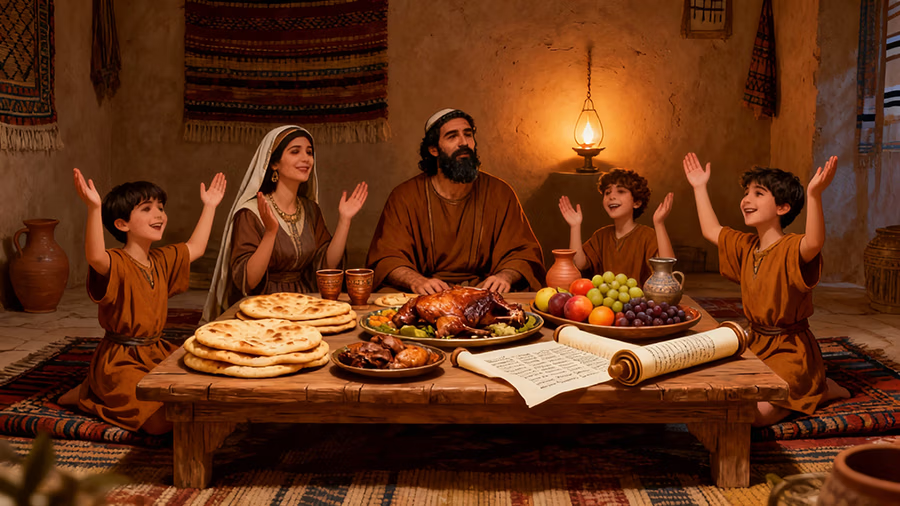
These elements transform a near-tragedy into annual triumph, ensuring that God’s faithfulness remains fresh in Jewish memory. The celebration emphasizes reversal: from grief to joy, from mourning to celebration, from death sentence to abundant life. Those exploring biblical wisdom for contemporary Christian living through our examination of Book of Esther 4’s lessons on courage find powerful principles in remembering God’s past faithfulness as fuel for present trust.
Mordecai sent letters to all 127 provinces, obliging Jews everywhere to celebrate Purim annually. Queen Esther added her royal authority, establishing these customs permanently. The command was “written in the book,” ensuring official recognition within Persian imperial records. This governmental acknowledgment gave legitimacy and protection to Jewish religious practice throughout the empire.
The Global Legacy: Purim Through the Centuries
How long have Jews celebrated Purim worldwide? Since 470 BC, Jews have celebrated Purim annually across every generation and continent. Historical records and early photography document Purim observances from Japan to South America, from Soviet territories to Africa, making it one of history’s most consistently observed religious holidays spanning 2,500 years.
The endurance of Purim celebration stands as remarkable testimony to the power of Book of Esther 9’s command. Beginning in 470 BC and continuing unbroken to today, Jewish communities worldwide have maintained this memorial across 2,500 years. Research reveals Purim celebrations documented in virtually every nation where Jewish people have lived.
Early photographs capture turn-of-the-century Purim feasts in Japan, contemporary celebrations across the former Soviet Union, festivities throughout Africa, and observances across South America. No other religious holiday demonstrates such consistent global observance across so many centuries, cultures, and geographical locations. This persistence testifies not merely to Jewish cultural tenacity but to the profound impact of the events described in Book of Esther 9.
The celebration serves multiple purposes: remembering God’s providence, honoring Esther’s courage, recognizing Mordecai’s wisdom, teaching children Jewish history, and maintaining community identity. Each annual reading of the Megillah reinforces these values while celebrating the dramatic reversals that characterize God’s dealings with His people.
For Christians studying today’s concerns through biblical lenses, Purim demonstrates how religious observance preserves truth across generations. When communities commit to remembering God’s faithfulness, that remembrance shapes identity and sustains hope during subsequent trials. The feast doesn’t merely recall past deliverance but anticipates future interventions by the same faithful God.
The Hidden Name of God in Book of Esther 9
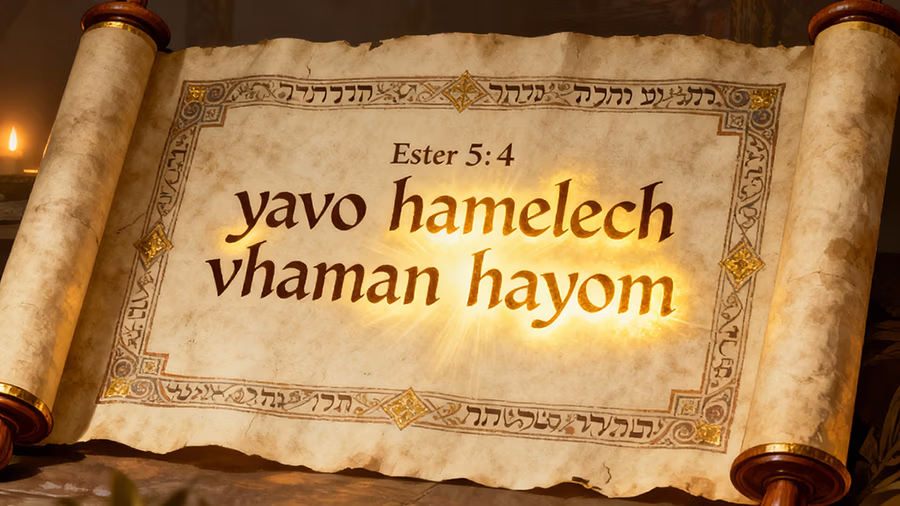
Does God’s name appear in the Book of Esther? While God’s name never explicitly appears in Esther’s text, His presence is revealed through an acrostic in Esther 5:4. The Hebrew phrase “let the king and Haman come today” contains initial letters spelling YHWH (Yahweh), God’s covenant name, hidden within the pivotal verse.
Many scholars note that Book of Esther 9 and the entire book never explicitly mention God by name. This absence has sparked considerable discussion about whether Esther belongs in Scripture. However, the book doesn’t merely contain God’s fingerprints; it conceals His name in a beautiful literary device.
Esther 5:4, nearly the exact center of the book, contains the pivotal moment when Esther commits herself to her plan of action: “If it pleases the king, let the king and Haman come today to the banquet that I have prepared for him.” In Hebrew, this phrase uses four words: “yavo hamelech vhaman hayom.”
The initial letters of these Hebrew words form an acrostic: Y-H-W-H, the consonants spelling Yahweh, God’s covenant name. In Hebrew tradition, God’s name was too holy to write completely, so scribes used these four consonants. English translations render it “LORD” in small capitals. This hidden acrostic appears at the story’s turning point, when Esther risks everything in faith, not yet knowing if the king will intervene.
This literary artistry demonstrates that while God works behind the scenes in Book of Esther 9, His presence permeates the narrative. The concealment of His name mirrors His concealed-yet-evident activity throughout the story, as we’ve explored in Book of Esther 5’s examination of divine timing. For those developing deeper understanding through our Bible Messages series, this technique reveals how Scripture rewards careful study with hidden treasures.
Practical Applications: Providence and Personal Faith
What does Book of Esther 9 teach about trusting God today? Book of Esther 9 teaches that God works providentially through natural circumstances, delays aren’t denials, past faithfulness predicts future deliverance, and believers must act courageously while trusting divine outcomes. Providence doesn’t eliminate personal responsibility but empowers faithful action through difficult circumstances.
The providential lessons of Book of Esther 9 extend far beyond ancient Persian history. They speak directly to believers navigating contemporary challenges, political uncertainty, and personal crises. God’s character revealed in Esther remains consistent today, offering several critical principles for Christian living.
Providence Requires Participation
God’s providential work doesn’t negate human responsibility. Esther risked her life twice. Mordecai organized defense strategies. The Jewish people armed themselves and fought courageously. Divine providence created opportunities, but human faithfulness activated those opportunities. We cannot passively wait for God to act while neglecting our responsibilities. As we explore faith and Christian leadership principles, we discover that trust and action must work together.
Timing Belongs to God
The year-long delay from Haman’s decree to the battle day frustrated the enemies but served God’s purposes perfectly. Every piece needed that time to move into position. When we face delays in answered prayer or desired outcomes, Book of Esther 9 reminds us that God’s timing accomplishes what our preferred schedule cannot. Patience in providence demonstrates spiritual maturity.
Small Details Matter in God’s Plans
The seemingly insignificant detail of Mordecai’s unrewarded service became crucial when the king’s insomnia led him to the chronicles. Vashti’s pregnancy and her refusal to appear opened the door for Esther decades before she would need to be queen. God wastes nothing in His providence. The details of our lives that seem inconsequential may be building blocks for His future purposes.
Reversal Characterizes God’s Justice
Book of Esther 9 showcases divine reversal: from genocide to deliverance, from mourning to celebration, from Haman’s gallows to his own execution, from Mordecai’s sackcloth to prime minister robes as seen in Book of Esther 6’s dramatic turning point. When circumstances appear hopeless, God specializes in dramatic reversals. The darkest moment often precedes the greatest breakthrough.
Memory Matters for Faith Endurance
The establishment of Purim as perpetual memorial demonstrates that remembering God’s faithfulness fuels present faith and future hope. Our Christian Community benefits from regular testimony sharing, celebrating answered prayers, and intentionally recalling God’s interventions. These practices aren’t mere nostalgia but faith-building disciplines.

The Constitutional Connection: Faith and National Survival
How does Book of Esther 9 relate to constitutional governance? Book of Esther 9 demonstrates that national survival requires a believing populace. The Persian Empire’s tolerance of Jewish religious practice, Mordecai’s just governance, Esther’s courageous advocacy, and the people’s moral courage all show how faith principles undergird stable, just societies.
The mission of Trust and Obey with Chuck Frank emphasizes that “a Constitutional Republic can only survive and thrive with a believing populace.” Book of Esther 9 provides historical validation for this principle. The Persian Empire, despite its pagan foundation, demonstrated governmental structures that protected religious liberty and enabled justice.
King Ahasuerus’s willingness to issue a counter-decree, though unable to revoke the first, showed flexibility within legal constraints. Mordecai’s elevation to power brought wisdom and justice to imperial governance. The provincial officials’ support for the Jews demonstrated that righteous leaders influence entire systems. These elements created an environment where God’s people could thrive and where divine providence could operate through existing structures.
For believers engaging with the mission of faith-informed citizenship, Book of Esther 9 offers crucial insights. Righteous individuals in positions of influence can redirect entire nations. Courageous advocacy for truth matters at every level of society. Divine providence often works through existing governmental and social structures rather than destroying them. The interplay between human agency and divine sovereignty creates space for both prayer and political engagement.
The Persian Empire’s documentation of these events in official chronicles meant that future generations would learn about the Jewish people’s God and His faithfulness. Governmental recognition of religious truth serves public good. This principle undergirds religious liberty as foundational to healthy societies where diverse communities can flourish while maintaining their distinctive identities.
A Modern Day of Prayer: JFK’s Prophetic Call
What contemporary parallel does Chuck Frank draw from Book of Esther 9? Chuck Frank connects Book of Esther 9’s themes to President John F. Kennedy’s 1962 National Day of Prayer proclamation, emphasizing that courage, faith, and divine intervention remain essential for national wellbeing, even when facing powerful opposition and uncertain outcomes.
In concluding his teaching on Book of Esther 9, Pastor Chuck Frank highlights President John F. Kennedy’s proclamation of October 17, 1962, as a National Day of Prayer. The proclamation called Americans to pray “each following the practices of his own faith” for the nation, families, citizens, and world peace. Kennedy emphasized that homes should “nurture our youth and give to them the needed faith in God, in our nation, and in their future.”
This presidential call to prayer echoes the spirit of Book of Esther 9, where a national crisis required both human courage and divine intervention. Kennedy’s emphasis on faith as essential for national wellbeing aligns with the lesson that constitutional republics require believing populations. His assassination one year and one month later adds tragic weight to his words.
Kennedy’s famous quote – “Do not pray for easy lives. Pray to be stronger people” – perfectly captures the lesson of Book of Esther 9. Esther and Mordecai didn’t receive easy circumstances. They faced potential annihilation. Yet their faith in God and courageous action, not knowing whether their lives would be preserved, brought deliverance for their entire people. They became stronger people through crisis, and their example endures across millennia. God’s providence operates even when evil appears ascendant. Courageous faith matters more than comfortable circumstances. The battle requires participation, not passive waiting. Victory comes through divine intervention working through human faithfulness.
Conclusion: Living in Light of God’s Providence
Book of Esther 9 stands as eternal testimony to God’s faithfulness, the power of courageous faith, and the importance of remembering divine deliverance. From the ancient Persian Empire to contemporary challenges, the lessons remain constant: God works providentially through natural circumstances, positions His people strategically for His purposes, brings justice in His timing, and transforms mourning into celebration.
The establishment of Purim ensures that each generation learns these truths afresh. The feast celebrates not merely ancient history but present reality – we serve the same God who orchestrated Esther’s rise, Mordecai’s wisdom, and the Jewish people’s deliverance. His providence continues operating in our lives, often unrecognized until we look backward and see His fingerprints covering circumstances we thought were merely coincidental.
As we face uncertain times, political challenges, personal crises, and spiritual warfare, Book of Esther 9 calls us to Esther and Mordecai’s example: trust God’s providence while acting courageously, recognize His hand in small details and large reversals, maintain faith communities that remember His past faithfulness, and refuse to pray for easy lives but instead pray to become stronger people. Explore additional Christian resources and tools to deepen your faith journey.
The 2,500-year observance of Purim demonstrates that truth endures, God’s faithfulness transcends generations, and remembering divine intervention sustains hope through subsequent trials. May we embrace these lessons, live faithfully in our moment, and trust that the God of Book of Esther 9 continues writing His story through our lives today.
Frequently Asked Questions (FAQs)
What is the main message of Book of Esther 9?
Book of Esther 9’s main message reveals God’s providential deliverance of His people through apparently natural circumstances. The chapter demonstrates that divine sovereignty operates behind the scenes, transforms mourning into celebration, and requires human courage partnering with divine providence for breakthrough.
Why is Purim important to Christians?
While Purim is a Jewish holiday, Christians benefit from understanding God’s faithfulness across covenant history. Book of Esther 9’s themes of providence, courage, reversal, and remembrance apply universally. The feast demonstrates how commemorating God’s past faithfulness strengthens present faith and future hope.
How does Book of Esther 9 show God’s presence without naming Him?
God’s name never explicitly appears in Esther, yet His providence saturates every page. Book of Esther 9 reveals His presence through orchestrated circumstances, perfect timing, dramatic reversals, and an acrostic spelling YHWH in Esther 5:4. His fingerprints cover the narrative even when His name remains unspoken.
What practical lessons does Book of Esther 9 teach for today?
Book of Esther 9 teaches that providence requires our participation, God’s timing perfects our plans, small details matter in His purposes, divine reversal specializes in hopeless situations, and remembering His faithfulness fuels present courage. These principles guide faithful Christian living through contemporary challenges.
Further Reading
Blue Letter Bible – Book of Esther 9: Comprehensive biblical commentary and Hebrew word studies for deeper understanding of Esther 9’s original language and context.
Enduring Word Commentary – Esther 9: Verse-by-verse exposition by David Guzik exploring theological themes and practical applications from this chapter.
The Gospel Coalition – Esther and Silent Sovereignty: Bethany Jenkins examines how God works through ordinary events and hidden providence in the Book of Esther.
Bible Study Tools – Purim Traditions: Historical and contemporary overview of how Purim celebrations maintain Book of Esther 9’s commanded observances.


