
Book of Esther 7 marks the dramatic climax where Queen Esther reveals Haman’s genocidal plot against the Jewish people. King Ahazerus responds with swift justice, hanging Haman on the very gallows he built for Mordecai. This powerful chapter demonstrates how God orchestrates perfect timing, righteous judgment, and complete reversal of evil schemes. The story reveals timeless lessons about courage, divine providence, and the certainty of God’s justice.
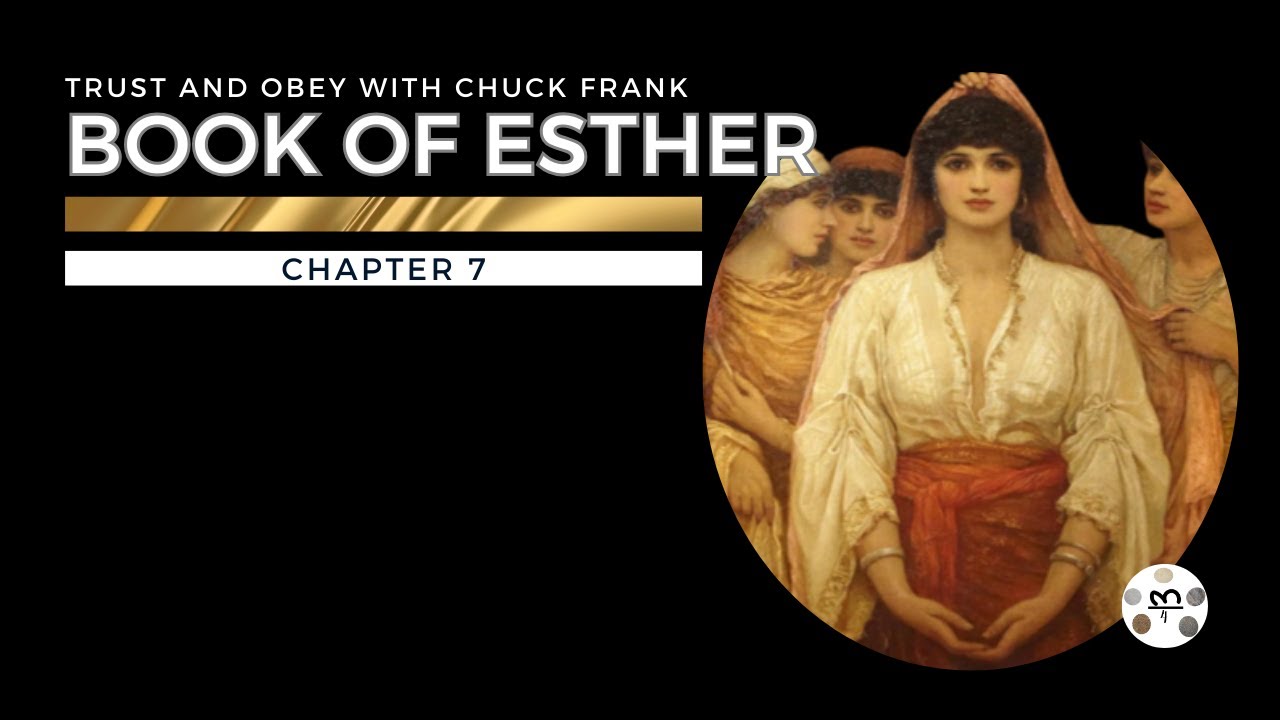
Table of Contents
The Second Banquet: Esther’s Strategic Wisdom
What happened at Queen Esther’s second banquet in the Book of Esther 7? Esther revealed Haman’s plot to annihilate the Jewish people, strategically presenting her case to King Ahazerus after building trust through two carefully planned feasts. Her composure and timing demonstrated remarkable wisdom under pressure.
The Book of Esther 7 opens with King Ahazerus and Haman attending Queen Esther’s second banquet, a continuation of the strategic plan Esther initiated in Book of Esther 5. The king, now for the third time, extends his generous offer to grant Esther’s request up to half the kingdom. This repeated offer demonstrates both the king’s affection for Esther and God’s preparation of his heart for the revelation to come.
Esther’s patient approach through two separate banquets reveals profound wisdom that believers can apply when addressing injustice or advocating for truth. She did not rush to accusation or become hysterical with emotion. Instead, she modeled composure, restraint, and strategic timing that allowed events to unfold in God’s perfect order. Between the first and second banquets, divine providence worked through King Ahazerus’s sleepless night, leading to Mordecai’s public honoring and Haman’s initial humiliation.
The authenticity of this account is supported by historical evidence. An ancient leather scroll containing the entire Book of Esther, discovered on the Iberian Peninsula 559 years ago, now resides in an Israeli museum. This artifact, donated by a Jewish family who preserved it for generations, confirms the textual accuracy of Esther’s narrative. Like the Dead Sea Scrolls that verify 98% textual accuracy of Scripture, this physical evidence reminds us that God oversees the preservation of His Word.

The setting itself holds significance. Shushan, the Persian capital where these events unfolded, was one of the most powerful cities in the ancient world. King Ahazerus ruled an empire spanning 127 provinces from India to Ethiopia, controlling territory that encompasses over 19 modern nations. Understanding this historical context through resources available in our Bible Messages section enriches our appreciation for the scope of God’s deliverance.
Esther’s Courageous Revelation
How did Queen Esther reveal Haman’s plot in the Book of Esther 7? Esther approached the king with humility, requesting that her life and her people be spared from destruction. She revealed they had been sold for annihilation, then identified Haman as the enemy plotting their genocide.
When King Ahazerus pressed Esther for her petition, she responded with calculated humility:
If I have found favor in your sight, O king, and if it pleases the king, let my life be given me as my request, and my people as my wish.
This opening statement immediately captured the king’s attention and concern. Why would the queen need to plead for her own life?
Esther continued her revelation with precision:
For we have been sold to be destroyed, killed, and eliminated.
The verb choices here are deliberate and escalating, painting a picture of total annihilation. She then added a crucial qualifier that demonstrated both wisdom and political acumen:
Now if we had only been sold as slaves, men and women, I would have kept silent, because the distress would not be sufficient reason to burden the king.
This statement accomplished multiple purposes. First, it showed Esther’s consideration for the king’s time and concerns, positioning herself as reasonable rather than demanding. Second, it highlighted the severity of the threat by contrast. Slavery would have been grievous enough to keep silent about, but genocide demanded royal intervention. Third, it subtly referenced Haman’s promise to deposit vast sums into the royal treasury in exchange for the decree, money Haman did not actually possess.
The king’s response reveals his genuine shock:
Who is he, and where is he who would presume to do such a thing?
Notice the king’s word choice, “presume,” indicating that such an action would be an audacious overstep of authority. This moment represents the turning point in the Book of Esther 7 where all of Haman’s scheming begins to unravel.
Esther’s answer was direct and unambiguous:
A foe and an enemy is this wicked Haman.
No euphemisms, no political hedging, just clear identification of evil. As the Book of Esther series demonstrates throughout, there comes a time when believers must name wickedness plainly and refuse to compromise with evil for the sake of social comfort.
The King’s Wrath and Haman’s Terror
Why did King Ahazerus become angry in the Book of Esther 7? The king realized that Haman had deceived him into authorizing genocide against the queen’s people, exploiting royal authority for personal vengeance. His anger reflected both personal betrayal and recognition of being manipulated into grave injustice.

Upon hearing Esther’s accusation, Haman became terrified before the king and queen. The text tells us:
Haman became terrified before the king and queen.
This language conveys complete panic and the recognition that his schemes had been exposed. The man who had walked through Shushan full of pride and murderous intent now stood paralyzed with fear.
King Ahazerus, overcome with anger, rose from the banquet and went into the palace garden. This departure was significant. The king needed to process the magnitude of what he had just learned. He had been deceived into authorizing the destruction of his own queen’s people. His trusted advisor had manipulated him into issuing an irrevocable decree of genocide. The political, personal, and moral implications were staggering.
While the king walked in the garden wrestling with these revelations, Haman made a desperate decision. He stayed behind to beg Queen Esther for his life, recognizing that:
Harm had been determined against him by the king.
This moment reveals the complete reversal of power dynamics. The man who had plotted Mordecai’s execution and sought the annihilation of an entire people now groveled before a Jewish woman for mercy.
The scene that followed became the final nail in Haman’s coffin. When King Ahazerus returned from the garden, he found Haman falling on the couch where Esther reclined. In ancient Persian court protocol, this physical proximity to the queen would have been considered an egregious violation. The king’s immediate interpretation was damning:
Will he even assault the queen with me in the house?
Whether Haman’s action was genuine prostration in pleading or an unfortunate accident of desperation, the king perceived it as an attack. The phrase:
As the word went out of the king’s mouth, they covered Haman’s face.
This indicates that servants immediately recognized the death sentence in the king’s words. Covering the face of the condemned was Persian court protocol, signaling that the person was already considered executed.
Divine Justice and Perfect Reversal
What does Haman’s execution in the Book of Esther 7 teach about divine justice? God’s justice often works through the principle of measure-for-measure judgment, where the wicked fall into their own traps. Haman’s death on his own gallows illustrates how evil schemes ultimately backfire on those who plot against God’s people.
At this critical moment, Harbona, one of the king’s eunuchs, provided crucial information:
Indeed, behold the wooden gallows standing at Haman’s house fifty cubits high, which Haman made for Mordecai, who spoke good on behalf of the king.
This detail accomplished two important things. First, it reminded the king of Mordecai’s loyal service in uncovering the assassination plot documented in Book of Esther 2. Second, it revealed the personal vendetta that had motivated Haman’s broader genocidal plans.
The height of the gallows, fifty cubits (approximately 75 feet), demonstrated the extent of Haman’s malice and pride. This was no ordinary execution device but a towering monument to hatred, designed to make Mordecai’s death a public spectacle visible throughout Shushan. The very instrument Haman crafted for his enemy’s humiliation became the means of his own demise.
King Ahazerus’s response was immediate and decisive:
Hang him on it.
The swiftness of this judgment reflects the severity of Haman’s crimes and the king’s fury at being manipulated.
So they hanged Haman on the wooden gallows which he had prepared for Mordecai, and the king’s anger subsided.
This sentence represents one of the Bible’s clearest examples of poetic justice, where the punishment perfectly fits the crime and the schemer is caught in his own trap.
This principle of divine reversal appears throughout Scripture. In Proverbs 26:27, we read:
Whoever digs a pit will fall into it, and he who rolls a stone will have it roll back on him.
The Psalmist declares in Psalm 7:15-16:
He who digs a hole and scoops it out falls into the pit he has made. The trouble he causes recoils on himself; his violence comes down on his own head.
The Book of Esther 7 provides a dramatic historical illustration of this spiritual truth.
For contemporary believers exploring biblical wisdom for daily living, this principle offers both warning and comfort. Those who scheme against the righteous should heed Haman’s fate. Those who suffer unjust persecution can trust that God sees and will ultimately vindicate His people.
Contemporary Application: Speaking Truth to Power
How does the Book of Esther 7 apply to modern Christian living? Believers must develop courage to expose injustice, wisdom to choose proper timing, and faith to trust God’s providence even when evil seems to triumph. Like Esther, we must refuse to remain silent when wickedness threatens God’s people.
The transcript of Chuck Frank’s teaching on the Book of Esther 7 draws powerful parallels between Esther’s situation and contemporary challenges facing believers in America and around the world. Just as Esther faced a moment where silence meant complicity in genocide, modern Christians confront situations where remaining passive enables evil to advance unchecked.
Pastor Chuck identifies multiple areas where the church has been silent while injustice has flourished. We have allowed liberty to be compromised, children to be sexualized, colleges to be politicized, elections to be corrupted, and medical establishments to operate without accountability. The parallel to Haman’s manipulation of government authority for wicked purposes is striking. In both cases, evil advanced because good people remained silent or complicit.
The solution, as demonstrated in the Book of Esther 7, is not violence or worldly political maneuvering but rather courageous truth-telling backed by fervent prayer. Esther’s approach combined strategic wisdom with absolute dependence on God. She and her people fasted and prayed before she approached the king. When the moment came, she spoke truth clearly and without compromise.
This same pattern applies to believers today who want to see God’s truth applied to contemporary concerns. The teaching calls for Christians to awaken from passive observation and speak truth defiantly against evil. This does not mean crude or unwise confrontation, but rather Esther-like courage that names wickedness plainly while trusting God to work justice.
The prayer from George Washington included in Chuck’s teaching reinforces this application. Washington, despite modern revisionism claiming he was a deist, repeatedly invoked Jesus Christ in his prayers and acknowledged complete dependence on God. His prayer demonstrates the kind of humble reliance on divine providence that characterized both Esther and the founders of America’s constitutional republic.
The Remnant’s Role in National Redemption
What is the remnant’s responsibility according to the Book of Esther 7? The faithful remnant must cry out for God’s mercy, speak truth boldly, and trust divine intervention rather than human strength. Like Esther and Mordecai, believers serve as God’s instruments for deliverance in times of national crisis.

Pastor Chuck’s teaching draws an explicit parallel between Esther’s situation and the biblical account of King Jehoshaphat in 2 Chronicles 20. When three kingdoms united to destroy Judah, Jehoshaphat gathered his people to pray. Facing overwhelming military superiority, they had no earthly hope of victory. God’s instruction was remarkable:
Be still. I have this. I want you to be ready to show up for battle tomorrow, but I want you to watch me go before you.
Jehoshaphat positioned his fighting men with worshipers in front, singing:
Praise the Lord, his love never ends.
As they worshiped, God caused the enemy armies to attack one another, and by the time Judah’s forces arrived, every enemy soldier was dead. The victory was so complete and the plunder so abundant that it took three days to collect it all, with enough remaining for a fourth day.
This biblical precedent informs how believers should approach contemporary battles. The teaching emphasizes that deliverance will not come from human might but from courageous praying and speaking truth. Like the dried bones in Ezekiel’s vision, the compromised American church needs God’s breath of life to rattle it awake and knit it together for effective spiritual warfare.
The Book of Esther 7 demonstrates that when God’s people cry out and courageous individuals like Esther take a stand, divine justice follows swiftly. The teaching prophetically suggests that we may be approaching a similar moment where evil’s apparent triumph will suddenly reverse, just as Haman’s plot collapsed in a single day.
For those engaged with the Five Smooth Stones teaching series, this application reinforces the importance of equipping ourselves with biblical truth as our primary weapons. The battle is spiritual, and victory comes through faith, prayer, and bold proclamation of truth rather than through political maneuvering or human strength alone.
Warnings Against the Seduction of Wealth and Power
What does Haman’s downfall teach about wealth and power? Haman’s story warns that accumulating power and wealth without godly character leads to destruction. His pride, hatred, and manipulation of authority for personal gain resulted in his own execution, illustrating that riches without righteousness bring ruin.
The Book of Esther 7 presents Haman as a cautionary tale about the corrupting influence of unchecked ambition. Despite his high position as second only to the king, Haman’s obsession with honor and his hatred of Mordecai consumed him. His vast wealth, which he boasted about in earlier chapters, could not save him when divine justice arrived. The gallows he built at enormous expense became his own execution site.
Pastor Chuck’s teaching draws on personal experience from 20 years in New York City working in real estate among families of incredible wealth. His observation is sobering: extraordinary wealth rarely produces extraordinary happiness. This aligns with Jesus’s warning that a person’s life does not consist in the abundance of possessions and that it is extremely difficult for the wealthy to enter God’s kingdom.
The teaching emphasizes that wealth is a dangerous commodity requiring constant consultation with God. The danger is not in wealth itself but in allowing it to eclipse the love of God. Haman’s story illustrates this principle perfectly. His riches, power, and position meant nothing when he lost favor with the king. In a single day, everything he had accumulated was stripped away, and he lost his life.
For believers who find themselves blessed with material resources, the Book of Esther 7 offers a stark warning to maintain proper priorities. Wealth should never become an end in itself or a source of false security. The teaching available through Christian community fellowship provides accountability and wisdom for navigating the spiritual dangers that accompany financial blessing.
The contrast between Haman and Mordecai is instructive. Mordecai, who refused to bow to Haman despite the cost, maintained his integrity and ultimately received honor. Haman, who demanded honor and engineered schemes to acquire more power, died in disgrace. This pattern repeats throughout Scripture and history: pride comes before destruction, and humility precedes honor.
The Certainty of God’s Justice
Why is God’s justice certain according to the Book of Esther 7? The narrative demonstrates that God’s providential control ensures that evil ultimately fails and righteousness prevails. Though His hand is hidden, His justice is inevitable, working through human events to accomplish His purposes.

One of the most remarkable features of the Book of Esther is that God’s name never appears explicitly in the text, yet His providence is evident on every page. The Book of Esther 7 represents the culmination of divine orchestration that began with Vashti’s deposition, continued through Esther’s elevation, worked through Mordecai’s loyalty and Ahazerus’s insomnia, and concluded with Haman’s execution.
Every element aligned perfectly not by chance but by divine design. The timing of Esther’s two banquets, the content of the chronicles read to the sleepless king, Haman’s arrival at court at precisely the wrong moment, and his fatal mistake at Esther’s second banquet all point to a sovereign God directing events toward justice.
This principle provides tremendous comfort for believers facing injustice in their own lives. When evil appears to triumph and the wicked seem to prosper, the Book of Esther 7 reminds us that God’s justice may be delayed but is never denied. The teaching emphasizes that God is a God of efficiency who knows the best way for everything to work out, even when circumstances appear chaotic to us.
The application extends to national concerns. Pastor Chuck’s teaching expresses faith that God has a plan for America parallel to His plan for the Jewish people in Persia. Just as one day saw Haman’s plot reversed and God’s people delivered, the teaching anticipates a similar divine intervention in contemporary circumstances. This is not passive wishful thinking but active faith that prays, speaks truth, and watches expectantly for God to move.
For those studying Proverbs and biblical wisdom, the Book of Esther 7 provides a narrative illustration of wisdom principles. Proverbs repeatedly affirms that the Lord ensures justice, that the wicked will not go unpunished, and that those who trust in the Lord will be vindicated. Esther’s story demonstrates these truths in historical action.
Living with Prophetic Expectation
How should believers live in light of the Book of Esther 7’s lessons? Christians should maintain active faith that combines fervent prayer, bold truth-telling, and confident expectation of God’s justice. Like Esther’s generation, we must refuse passive observation and instead participate in God’s redemptive purposes.
The teaching on the Book of Esther 7 includes a powerful closing prayer that models the kind of faith-filled expectation believers should maintain. The prayer acknowledges God’s sovereignty over events that seem to have spun out of control, recognizes that God sees the ultimate outcome, and affirms that God’s primary desire is for His people to turn back to Him.
This return to God requires more than private piety. It demands public courage to oppose untruth immediately when it appears. The teaching emphasizes that America, like the northern kingdom of Israel, has engaged in spiritual adultery through pantheistic practices and dependence on everything except God. The remedy is repentance coupled with active resistance to evil.
The faith expressed in the teaching anticipates that the next season will witness biblical-scale justice similar to what occurred in the Book of Esther 7. This is not date-setting or presumption but rather expectant faith rooted in God’s character and biblical precedent. When God’s people pray, fast, speak truth, and trust Him, He intervenes on their behalf. The campaign’s emphasis on presenting truth clearly and unapologetically aligns perfectly with Esther’s example in identifying Haman as wicked without equivocation or political hedging.
The teaching warns that siding with Satan always ends badly, even for Satan’s own servants. Just as Haman’s allies could not save him when God’s justice arrived, those who align with evil today will find their supposed protectors powerless when divine judgment comes. This should motivate both warning for the wicked and comfort for the righteous who suffer unjustly.
Conclusion: Courage for Such a Time as This
The Book of Esther 7 reaches its dramatic climax with Haman’s execution on the gallows he built for Mordecai, providing a powerful testament to God’s perfect justice and providence. This ancient account speaks with urgent relevance to contemporary believers who must decide whether to remain silent or courageously confront evil in their generation.

Esther’s example teaches us that effective resistance to wickedness requires both strategic wisdom and absolute courage. She did not act rashly or emotionally but planned carefully, built influence, chose her timing wisely, and then spoke truth plainly without compromise. Her approach combined natural wisdom with supernatural dependence on God through prayer and fasting.
The complete reversal of Haman’s schemes in a single day demonstrates that God’s justice, though sometimes delayed, is always certain. Those who plot against God’s people ultimately fall into their own traps. This principle should encourage believers facing persecution to maintain faith that divine vindication will come in God’s perfect timing.
For the contemporary church, the Book of Esther 7 issues both a warning and a call to action. The warning is against passive observation while evil advances unchecked. The call is to courageously speak truth, pray fervently, and trust God to work justice in ways that exceed human capacity or understanding.
As you reflect on this powerful chapter, consider what areas of compromise exist in your own life or community. Where has silence enabled injustice to flourish? What truth needs to be spoken boldly despite potential cost? Like Esther, you may have come to your position of influence “for such a time as this.” Will you have courage to act?
The Book of Esther 7 assures us that when God’s people pray, speak truth, and trust divine providence, no scheme of the enemy can ultimately succeed. May this ancient story inspire modern courage to stand for righteousness and trust God to accomplish justice in our day.
Frequently Asked Questions (FAQs)
What is the main message of the Book of Esther 7?
The Book of Esther 7 demonstrates God’s perfect justice through Haman’s execution on the gallows he built for Mordecai. The chapter teaches that evil schemes against God’s people ultimately backfire, divine providence ensures justice even when delayed, and courageous truth-telling combined with prayer can reverse seemingly impossible situations.
Why did Esther wait for a second banquet to reveal Haman’s plot?
Esther demonstrated strategic wisdom by holding two banquets to build trust with King Ahazerus and allow God’s providence to work. Between the banquets, God orchestrated events including the king’s sleepless night and Mordecai’s honoring, setting the stage for Haman’s downfall. Her patience shows that effective advocacy requires both courage and wisdom about timing.
How does the Book of Esther 7 apply to Christians today?
The Book of Esther 7 calls modern believers to courageously expose injustice, speak truth to power, and trust God’s providence even when evil appears to triumph. Like Esther, Christians must refuse passive silence when wickedness threatens others, combining strategic wisdom with bold proclamation and fervent prayer for divine intervention.
What does Haman’s death teach about divine justice?
Haman’s execution on his own gallows illustrates the biblical principle of measure-for-measure justice, where the wicked fall into their own traps. His downfall demonstrates that God’s justice, though sometimes delayed, is always certain, and that those who plot against God’s people ultimately face judgment for their schemes.
Further Reading
Biblical Commentary and Study Resources:
Enduring Word Bible Commentary: Esther 7 – Detailed verse-by-verse analysis of Esther’s revelation and Haman’s downfall with theological insights and historical context.
Bible Study Tools: Book of Esther Chapter 7 – Comprehensive study tools including multiple translations, cross-references, and scholarly commentary on the climactic chapter.
The Gospel Coalition: Esther and the Silent Sovereignty of God – Explores the literary and theological significance of divine providence and God’s hidden presence throughout the Book of Esther.
Historical and Archaeological Context:
Bible Archaeology Report: Three Things in Susa Esther Likely Saw – Archaeological evidence supporting the historical authenticity of the Book of Esther and Persian Empire contexts, including excavations at the palace of Susa.
World History Encyclopedia: Persian Empire – Comprehensive historical background on the Achaemenid Persian Empire under which Esther’s story unfolds, including government, military, and culture.
Spiritual Application Resources:
Desiring God: When God Seems Silent – Theological reflection on God’s providence and hidden presence as demonstrated in the Book of Esther, with practical application for believers facing trials.
Blue Letter Bible: Esther 7 Study Resources – Lexical tools, original language references, and multiple commentary sources for deeper study of Book of Esther 7.


