
October 31, 2025
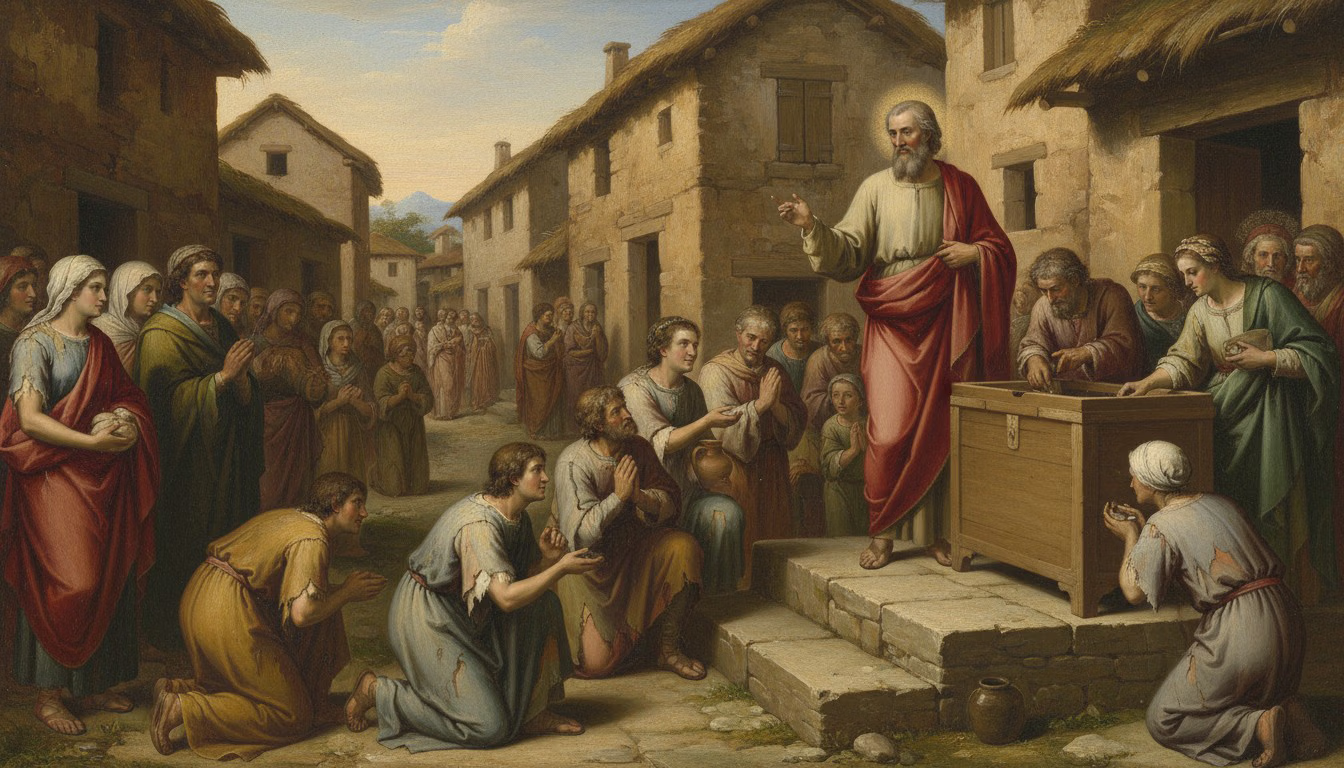
Charitable giving flows from recognizing that everything belongs to God. Paul’s teaching in 2 Corinthians 8 reveals how the poverty-stricken Macedonian church gave beyond their ability with overflowing joy. True biblical generosity requires joyful hearts, wise discernment, and faithful stewardship of the resources God entrusts to us for His kingdom purposes.
Table of Contents
The Macedonian Model: Giving Beyond Ability
What does 2 Corinthians 8 teach about the nature of true charitable giving? 2 Corinthians 8 teaches that authentic charitable giving flows from hearts surrendered to God rather than from financial abundance. The Macedonian church gave beyond their ability despite severe poverty and persecution because they first offered themselves to the Lord. Their generosity demonstrates that true biblical giving is measured by sacrifice and joy rather than the size of the gift.
Paul opens his teaching on charitable giving with a powerful example that challenges our modern understanding of generosity. He writes to the wealthy Corinthian church, directing their attention to believers in Macedonia who were experiencing extreme poverty and ongoing persecution.
The historical context matters deeply here. Macedonia had endured three civil wars, leaving the region economically devastated. The Roman conquest had drained resources, and ongoing political instability prevented economic recovery. Beyond material poverty, these believers faced active persecution from both Jewish opponents and Gentile communities who viewed Paul’s message as threatening their religious and economic systems.
Certain Jews from the Sanhedrin in Jerusalem were following Paul throughout his missionary journeys, attempting to disrupt every church he planted. They spread what we might call misinformation today, telling Gentiles that Paul threatened their livelihoods by preaching that there is only one God. This created hostility in communities where the Macedonian believers lived and worked.
Yet in the midst of such overwhelming hardship, something remarkable happened:
Moreover, brethren, we make known to you the grace of God bestowed on the churches of Macedonia: that in a great trial of affliction the abundance of their joy and their deep poverty abounded in the riches of their liberality. For I bear witness that according to their ability, yes, and beyond their ability, they were freely willing, imploring us with much urgency that we would receive the gift and the fellowship of the ministering to the saints. And not only as we had hoped, but they first gave themselves to the Lord, and then to us by the will of God.
2 Corinthians 8:1-5
The Macedonians demonstrated what authentic charitable giving looks like when our hearts align with God’s purposes through the 4-3 Formula biblical framework for growth. They possessed virtually nothing by worldly standards, yet they gave with a liberality that astonished Paul himself. Their charitable giving flowed not from surplus but from sacrifice, motivated by joy rather than obligation.
What made their generosity possible? Paul reveals the secret: “They first gave themselves to the Lord, and then to us by the will of God.” The Macedonians understood that charitable giving begins with surrendering ourselves completely to God. When we recognize that our lives, resources, and opportunities all belong to Him, generous giving becomes a natural expression of worship rather than a burdensome duty.
Notice the order Paul emphasizes. The Macedonians did not first calculate what they could afford to give. They did not analyze their budget, determine their disposable income, and allocate a comfortable percentage. Instead, they surrendered themselves completely to God, and their sacrificial giving flowed naturally from that surrender.
Paul contrasts this impoverished but generous church with the wealthy Corinthians who possessed material abundance but struggled with spiritual stinginess. Corinth was a massive port city, one of the wealthiest communities in the ancient world. Yet the believers there needed to be challenged by the example of much poorer Christians who understood generosity far better than they did.

God as the Source of All Our Resources
How does recognizing God’s ownership transform our approach to charitable giving? Recognizing God as the owner of everything we possess fundamentally transforms charitable giving from obligation to worship. When we truly believe that all income, opportunities, and resources come from Him, anxiety about money dissolves and generous giving becomes a joyful expression of trust. This foundational truth liberates us from the bondage of materialism and opens pathways for God to work through our stewardship.
One of the most liberating truths about charitable giving is this: everything you have belongs to God. Not theoretically. Not symbolically. Actually and completely. As Paul taught the Macedonians and Corinthians, God remains the source of all income, opportunity, and resource.
This principle appears throughout Scripture. Through our comprehensive study of Proverbs biblical wisdom, we encounter repeated reminders that the Lord gives wealth and takes it away according to His purposes. The Book of James declares that every good and perfect gift comes from above. Even Job, after losing everything, declared:
The Lord gave, and the Lord has taken away; blessed be the name of the Lord.
Job 1:21
When we truly grasp this reality, it revolutionizes our approach to charitable giving. We stop viewing ourselves as owners and recognize our role as stewards. God has entrusted us with resources for a season, expecting us to manage them according to His will. This perspective eliminates the anxiety that often accompanies discussions of money and generosity.
Consider how differently we would approach charitable giving if we genuinely believed that God controls our financial provision. Would we hoard resources fearfully? Would we resist giving when the Holy Spirit prompts our hearts? Would we obsessively count our money, worrying about the future?
The truth is that most of us believe God owns everything until we get our hands on it. Then suddenly our needs seem overwhelming. We convince ourselves we cannot afford to give what we intended. We cling tightly to resources, forgetting that the same God who provided today can provide tomorrow.
Jesus addressed this tension directly when He taught His disciples about worry and provision:
Give, and it will be given to you: good measure, pressed down, shaken together, and running over will be put into your bosom. For with the same measure that you use, it will be measured back to you.
Luke 6:38
This is not prosperity gospel theology promising financial return for charitable giving. Rather, Jesus reveals a spiritual principle: God’s economy operates differently than the world’s economy. When we give generously from a heart surrendered to Him, we position ourselves to receive His provision and blessing.

Wisdom and Discernment in Charitable Giving
Why must wisdom accompany generosity in our charitable giving practices? Wisdom must accompany generosity because corruption has infiltrated many charitable organizations, even those with religious names. While America leads the world in charitable giving and believers give far more than non-believers, discernment protects our stewardship from exploitation. Jesus warned against casting pearls before swine, calling us to verify that our contributions genuinely serve God’s purposes rather than enriching administrators or funding destructive agendas.
America stands remarkably generous in charitable giving. By a significant margin, the United States gives more than any other nation. Within American society, believers demonstrate extraordinary generosity compared to non-believers, giving approximately 400 times more to charitable causes.
These statistics reveal something profound about the connection between faith and generosity. When people recognize God as the source of their blessings and embrace biblical wisdom for daily living through Scripture study, they naturally become more generous.
However, a troubling reality shadows this generosity. Many organizations receiving charitable donations have abandoned their founding principles and now serve agendas that directly contradict biblical values. Non-governmental organizations with religious-sounding names have become vehicles for policies that harm communities and undermine the very faith that inspired donor generosity.
Consider the border crisis as one stark example. Catholic Charities has received $1.4 billion related to the current border situation. Church World Service received $2.5 million. Jewish Family Services received $22 million. Lutheran Immigration and Refugee Service received $182.5 million. Border Servant Corps received $15.1 billion. Organizations like Global Refuge, Southwest Key Programs, and Endeavors have collectively made billions from federal contracts.
The financial incentives have corrupted missions. CEOs of these organizations earn six-figure salaries while their organizations facilitate policies that many believe damage American communities and sovereignty. The previous CEO of Southwest Key Programs paid himself $3.5 million annually. The current CEO makes $1 million per year.
These arrangements represent the opposite of what Paul described when he taught about charitable giving in 2 Corinthians 8. The Macedonian believers gave sacrificially from poverty to advance the gospel. These modern organizations extract enormous sums while pursuing political agendas.
As explored through our G-Drop commentary on contemporary concerns, Christians must learn to see through deceptive language and evaluate organizations by their fruit rather than their marketing.
Generous hearts must be accompanied by wise minds. Jesus Himself warned:
Do not give what is holy to the dogs; nor cast your pearls before swine, lest they trample them under their feet, and turn and tear you to pieces.
Matthew 7:6
Research organizations before supporting them financially. Examine their leadership, theological commitments, and actual activities. Use resources like Charity Navigator and MinistryWatch to verify financial transparency. When research reveals problems, redirect your resources to faithful organizations.

Joyful Giving Versus Anxious Hoarding
What does our emotional response to charitable giving reveal about our spiritual condition? Our emotional response to charitable giving reveals whether we truly trust God as our provider or worship money as our security. The Macedonians gave with abundance of joy despite poverty. Joyful generosity flows from recognizing God’s ownership and trusting His faithfulness. Anxious hoarding betrays that we trust our bank accounts more than our heavenly Father.
Paul emphasizes that the Macedonians gave with abundance of joy despite their deep poverty. Their generosity flowed from hearts overflowing with thanksgiving and trust in God’s faithfulness. Contrast this with how many believers approach charitable giving today. Anxiety dominates our thinking. We resist giving when the Holy Spirit prompts our hearts because fear overwhelms faith.
Jesus taught extensively about the danger of serving money rather than God:
No one can serve two masters; for either he will hate the one and love the other, or else he will be loyal to the one and despise the other. You cannot serve God and mammon.
Matthew 6:24
This exclusive loyalty extends to how we practice charitable giving. Either we trust God to provide and give generously, or we trust our accumulated resources and give reluctantly.
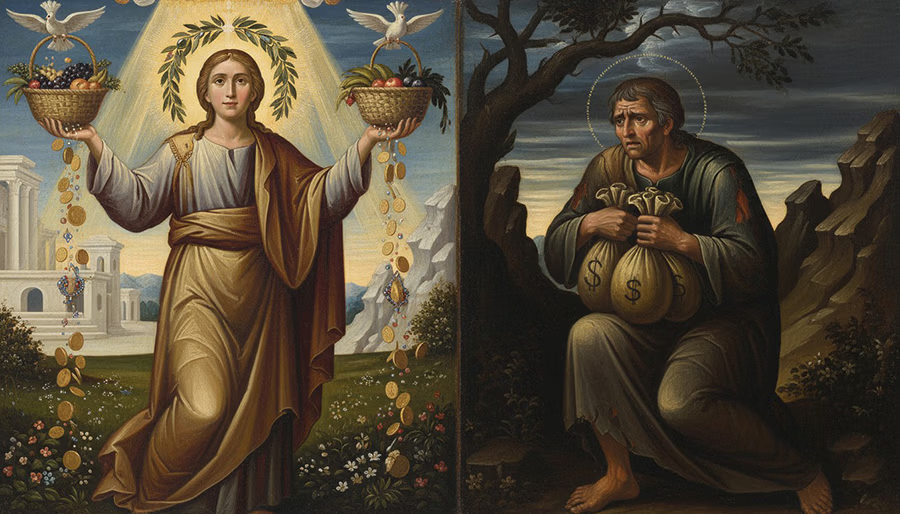
The ironic tragedy is that hoarding money never produces the security we seek. Wealth accumulated through anxious hoarding tends to produce misery rather than contentment. Charitable giving breaks this destructive cycle. When we release resources generously, acknowledging God’s ownership and trusting His provision, we experience the freedom and joy He intends.
The practical path to joyful giving begins with daily gratitude. Each morning, thank God specifically for the resources He has provided. Through consistent application of the Five Smooth Stones spiritual toolkit, we develop the faith necessary to overcome fear and walk in generous obedience.
Living Out Charitable Giving Today
How can contemporary believers implement these biblical principles of charitable giving? Contemporary believers implement biblical charitable giving by establishing daily gratitude practices, developing prayerful giving plans, researching organizations thoroughly, and prioritizing ministries proclaiming truth. These practices transform charitable giving from obligation to worship while ensuring resources faithfully serve kingdom purposes in an increasingly deceptive world.
Several concrete steps help cultivate faithful stewardship. First, establish a daily rhythm of acknowledging God’s ownership. Begin each morning thanking Him for specific provisions. Second, pray specifically about charitable giving decisions. Ask God to direct your generosity toward ministries aligned with His will.
Third, develop a giving plan rather than responding only to emotional appeals. Determine what percentage of your income will support your local church and other charitable causes. Fourth, prioritize ministries that faithfully proclaim biblical truth through biblical wisdom applied to contemporary challenges.
Fifth, maintain accountability in your financial life. Meet regularly with trusted believers who can ask hard questions about your giving patterns and heart attitudes toward money. Finally, review your charitable giving annually, evaluating whether organizations you support continue deserving your trust.
These practices work together to create a lifestyle of faithful stewardship where charitable giving flows naturally from hearts surrendered to God.

Conclusion: Trust, Obey, and Give Joyfully
The Macedonian church teaches us that authentic charitable giving flows from hearts surrendered completely to God. These believers possessed almost nothing materially yet gave with overflowing generosity because they first gave themselves to the Lord. Their example challenges our comfortable Christianity, where abundance often produces stinginess rather than generosity.
Paul’s teaching reveals that charitable giving is ultimately about worship rather than philanthropy. When we recognize God as the source and owner of everything we possess, generosity becomes natural rather than forced. We stop anxiously hoarding resources and start joyfully releasing them for His purposes.
Yet wisdom must accompany generosity. The corruption within many charitable organizations demands that we verify before we trust, researching thoroughly to ensure our giving genuinely advances God’s kingdom rather than enriching administrators or funding destructive agendas.
The path forward is clear: Thank God daily for His provision. Acknowledge His ownership of everything you possess. Research organizations thoroughly before contributing. Give joyfully, trusting God to provide for your needs as you support His work.
Your resources, whether abundant or limited, represent opportunities to participate in what God is doing in the world. Through wise, generous, joyful giving, you become a conduit of His blessing rather than a reservoir that hoards selfishly.
As you consider how God is calling you to practice charitable giving, remember the Macedonians. They gave beyond their ability because they believed in a God who provides beyond our ability. They gave with joy because they trusted His character and faithfulness.
As you grow in both biblical understanding through verse-by-verse teaching and practical application, may your charitable giving reflect a heart fully surrendered to the God who gave everything for you. Through accessing resources for Christian growth and reflections on Scripture, we position ourselves to hear and respond to God’s call toward faithful stewardship.
Keep it simple: trust and obey. Recognize God’s ownership. Give joyfully. Verify wisely. And watch as He uses your faithful stewardship to advance His kingdom in ways that exceed your expectations.
Frequently Asked Questions (FAQ’s)
What does the Bible say about charitable giving?
The Bible teaches that charitable giving should flow from recognition that everything belongs to God. In 2 Corinthians 8, Paul highlights the Macedonian church that gave beyond their ability with great joy because they first surrendered themselves to the Lord. True biblical generosity combines joyful hearts with wise stewardship, understanding that we are managing God’s resources for His purposes.
How much should Christians give to charity?
Scripture emphasizes the heart attitude behind charitable giving more than specific percentages. The tithe (10%) provides a baseline for supporting your local church, but Spirit-led generosity often exceeds this amount. The Macedonian believers gave “according to their ability, yes, and beyond their ability” with joy. Give according to how God has prospered you, maintaining joy rather than giving under compulsion.
How can I verify if a charity is legitimate and faithful to biblical principles?
Research charitable organizations through websites like Charity Navigator, GuideStar, and MinistryWatch before contributing. Examine their financial statements, leadership compensation, theological positions, and actual program outcomes. Verify that their activities align with their stated mission and biblical values. Be wary of organizations with religious names that pursue political agendas contradicting Scripture.
Should I give even when I struggle financially?
The Macedonian church gave generously despite extreme poverty, but they did so with joy rather than resentment or obligation. When struggling financially, prioritize supporting your local church and pray for God’s direction about additional giving. Remember that time, skills, and hospitality represent valuable gifts beyond money. Trust God’s provision while practicing responsible stewardship.
Further Reading and Resources
For deeper understanding of biblical stewardship and charitable giving:
- Blue Letter Bible: 2 Corinthians 8 Commentary – David Guzik’s detailed verse-by-verse exposition of Paul’s teaching on Christian generosity and the Macedonian example
- Charity Navigator – America’s largest independent charity evaluator providing comprehensive ratings, financial transparency data, and accountability metrics for thousands of charitable organizations
- The Gospel Coalition: Generosity Resources – Collection of articles and theological reflections on Christian giving, biblical generosity, and gospel-centered stewardship
- Desiring God: Giving Topics – John Piper’s teachings on money, possessions, and eternal perspective in financial stewardship from a Christian Hedonist framework
- Crown Financial Ministries – Comprehensive biblical financial principles, practical stewardship resources, budget coaching, and free calculators for debt management and financial freedom
