
Book of Esther 5 demonstrates God’s invisible hand guiding Queen Esther as she risks death to save her people. Through three days of fasting, strategic banquets, and divine timing, this chapter reveals how God orchestrates circumstances even when His name remains unspoken, turning desperation into deliverance through faithful courage.
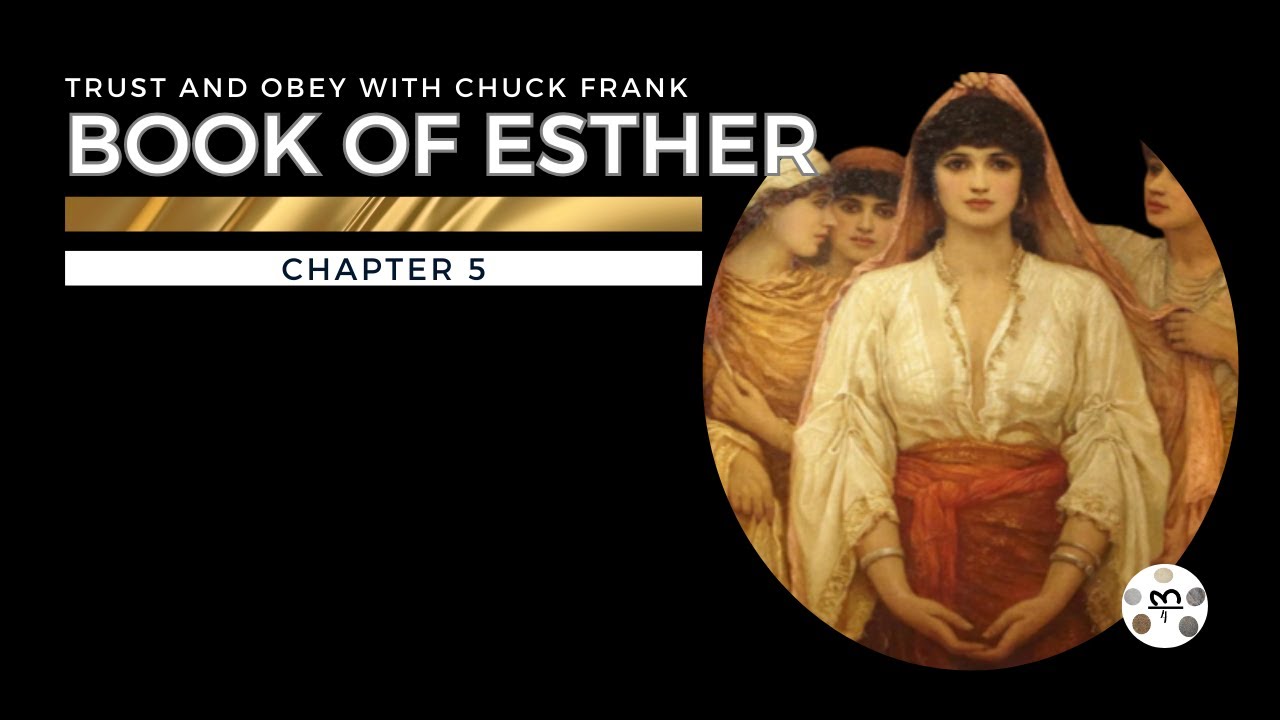
Table of Contents
The Third Day: From Fasting to Royal Presence
On the third day of fasting, Esther removes her sackcloth, puts on royal robes, and enters the king’s inner court uninvited. This dangerous act risks immediate execution, but demonstrates her complete dependence on God’s intervention after three days of prayer and fasting by Jews throughout Persia.

The opening scene of Book of Esther 5 presents us with a moment of extraordinary courage. After calling for a three-day fast among all Jews throughout the Persian provinces, Esther transitions from mourning to monarchy. The text tells us that “on the third day Esther put on her royal robes and stood in the inner courtyard of the king’s palace.”
This detail carries profound significance. Esther had been in sackcloth during the fast, identifying with her people’s desperate situation. Now, clothed in royal garments, she approaches the threshold between certain death and possible deliverance. The inner courtyard represented a forbidden zone where entrance without invitation meant execution unless the king extended his golden scepter.
The parallel to Christ’s resurrection on the third day cannot be ignored by students of Scripture. Just as Jesus emerged from death to life on the third day, Esther emerges from her time of spiritual preparation to face what could be her death. This connection between our study of the Book of Esther and broader biblical themes enriches our understanding of God’s redemptive patterns throughout history.
King Ahasuerus sat on his royal throne, positioned to see anyone who dared enter the inner court. This was no accident of palace design but an intentional security measure. The king needed clear sight lines to identify unauthorized visitors who violated sacred protocol. Esther knew these protocols intimately, yet she chose to break them, trusting that the prayers of a million Jews would move God’s hand to turn the king’s heart.
God’s Providential Hand: The King’s Favor
God’s providence appears when King Ahasuerus immediately sees Esther, she finds favor in his sight, and he extends the golden scepter. This moment answers three days of prayer by Jews throughout Persia, demonstrating God’s invisible hand turning the king’s heart despite not calling Esther for 30 days prior.
The Scripture records a pivotal moment: “When the king saw Queen Esther standing in the court, she obtained favor in his sight, and the king extended to Esther the golden scepter which was in his hand.” This brief verse contains layers of divine intervention that we must carefully examine.
Consider the timing. The king had not summoned Esther for thirty days. In a palace filled with political intrigue and hundreds of women, she had become forgotten, relegated to the margins of royal attention. Yet at this precise moment, when she appears uninvited and subject to execution, the king not only sees her but extends favor.
The Hebrew concept of “finding favor” goes deeper than modern pleasantries. It represents a supernatural inclination of heart, a divine turning of affection that cannot be manufactured by human effort. As Proverbs 21:1 teaches us, “The king’s heart is like channels of water in the hand of the Lord; He turns it wherever He wishes.” This verse becomes reality before our eyes as we study how divine providence operates through biblical wisdom principles.
The king’s immediate response reveals God’s answer to corporate prayer. Throughout the provinces, Jews had been fasting, praying, and interceding for Esther. This was not casual prayer but desperate supplication, the kind that comes from facing genocide. Their prayers reached heaven, and heaven responded by inclining a pagan king’s heart toward his Jewish queen.
Esther approaches and touches the top of the scepter, a gesture of submission and acceptance. The king’s next words confirm that something supernatural has occurred: “What is troubling you, Queen Esther? And what is your request? Up to half of the kingdom it shall be given to you.” This generous offer, while hyperbolic in ancient royal custom, demonstrates an extraordinary openness that can only be attributed to God’s providential intervention.

The Strategic Banquet: Wisdom in Timing
Esther demonstrates strategic wisdom by inviting King Ahasuerus and Haman to a private banquet rather than immediately revealing her request. This approach creates intimacy, builds suspense, and allows God’s timing to unfold perfectly as additional circumstances develop overnight that will impact the final outcome.
Queen Esther’s response to the king’s generous offer surprises us. After risking death to approach the throne, she makes what seems like a trivial request: “If it pleases the king, may the king and Haman come this day to the banquet that I have prepared for him.”
This moment confounds King Ahasuerus. He recognizes immediately that something profound must be troubling his queen. No woman risks execution to invite her husband to lunch. The king’s instinct tells him that deeper issues are at play, which is why he commands, “Bring Haman quickly so that we may do as Esther desires.”

Yet here we encounter another aspect of divine providence working through Book of Esther 5. God gives Esther wisdom not to reveal her petition immediately. Sometimes the greatest faith involves waiting when everything inside us screams for immediate action. This principle applies to our own lives as we navigate crises, seeking to understand when to speak and when to remain silent, learning from the Five Smooth Stones of spiritual warfare and wisdom.
The first banquet proceeds with wine and conversation. As they drink, the king repeats his offer: “What is your petition, for it shall be granted to you. And what is your request? Even to half of the kingdom it shall be done.” The repetition emphasizes his genuine concern and the growing tension in the narrative.
The Second Invitation: Delayed Revelation
Esther’s response creates even greater suspense: “My petition and my request is: if I have found favor in the sight of the king, and if it pleases the king to grant my petition and do what I request, may the king and Haman come to the banquet which I will prepare for them, and tomorrow I will do as the king says.”
This decision to delay the revelation requires explanation. God’s providential hand is at work here, preparing circumstances that will unfold overnight. Esther senses, through divine leading, that the timing is not yet right. One more night must pass, one more banquet must be held, before the full dramatic reversal can occur. This demonstrates how God orchestrates not just major events but their precise timing for maximum redemptive impact.
Haman’s Pride: The Narcissist’s Blindness
Haman leaves the first banquet “joyful and pleased of heart” because he believes being invited to private banquets with the king and queen confirms his supremacy. His narcissistic pride blinds him to the danger ahead, demonstrating how arrogance precedes destruction as warned throughout Scripture.
The narrative shifts to follow Haman as he departs from Esther’s banquet. The text records that “Haman went out that day joyful and pleased of heart.” To understand this joy, we must enter the mind of a narcissist at the height of his power.
Haman stands as the second most powerful man in the greatest empire ever assembled by human hands. Now the queen herself has invited him to not one but two private banquets with only the king present. In Haman’s distorted perception, this represents the ultimate validation of his superiority. He believes he has achieved a status that separates him from all other officials and servants.
But pride comes before a fall, as Scripture repeatedly warns. Haman’s joy proves short-lived because of one man, one thorn in his side, one Jew who refuses to bow. The text continues: “But when Haman saw Mordecai at the king’s gate and that he did not stand up or tremble before him, Haman was filled with anger against Mordecai.”
This reveals the fragility of narcissistic ego. Despite receiving honors that would satisfy most men, Haman cannot enjoy them because one person refuses to acknowledge his greatness. Mordecai remains in the gate, still in sackcloth and ashes, still wailing for his people, still refusing to compromise his worship of the one true God by bowing to any man.
Haman’s response demonstrates his character. He controls himself in public but rushes home to gather his friends and wife Zeresh. There he recounts “the glory of his riches, and his many sons, and every instance where the king had magnified him and how he had promoted him above the princes and servants of the king.”
This compulsive need to rehearse his accomplishments reveals deep insecurity masked by arrogance. Then Haman adds: “Even Esther the queen let no one but me come with the king to the banquet which she had prepared; and tomorrow also I am invited by her with the king.”
Yet even with all this recitation, Haman admits: “Yet all of this does not satisfy me every time I see Mordecai the Jew sitting at the king’s gate.” The emptiness of pride-based living stands exposed. No amount of external validation fills the void when someone refuses to participate in the narcissist’s delusion of supremacy, a pattern we frequently observe in today’s political and cultural landscape.
The Gallows: Evil’s Premature Celebration
Haman constructs a 75-foot gallows specifically to execute Mordecai, planning to request permission at the second banquet. This premature preparation for evil demonstrates how wickedness overreaches, building instruments of destruction that divine justice will turn against the builders themselves.
Haman’s wife and friends offer him deadly counsel: “Have a gallows fifty cubits high made and in the morning ask the king to have Mordecai hanged on it; then go joyfully with the king to the banquet.” This advice pleased Haman, so he had the gallows constructed.

The height of these gallows deserves attention. Fifty cubits equals approximately seventy-five feet, an extraordinary height that serves no practical purpose for execution. This towering structure represents Haman’s desire not merely to kill Mordecai but to make his death a public spectacle visible throughout Susa. The gallows become a monument to Haman’s hatred, a physical manifestation of his murderous intent.
The method of execution requires clarification. Ancient Persian practice often involved impalement rather than hanging. The condemned person would be placed on a sharpened stake, sometimes thrust up under the sternum, creating a slow and agonizing death. These executions were often preceded by torture, including flaying alive. The brutality of pagan cultures in the ancient Near East cannot be overstated.
Yet this gallows, built for Mordecai, will become Haman’s own instrument of death. God’s justice often works through ironic reversals where the wicked fall into the pits they dig for others. This principle echoes throughout Scripture, as taught in the Psalms and Proverbs, and as we explore in our Bible Messages series examining God’s righteous patterns.
The construction of the gallows occurs at night while something else is happening that Haman knows nothing about. The king cannot sleep, and in his insomnia, he will discover something that changes everything. But Haman, in his arrogance, believes tomorrow will bring the death of his enemy and another glorious banquet with the royal couple.
Book of Esther 5: God’s Invisible Hand Throughout
God’s presence permeates Book of Esther 5 through answered prayer, changed hearts, strategic wisdom, perfect timing, and dramatic reversals. The three-day fast, the king’s favor, Esther’s inspired delays, and the overnight developments all reveal God’s sovereignty working invisibly but powerfully throughout the narrative.
Many scholars note that the Book of Esther never explicitly mentions God’s name, leading some to question its spiritual significance. This observation misses the profound theological truth that Book of Esther 5 illustrates: God works powerfully even when His name remains unspoken, His hand invisible but undeniable.
Consider the evidence throughout this chapter. A million Jews fast and pray for three days. This is corporate intercession on a massive scale, and these prayers are directed to someone, the God of Abraham, Isaac, and Jacob. They petition Him for deliverance, trusting that He hears and responds.
The answer comes immediately when Esther enters the inner court. King Ahasuerus, who had not called for her in thirty days, suddenly sees her and extends favor. His heart turns toward her at precisely the moment she needs it most. This is not coincidence but divine providence, the fulfillment of Proverbs 21:1 that we examined earlier.
Romans 8:28 provides the theological framework for understanding God’s work in Book of Esther 5: “And we know that God causes all things to work together for good to those who love God, to those who are called according to His purpose.” This verse does not promise that every individual outcome will be pleasant, but that God’s ultimate purposes will prevail for those aligned with His kingdom.
Understanding Divine Providence
The apostle Paul’s teaching helps us understand that God works through all circumstances, including the sins and schemes of wicked men like Haman. God does not cause evil, but He sovereignly uses even evil intentions to accomplish His redemptive purposes. This truth should strengthen every believer facing opposition or persecution in our own generation.
Pastor Robert Deffinbaugh offers valuable insight on divine providence: “God’s Providence is very closely related to His sovereignty. The sovereignty of God refers to God’s independence from men and His power and ability to achieve His purposes through all men. The Providence of God refers to the way in which God works, His invisible hand working that which accomplishes His purposes and promises but which is not recognized as His work.”
This definition perfectly describes what we observe throughout Book of Esther 5. God’s hand moves invisibly, turning hearts, inspiring wisdom, timing events, and setting up the dramatic reversals that will unfold. His work is so subtle that it could be mistaken for coincidence by those unwilling to see, yet so powerful that it preserves an entire people from genocide.
Esther’s Journey: From Orphan to Deliverer
Esther transforms from a passive orphan to a courageous queen who risks death for her people. Her character development through fasting, prayer, strategic wisdom, and bold action demonstrates how God prepares ordinary people for extraordinary purposes when they submit to His providence and timing.
Tracking Esther’s development provides essential context for understanding Book of Esther 5. She begins as an orphan, a young Jewish girl with no status in Persian society. Orphans in the ancient world occupied the lowest social position imaginable, vulnerable to abuse and exploitation with no family protection.

Yet God’s providential hand guided every step of her unlikely journey. Through circumstances we studied in earlier chapters, including Book of Esther 1’s historical context and Book of Esther 2’s examination of divine guidance, Esther entered the royal harem and captured the king’s attention.
The eunuch Hegai recognized something special in Esther, giving her preferential treatment, extra handmaidens, and the best apartments. This favor cannot be attributed to human wisdom alone. God was positioning His chosen instrument for the crisis that would come.
When King Ahasuerus met Esther, the text says he loved her immediately. He did not wait to audition all the candidates but crowned her queen, placing her in a position to intercede for her people when Haman’s decree threatened their destruction.
Even more remarkable is the timing. Mordecai discovered an assassination plot against the king, reported it through Esther, and had his name recorded in the royal chronicles. This seemingly minor detail, recorded in earlier chapters, will prove crucial in the overnight developments between Book of Esther 5 and chapter 6.
Every detail reveals God’s meticulous orchestration. Nothing is random. Nothing is wasted. Every element serves His redemptive purpose. This same God works in our lives today, weaving together circumstances we cannot yet understand into patterns that will someday reveal His glory.
Esther’s character transformation climaxes in her decision to approach the king. Her famous words to Mordecai, “If I perish, I perish,” demonstrate a woman who has moved from passive beauty to active courage. She understands that God has positioned her “for such a time as this” and chooses to fulfill her purpose regardless of personal cost, modeling the kind of faithful obedience we explore in our mission statement.
Book of Esther 5 Application: Faithful Courage in Crisis
Book of Esther 5 teaches believers to combine prayer with strategic action, trust divine timing over human urgency, maintain courage when facing opposition, and recognize God’s invisible hand in circumstances. These principles apply directly to contemporary Christians navigating cultural hostility and political challenges.
The parallels between Esther’s situation and our contemporary moment demand attention. Just as Jews in Persia faced a decree aimed at their destruction, Christians in the modern West face increasing hostility from cultural and political forces seeking to erase biblical values from public life.
Esther’s response provides a template for faithful action. She did not panic or act rashly. Instead, she called for corporate prayer and fasting, understanding that human effort alone could not overcome the forces arrayed against her people. This prioritization of spiritual preparation before physical action challenges our modern tendency toward immediate activism without adequate prayer.
The three-day fast reminds us that some battles require extended spiritual preparation. Not every crisis can be resolved with a quick prayer. Some situations demand sustained intercession, the kind of persistent seeking after God that demonstrates complete dependence on His intervention rather than our capabilities.
When Esther finally acted, she did so with strategic wisdom. She did not blurt out her request impulsively but created circumstances that would maximize the effectiveness of her petition. This balance between faith and wisdom characterizes mature Christianity, where we trust God’s sovereignty while employing the practical wisdom He provides through His Word and Spirit.
The principle of divine timing emerges powerfully in Book of Esther 5. Twice the king offers Esther whatever she requests, yet twice she delays revealing her true petition. This requires extraordinary self-control and trust that God is orchestrating events beyond her immediate understanding. How often do we rush ahead of God’s timing because we cannot see the pieces He is moving into place?
Models of Faith and Pride in Modern Culture
Haman’s pride and Mordecai’s faithfulness present contrasting models. Haman represents the narcissistic personality that dominates much of contemporary culture, obsessed with status, demanding recognition, and willing to destroy anyone who challenges his ego. Mordecai embodies the faithful remnant who refuse to compromise worship of the one true God regardless of consequences.
Our generation faces similar choices. Will we bow to cultural pressures that demand we celebrate what God calls sin? Will we remain silent when truth is suppressed? Or will we, like Mordecai, maintain our witness at the gate even when threatened with destruction?
The role of prayer in Book of Esther 5 cannot be overstated. A million Jews prayed and fasted, creating a spiritual atmosphere in which God could work. This demonstrates the power of corporate intercession, something our Christian community seeks to foster among believers committed to faithful prayer and mutual support.
Consider the current political landscape. For years, many Christians have felt like an oppressed minority, watching as godless leadership enacted policies that undermined biblical values, promoted immorality, and even persecuted those who stood for truth. The parallels to Jews living under Haman’s decree are striking.
Yet just as God heard the prayers of His people in Persia, He hears the prayers of the faithful remnant today. The 2024 election may represent a providential turning point, similar to the moment when King Ahasuerus extended his scepter to Esther. While we cannot know the future with certainty, we can trust that God’s sovereignty extends over all political developments and that He uses even pagan rulers to accomplish His purposes.
The Prayer of Dr. Martin Luther King Jr.: Leadership and Integrity
The prayer that Chuck Frank offers at the conclusion of his teaching on Book of Esther 5 deserves careful attention. Written by Reverend Martin Luther King Jr., it petitions God for leaders of integrity in a time of crisis:
God, give us leaders. A time like this demands great leaders, leaders whom the lust of office does not kill, leaders whom the spoils of office cannot buy, leaders who possess opinions and a will, leaders who have honor, leaders who will not lie, leaders who can stand before a demagogue and damn his treacherous flatteries without winking. Tall leaders, sun-crowned, who live above the fog in public duty and in private thinking.
This prayer resonates because it describes the kind of leadership that Esther demonstrates in chapter 5. She is a leader whom the spoils of office do not corrupt. Despite her position as queen, she risks everything to save her people. She possesses opinions and will, standing firm in her identity as a Jew even when revelation could mean death.

The prayer’s relevance extends beyond ancient Persia to our contemporary situation. We have endured decades of corrupt leadership, leaders who can be bought, who lack honor, who lie habitually, and who flatter demagogues rather than confronting evil. The reference to government involvement in the assassinations of American leaders reminds us how deeply corruption has penetrated our institutions.
Yet the release of previously classified documents and the growing awareness of historical deceptions create hope for accountability and renewal. Just as the Jews in Persia needed deliverance from corrupt leadership, Americans need political and spiritual reformation that restores constitutional principles and biblical values.
The prayer ends with “Amen,” meaning “so be it” or “let it be true.” This is not passive resignation but active faith, believing that God can and will raise up leaders who meet these criteria. Book of Esther 5 demonstrates that God specializes in raising up unlikely leaders, people like Esther who emerge from obscurity to fulfill critical purposes in moments of crisis, a theme we continue exploring through our examination of biblical history and contemporary concerns.
Conclusion: Trusting the Invisible Hand
Book of Esther 5 calls us to recognize and trust God’s providential hand even when His name goes unspoken and His work remains invisible to casual observation. The chapter demonstrates that God hears corporate prayer, turns the hearts of rulers, grants strategic wisdom to the faithful, orchestrates perfect timing, and ensures that evil’s plans ultimately serve His redemptive purposes.
Esther’s courage inspires us to act decisively when God’s timing arrives, even when action requires personal risk. Her strategic wisdom challenges us to balance faith with practical understanding, neither rushing ahead of God nor lagging behind His leading. Her willingness to identify with her suffering people rather than hiding behind privilege models the kind of costly solidarity that characterizes genuine faith.
The overnight developments that will unfold between chapters 5 and 6 remind us that God works even while we sleep, arranging circumstances beyond our knowledge or control. Our responsibility is to pray faithfully, act courageously when called, and trust that the invisible hand guiding history also guides our individual lives toward purposes we may not yet understand.
For those facing opposition, persecution, or seemingly impossible circumstances, Book of Esther 5 offers hope. The same God who preserved Jews in Persia preserves His people today. The same power that turned a pagan king’s heart can turn any situation according to His will. The same providence that positioned an orphan girl as queen can use your life for extraordinary purposes.
The question is not whether God is sovereign but whether we will trust His sovereignty enough to act in faith when He calls. Will we fast and pray like the Jews in Susa? Will we approach the throne like Esther despite potential costs? Will we refuse to bow like Mordecai even when threatened? Will we trust divine timing when everything urges immediate action?
These are not merely historical questions but present realities for believers navigating an increasingly hostile culture. Book of Esther 5 equips us with theological truth, practical wisdom, and inspirational example for the challenges we face. May we have eyes to see God’s invisible hand, courage to act when He opens doors, and faith to trust His timing in all circumstances.
Frequently Asked Questions (FAQ’s)
What is the main message of Esther chapter 5?
The main message is that God’s providence works powerfully even when invisible, orchestrating circumstances through prayer, strategic wisdom, and perfect timing to deliver His people from destruction. Esther’s courage and the Jews’ corporate fasting demonstrate how faith combines spiritual preparation with decisive action.
Why does Esther delay revealing her request?
Esther delays because divine wisdom guides her to wait for God’s perfect timing. This strategic patience allows circumstances to develop overnight that will make her petition more effective. The delay demonstrates that faith sometimes requires waiting rather than rushing ahead of God’s orchestration.
How does the Book of Esther show God’s presence without naming Him?
God’s presence appears through answered prayers, changed hearts, providential timing, and dramatic reversals. The three-day fast directs petitions to God, King Ahasuerus’s favor demonstrates divine influence over rulers, and the unfolding events reveal careful orchestration that transcends human planning.
What does Haman’s gallows symbolize?
The seventy-five-foot gallows symbolizes evil’s overreach and premature celebration. Built to destroy Mordecai, it becomes Haman’s own instrument of execution, demonstrating God’s justice through ironic reversal where wickedness falls into the traps it sets for others.
Further Reading
For those seeking to deepen their understanding of Book of Esther 5 and God’s providence, these resources provide valuable biblical commentary and theological insight:
Matthew Henry Commentary on Esther 5 – Blue Letter Bible offers Matthew Henry’s classic and thorough exposition of Esther chapter 5, examining Esther’s bold approach, the king’s favor, and Haman’s pride with deep spiritual application.
David Guzik’s Enduring Word Commentary – Accessible verse-by-verse commentary on Esther 5, exploring themes of divine timing, answered prayer, and God’s invisible hand throughout the narrative.
Bible.org Study Guide on Esther 5 – Comprehensive study resource examining the text in detail with careful attention to the original languages, cultural context, and theological implications of God’s providence in Esther chapter 5.
Precept Austin’s Detailed Commentary – Extensive verse-by-verse analysis with rich application, exploring divine providence, the principle of sowing and reaping, and God’s sovereign control over human affairs as demonstrated in these pivotal chapters.
BibleHub Study Resources for Esther 5 – Collection of multiple commentaries and study tools for in-depth exploration of Esther chapter 5, including historical background, cross-references, and theological insights.


